Last month, I mentioned two big moments – the General Election and the 50th anniversary of the Health and Safety at Work Act (1974) on 31 July. The lack of attention given to health, safety, or even wellbeing by most political parties in their election manifestos, while not entirely unexpected, was disappointing. And it doesn’t reflect the real concerns of workers and leaders here and around the world.
Opinion
In these times, how can we be safe, well and happy?
By
on 01 July 2024
It is quite surprising – alarming even – that health and safety now tops the risks for company directors and CEOs.
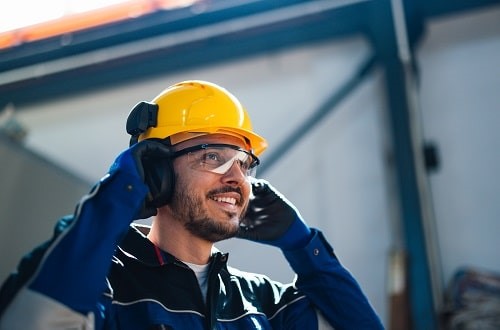 When employees are engaged at work, they are noticeably more hopeful about their future lives. Photograph: iStock/miniseries
The latest survey of global company leaders, by law firm Clyde & Co., shows health and safety is now at the top of senior leaders’ risk list. Even the authors were surprised to see health and safety risks being placed above even cyber attacks, data losses, regulatory breaches, or bribery and corruption.
While the change could mean leaders have just got other risks more under control, there has been a real focus on mental health and wellbeing since the pandemic, which the report’s authors also thought could be a factor.
At the same time, the latest State of the Global Workforce report by Gallup shows a “global deterioration in mental health” and links this to the fact that in 2023 “global employee engagement stagnated, and overall employee wellbeing declined”. Gallup estimates that low employee engagement costs the global economy US$8.9 trillion, or nine per cent of global GDP.
Their report also contains some interesting evidence showing that labour laws can also make a positive impact on individuals’ propensity to thrive in life. They go further to show that areas of labour laws with the biggest impact on people’s “present life evaluations” include safety, which comes in at number six.
But something with a much bigger impact on people’s sense of optimism than even labour laws is employee engagement. When employees are engaged at work, they are noticeably more hopeful about their future lives. In Gallup’s own words, “a great job is strongly associated with hope for the future”.
Another report by Make UK on workplace wellbeing in manufacturing suggests that, in recent years, “businesses have prioritised increasing their investment in the health and wellbeing of their staff”.
This research shows many manufacturers are moving further away from a ‘reactive’ model of health and wellbeing to a much more proactive approach. They are seeing a shift in focus from managing sickness absence and performance by using tools such as occupational health towards investing in early-stage interventions to prevent sickness, as well as cultural change.
According to Make UK, nearly half of manufacturing companies have increased their spending on health and wellbeing initiatives in the past year. Mental ill health was listed as the biggest cause of long-term sickness absences among manufacturing employees, accounting for almost 40 per cent of absences.
It is positive to see this kind of investment by a sector that you may not immediately associate with supporting wellbeing.
The real question is how we equip people and their organisations to best deal with and manage these risks. And that requires an approach which takes not only mental health but also physical, emotional and social wellbeing seriously, and deals with people’s safety, health and wellbeing as one whole.
This is what we mean by taking a holistic approach where employers and their staff understand that safety, health and wellbeing are interlinked, and can build plans and approaches which support them altogether.
We often only think about one at a time, separating our minds, bodies and spirits into silos. This must change if we are going to truly build on the successes of the last 50 years and make the next five decades the safest, healthiest and happiest yet.