Having long campaigned on the dangers of air pollution, and as chairman of the Westminster Commission for Road Air Quality (WCRAQ) and vice chair of the APPG (All Party Parliamentary Group) on Air Pollution, it’s clear to me that there are a number of necessary steps that the UK Government and institutions need to take in order to tackle the increasingly urgent issue of air pollution from road transport.
Opinion
Key steps along the pathway to reducing air pollution from road transport
By
on 05 June 2024
First and foremost, attaining clean air is only likely through sustained individual and local pressure. Unless individuals and local communities put pressure on political parties, the government, local authorities and regional players, such as elected mayors, at the place where people wield power, the ballot, we can never expect to see early action on clean air.
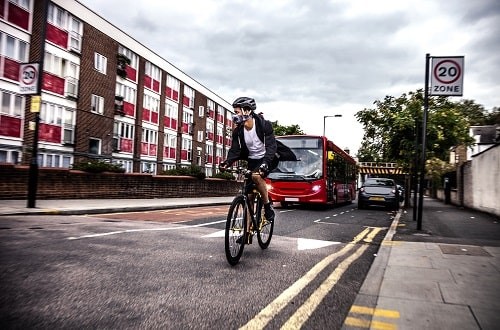 Photograph: iStock/LeoPatrizi
It needs to be a priority for every individual to look at the quality of the air that they breathe at home and when they’re travelling, whether that be by train, bus or car. Air quality in schools, colleges, universities, offices, in hospitals or other public service provisions also needs to be examined. Until individuals can effectively monitor the quality of the air that they breathe at any stage of their lives, on any given day, week, or month, there won’t be the sufficient pressure needed for change.
Other priorities include continued awareness about the dangers of wood- or coal-burning fires in the home, as well as the potential for pollution and the emission of carbon monoxide from other home heating appliances. We know there are changes that can be made, and I think the Government must be made even more aware of the urgency of action in these areas.
Sustainable transport
Travel, particularly individual transport methods, needs to be closely examined. All the evidence shows that public transport has fewer repercussions for the environment, producing fewer harmful emissions, than private transport. Regarding private transport, clearly certain modes, like cycling, are far less injurious to the environment than others, such as motorcycles and diesel cars.
So, a progressive shift towards non-polluting methods of transport is needed. A general move towards electric cars and battery cars is a positive step, although I see this as an intermediary between the current situation and the real objective of zero emissions and zero impact on air quality, through the widespread use of hydrogen engines and hydrogen power.
When the UK was part of the European Union, we had much tighter control of emissions from the manufacturing industry, from waste facilities and other entities releasing polluted air into the atmosphere. These restrictions, of course, can be tightened, and they should be.
We must imbue all our institutions: schools, companies, offices, hospitals etc. with a real sense of urgency. They must all take their impact on the environment seriously. Sustainability and net zero must be the rule. In practical terms, that means transport to work, the environment within work, the method of heating and cooling the building. All this needs to be looked at in terms of the workday experience of the individual.
Boost air quality monitoring
One of the ways in which we can accelerate awareness of the dangers of air pollution is by increasingly making air quality monitors available in homes, offices and institutions. In addition to this, the public need to be aware that small air quality monitors are already available and can be carried in a piece of equipment that is as small as a mobile phone, giving a very accurate indication of the air quality where an individual is working, walking and living. I think this real-time data will be extremely important in terms of raising awareness to effect change.
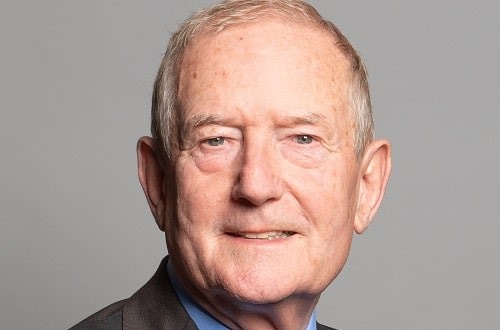 Barry Sheerman was Labour and Co-operative Member of Parliament for Huddersfield from 1979 to June 2024.
We no longer live in an era of smog like the 1950s, when people could see, smell and taste the mustard-coloured mist that enveloped them and was so intangibly harmful to health. At least this created awareness of air pollution. Present levels of air pollution are very largely invisible and therefore continue unchallenged. In that sense, air quality monitors in places of work and transport would be invaluable.
Having carried an air quality monitor myself, the ability to assess where air was clean, intermediate and downright injurious was enlightening and gave me useful concrete evidence about the atmosphere in my local environment.
These sorts of findings could be accelerated by every elected local authority or council, to build up a detailed picture and provide an annual assessment of air quality in each of the wards of that local authority. Annual air quality assessments could then collectively be reported to the Government, the Environment Agency and other relevant parties, such as medical researchers, in order to accelerate the pace of change.
There is a huge amount that remains to be done to tackle air pollution from road traffic, but there are clear steps that can be taken, and they must be made a priority.
Barry Sheerman was Labour and Co-operative Member of Parliament for Huddersfield from 1979 to June 2024.