The rulebook is becoming obsolete faster than we can rewrite it. While bureaucracies labour to update yesterday’s regulations, the world of work transforms daily.
Opinion
A new year, a new approach to risk?
By
on 02 February 2026
This isn’t a distant future or a speculative horizon; it’s the lived reality for millions of workers in the here and now, felt in the algorithms that dictate their schedules, the heatwaves that make warehouses unbearable, and the anxieties that follow them home at the end of each working day.
Today’s workplace risks do not arrive in neat categories or predictable sequences. They cascade, collide, and compound. Fragile supply chains destabilise entire industries almost overnight. Economic precarity fuels chronic stress that quietly erodes resilience. Digital systems geared at efficiencies obscure accountability and erode transparency.
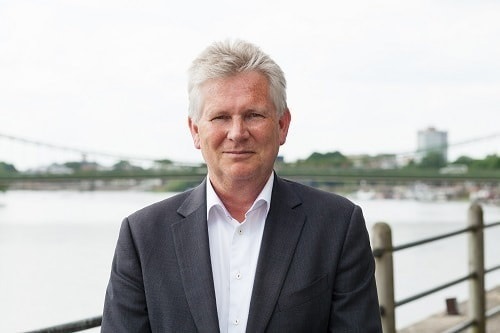 Mike Robinson: "At the start of a new year in which worker safety is anything but certain, we must commit to health and safety beyond rhetoric, beyond marketing, beyond token gestures."
Climate change brings lethal heat to the world’s most vulnerable workplaces, long before it reaches the boardroom agenda. Remote and hybrid work dissolve the boundary between professional and personal lives, turning recovery time into another contested resource. Uncertainty itself has become the hazard; it is both persistent and corrosive if left unaddressed.
Traditional safety frameworks were designed for a slower-paced world, where change took place over days or months, not seconds. They thrived in continuity, linearity, and control. First, they identify the hazard, and then they isolate it. Finally, they mitigate it through established processes and procedures. That model worked when risks were discrete and slow-moving.
But what happens when the hazard is new, evolving, or fundamentally unknown? When harm develops gradually across systems and networks, shaped by social, technological, economic, and environmental pressures, new and emerging risks rarely trigger alarms until damage has already been done. They fall through the cracks, not because people are careless, but because the cracks themselves have multiplied. It is workers, their families, and wider society who ultimately pay the price.
One of the most persistent and damaging assumptions, often in a quite literal sense, is that wellbeing, health, and safety are separate concerns; they are not. We know that exhausted workers sustain more injuries. Anxious employees make more critical errors. Chronic stress undermines attention, memory, and decision-making. Social isolation destroys the informal networks that catch problems early, before they escalate into incidents or crises. Psychological strain and physical risk reinforce each other, creating feedback loops that traditional frameworks are ill-equipped to recognise, let alone resolve.
Thriving workplaces are not built by treating safety as compliance, wellbeing as a perk, and productivity as the ultimate measure of success. They are built by recognising that human capacity is finite, that risk accumulates invisibly, and that prevention depends as much on trust, voice, and leadership as it does on controls and checklists. When workers believe they will be listened to, protected, and supported, risks surface earlier and solutions become possible sooner.
At the start of a new year in which worker safety is anything but certain, we must commit to health and safety beyond rhetoric, beyond marketing, beyond token gestures. This moment demands more than statements of good will. It demands leadership that does not waver when conditions deteriorate, when margins tighten, or when change takes an unknown direction. It demands a consistency in culture that prioritises people, even when doing so is inconvenient. It demands systems that give workers confidence that going home safely is not a hope or a reward, but a non-negotiable guarantee at every level of the organisation.
This is not only about protecting workers, though that alone justifies our collective efforts. It is about building organisations capable of adapting without breaking, communities strong enough to absorb shocks, and societies resilient enough to face what comes next. Work will continue to change. Risk will continue to evolve. The question is no longer whether we can keep up with the rulebook. It is whether we are willing to protect the people doing the work, even when the rules have yet to catch up.
Mike Robinson FCA is Chief executive of the British Safety Council