
Female workers report significantly higher rates of stress compared to their male colleagues, HSE statistics show.
News
Work more likely to impact on mental health for female workers, HSE stats suggest
By
on 02 December 2025
Women are 25 per cent more likely to say their job impacts on their mental health, according to the statistics HSE released last month as part of its annual reporting.
In the report for work related stress, depression or anxiety, it shows that in 2024/5, there were 3,220 cases of mental ill health per 100,000 female workers, compared to 2,580 per 100,000 for male workers.
From the age of 25, stress appears and continues throughout a woman’s working life, says HSE, with pressure peaking for those aged 25–34 and remaining high at 35–44 years, ages when many women are juggling family responsibilities, such as caring for children and elderly parents.
 Women are 25 per cent more likely to say their job impacts on their mental health, according to the statistics HSE released last month. Photograph: iStock
The disparity takes place against a backdrop of record levels of poor mental health across the general working population.
Indeed, levels have accelerated since the pandemic and grown to their highest levels since records began twenty-five years ago.
Last year, nearly one million, or 964,000 workers suffered from work-related stress, depression or anxiety.
This represents 2,770 cases per 100,000 workers, a doubling since annual records began in 2001/02, when there were around 1,380 cases per 100,000 workers.
Doctors and other health professionals, teachers and health and social care workers are all in the top three groups for having statistically higher rates of work-related mental ill health than the all-industry average.
The main causes are workload, particularly regarding tight deadlines, too much work or too much pressure or responsibility.
Other factors identified by HSE included a ‘lack of managerial support’, violence and bullying, organisational changes at work and role uncertainty, or not being clear about job purpose and responsibilities.
Commenting on the annual statistics for ill health and injuries that were released for Britain, HSE chief executive Sarah Albon said: “Great Britain maintains its position as one of the safest places to work globally, built on more than 50 years of health and safety regulation. However, these statistics demonstrate that workplace health challenges persist, particularly around mental health.”
“We remain firmly committed to protecting people and places, supporting businesses to create healthier working environments, and ensuring continuous improvement in workplace safety standards across Britain,” she added.
HSE's work related stress, depression or anxiety statistics in Great Britain here
NEWS

Remembering British Safety Council India colleague, Anindita Sengupta
By British Safety Council India on 17 September 2026
It was with great sadness that the staff of British Safety Council India learnt of the passing of their much-loved and respected colleague Anindita Sengupta, following a long and courageous health battle.
Government hails progress in rolling out social security for unorganised workers as e-Shram portal reaches 318.9 million registrations in five years
By Orchie Bandyopadhyay on 17 September 2026
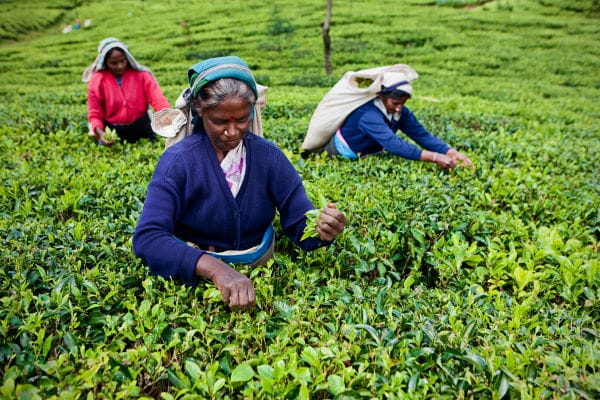
Five years after its much-heralded launch, the Indian Government has announced that its e-Shram digital portal designed to enable unorganised workers to access eligible social security benefits has hit the milestone of 318.9 million individual registrations nationwide.
British Safety Council calls on UK Government to ban silica-containing materials
By on 20 August 2026