
Almost three years after the Building Safety Regulator (BSR) began to oversee a new approach to the design, construction and management of higher-risk buildings in England, the BSR continues to improve processes to ensure more efficient and faster approval of all building work applications within scope of the higher-risk regime.
Features
Building safety in practice – learning, improving and delivering better outcomes
By
on 04 August 2026
Over the past year, we have reached an important stage in the implementation of the Building Safety Act. Our focus has shifted from establishing a new regulatory regime to making it work better in practice.
Introducing a new approach to the design, construction and management of higher-risk buildings was never going to be straightforward. It has required government, regulators and industry to establish new systems and capabilities and adapt to significantly higher expectations.
Looking back, we have learnt just as much from what hasn’t worked as smoothly as from what has. We’ve listened carefully to residents, applicants, industry and government and made practical changes where experience has shown processes could work better.
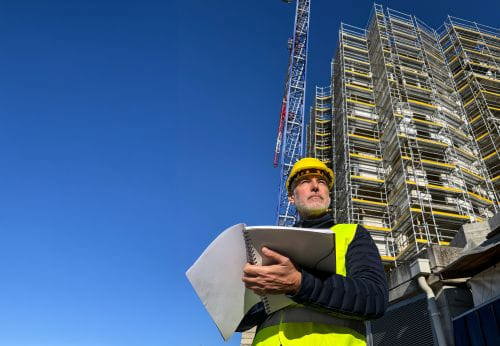
Earlier this year, the Building Safety Regulator (BSR) became a standalone arm’s length body. While our statutory responsibilities remain the same, the transition provides a stronger platform to improve our services and respond more quickly to the lessons we have learned during the first years of the regime.
There is still more to do. But the regime is now entering a more mature phase, with measurable improvements in performance, more consistent decision making and a clearer understanding across the sector of what good compliance looks like.
Progress since last summer
One of the clearest signs of progress has been the improvement we have seen at Gateway 2. This is the stage where applicants demonstrate that their designs comply with the Building Regulations before construction can begin.
During the early implementation of the regime, applications often took longer to determine than applicants, government or BSR wanted. Things weren’t working as intended and there were several reasons for this. We were creating a new regulatory service while dealing with complex live cases, and many applications simply weren’t ready for assessment. Important information was often missing, design evidence was incomplete and multidisciplinary assessment teams were developing new ways of working.
Over the past year, we’ve strengthened both our capacity and the way we operate. We’ve significantly expanded our workforce, brought more specialist expertise into our multidisciplinary teams, introduced dedicated account managers to support applicants through the process and improved the way complex applications are managed.
Alongside this, we’ve invested in improved guidance, practical toolkits and resources to help applicants understand what ‘good looks like’ before submitting applications.
We recognise that some of our own processes added unnecessary delay. Reducing that friction, while maintaining the safeguards introduced after Grenfell, has been a major focus over the past year.
We have also worked more closely with applicants and industry bodies to explain what information is required and where submissions commonly fall short.
The results are becoming clear. In the 12 weeks to 28 June 2026, BSR made 368 Gateway 2 decisions across all application categories, with 77% resulting in approval. Performance for the principal new-build and remediation categories was stronger still, with approval rates of around 85% to 90%. Higher approval rates reflect better prepared applications, clearer expectations and earlier engagement with applicants.
Determination times are also moving in the right direction. While published figures continue to reflect some older, more complex applications that have been in the system for longer, newer applications are progressing much more quickly as operational improvements take effect.
A year ago, we were seeing median determination times for new-build applications of 35 to 40 weeks. That has now reduced to 22 weeks. As we continue to improve processes, increase capacity and work with the sector to improve application quality, we fully expect determination times to drop further.
The Innovation Unit has been an important part of that progress. We created it to provide a more focused route for new-build applications, initially in London, and to test ways of improving the speed, consistency and predictability of decision-making.
The results have been encouraging. During May, it made 31 decisions, of which 28 were approvals – an approval rate of around 90%. That reflects not simply a faster process, but stronger engagement with applicants and a clearer shared understanding of what is required to secure approval.
The Innovation Unit has also helped reshape the way we assess new-build applications. By bringing multidisciplinary expertise together with a dedicated team, we’ve reduced assessment times while improving consistency and collaboration. Introducing dedicated account managers, an internal consistency panel and new tools to track outstanding issues has improved applicant communication and decision consistency.
Its success is now informing similar approaches elsewhere in BSR, including remediation.
Just as importantly, we’re taking what we have learnt and applying it more widely across the Gateway process.
Alongside improvements to Gateway performance, we’ve strengthened the way we support remediation. Our Remediation Enforcement Unit is working with accountable persons and industry to encourage timely action and help those responsible meet their legal duties. We’ve created a centralised remediation team, bringing consistency to complex cases while helping newer applications move through the system more efficiently.
This progress matters beyond the applications themselves. BSR has a central role in enabling safe homes to be built and existing buildings to be remediated. By making timely and robust decisions, we can support the delivery of new housing and the Government’s wider ambition to deliver 1.5 million homes, without compromising the standards residents are entitled to expect.
Safety and delivery are not competing objectives. Well-prepared applications, clear designs and effective quality management help projects progress more efficiently while reducing the risk of costly changes, delays or safety defects later.

Listening and adapting
Improving performance isn’t simply about processing applications more quickly. It is also about learning from experience, listening to feedback and being prepared to change where aspects of the regime are creating unnecessary difficulty or are not delivering the intended outcome. One of the clearest lessons has been the importance of helping applicants get submissions right first time.
Many of the earliest applications did not contain enough information for us to determine whether the proposed work complied with the building regulations. In some cases, documents were missing. In others, the design intent was unclear, different parts of the application were inconsistent, or important elements had yet to be fully developed.
That slows things down for everyone. It also points to a wider issue: Gateway 2 is not intended to be the point at which a project’s design is completed; but rather, the design should be sufficiently developed and coordinated for the applicant to demonstrate compliance.
So, we’ve strengthened our published guidance, expanded our frequently asked questions and introduced more practical support, including a pre-submission checklist for remediation applications.
Guidance can’t stand still. We’re continually refining it as we learn from experience and feedback from people using the regime.
Discussions with applicants, professional institutions, representative bodies and industry are helping us identify where guidance can be clearer and requirements interpreted more consistently.
Internally, we’re using technical conventions and better case management to support greater consistency between multidisciplinary teams. Applicants should expect the same regulatory standards regardless of which team assesses their project. Industry has consistently asked for greater clarity. Strengthening our technical processes is helping us provide that.
This does not mean that every case will take the same amount of time. Higher-risk building projects differ greatly in size, complexity and condition. Some require extensive technical examination, and some applications need further information before a lawful decision can be made.
Consistency means applying the same principles, evidential standards and risk-based judgement to every application – not treating fundamentally different projects as though they were identical.
We’ve also recognised that some parts of the legal and procedural framework have not worked as intended and we’ve been working with MHCLG to review these areas.
As part of this, government has consulted on changes intended to improve proportionality in the categorisation of building work, including the distinction between Category A and Category B work. It has also examined issues affecting telecommunications work and emergency repairs in higher-risk buildings. The aim is to reduce unnecessary friction and clarify how the regime applies, while maintaining the safeguards required for work that could materially affect building safety.
Our job is to give government evidence from our experience of running the regime and implement agreed changes effectively.
That is what regulatory maturity looks like: not weakening standards, but being willing to examine evidence, learn and improve.
Change in approach for managing occupied buildings
It’s not just the building control process where we’ve listened to feedback and taken action to review how the regime works in practice. We’re also changing our approach to building assessment certificates.
This is another example of adapting our approach so we can focus our regulatory effort where it has the greatest impact.
Our experience of the initial process showed that calling in buildings primarily according to height and age did not always direct regulatory attention to the buildings where it could have the greatest impact. It also created avoidable pressure for some principal accountable persons, including resident-led organisations with limited resources.
The reset introduces a more targeted and proportionate approach. Buildings will be called in for assessment where this is necessary, with greater emphasis on risk and on making effective use of regulatory capacity. We will prioritise assessments already under way, fast-track appropriate reassessments and offer more support to resident-led principal accountable persons.
The legal duties on accountable persons have not changed. They must continue to understand and manage building safety risks, maintain the required information and engage residents.
The change is about how BSR supervises and assures that work. It allows us to focus attention where it is most needed rather than assuming that every building presents the same level or type of risk. That distinction is important. Proportionate regulation is not lighter regulation. It is regulation that directs the greatest scrutiny towards the greatest risks and avoids requiring activity that adds little to the safety outcome.
Challenges remain
Although progress is substantial, we should be candid about the work still required.
We’ve grown our capacity significantly, made our processes more efficient and started to tackle the nuances of consistent regulatory decision-making that were seeing applications stall for weeks. We have more we need to do, but it’s a good start and has made a huge difference to the level of service we offer the sector.
We have also seen the sector step up and really want to work with us. The best applicants are those that actively want to talk to us and learn lessons from each application they submit. But, as for the BSR, there is more for the sector to do also. The quality of applications still varies considerably. Some are comprehensive and clearly demonstrate compliance. Others still contain gaps, contradictions or designs that have not been developed far enough to assess.
Competence also remains a central challenge.
The new regime depends on clients, designers, contractors and building control professionals having the skills, knowledge, experience and behaviours needed to fulfil their roles effectively. That includes the ability to manage complex design information, coordinate different disciplines and exercise effective oversight throughout construction. Having competent people is essential, but organisations must also create the systems, time and authority that allow them to do their jobs properly.
As more projects move from Gateway 2 into construction and ultimately Gateway 3, the focus will inevitably shift to whether the approved design has been delivered in practice.
We are fully aware that timely decisions at Gateway 3 are essential to enable buildings to be occupied and are growing our in-build teams and refining our processes to properly support this.
But we can’t deliver Gateway 3 alone – main contractors must be able to demonstrate effective control of their supply chains and subcontractors; changes must be properly considered and recorded.
Quality assurance cannot be reduced to collecting documents at the end of the project; it must be embedded throughout construction.
Culture change of this scale takes time. The sector is moving away from an approach in which responsibility could become fragmented and towards one in which duty holders are expected to understand, own and evidence their decisions.

Looking ahead
The foundations of the regime are now firmly in place. Our focus is increasingly on making it work more consistently, and more effectively, while never losing sight of why it exists: to keep people safe in their homes.
We’ve made real progress over the past year, but we know there’s more to do. As a standalone body, we’re well placed to continue strengthening the regime, building on what we have learnt and ensuring the regulatory system continues to mature.
We are encouraged by the progress across industry. Better engagement, stronger applications and more constructive dialogue show that more organisations understand what’s needed to deliver safer buildings.
Challenges remain, but continuing to work together will be essential.
We’ll continue listening, learning and refining the way we work, while supporting industry to meet its responsibilities and maintaining the high standards that residents rightly expect. That’s how we’ll continue building a stronger, more effective regulatory system – one that delivers safer buildings, greater confidence and lasting public trust.
John Palmer is operations director at the Building Safety Regulator.
For more information on the work of the BSR, see:
gov.uk/government/organisations/building-safety-regulator

FEATURES
Eliminating barriers in reporting: how conversational AI can unlock safety engagement
By on 01 January 0001
Why UK employers need to rethink recruitment, retention and support for older workers
By on 01 January 0001