
Achieving safety excellence involves creating an environment where every single employee feels a genuine sense of ownership – both for the safety of themselves and all their colleagues.
Features
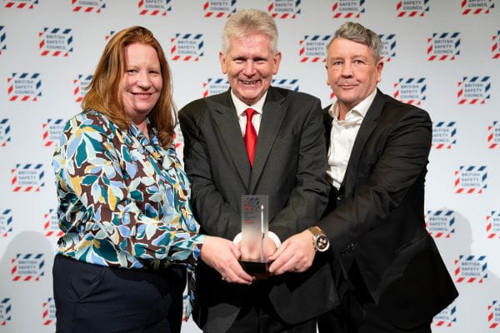
The Unipart Way: our journey to Zero Harm
By
on 08 September 2026
In the 26 years I have spent working in the OSH profession, the one fundamental truth still holds: there is nothing more important than the health and safety of our people. It is the absolute baseline of our moral responsibility as leaders.
Every single day, we have a duty to ensure that the people who walk through our doors in the morning return home in the same condition as when they arrived. Yet, if we reduce this to a series of audits, spreadsheets and tick-box exercises, we fail. We fail because safety is not a collection of tasks; it is embedded within our culture.
At Unipart, we do not view safety as something separate from the business. It is integrated into every decision we make. When I look back at our journey, I see an organisation that has evolved from seeing safety as a requirement to seeing it as a core value. This shift has not been about implementing new rules, but about developing our culture to one where Zero Harm is not just an ambition for the future, but a standard we hold ourselves to every day.

The Unipart Way: a culture of continuous improvement
When people ask how we created our culture, I simply point to The Unipart Way. It is our culture of continuous improvement, employee engagement, and a welcoming approach to change, and it is at the heart of everything we do. It is about creating an environment where every single employee feels a sense of ownership.
Driving this kind of culture change is not a quick fix. It takes time, patience, and a deep commitment to collaboration. When we talk about safety, we are not talking about top-down instruction. We are talking about shared pride. If a team member feels valued and trusts their leadership, they are naturally more protective of their working environment and the people around them.
This collaboration is vital because it allows us to look at safety through a different lens, moving beyond standard compliance to a place where our Zero Harm philosophy is shared by everyone.
We have found that by fostering this sense of ownership, the dialogue shifts. It stops being about what the safety team wants and starts being about what the workforce needs. It becomes proactive rather than reactive because people are watching out for one another, not because they have to, but because they care.
Standardisation and the Zero Harm philosophy
Operating a global organisation brings unique challenges. We work across rail, manufacturing, logistics and varied office environments, often spanning different territories. Each area has different risks, different processes and different legislative landscapes. The challenge is ensuring that we maintain consistently high standards across all these diverse operational footprints.
This is why we have developed our philosophy of Zero Harm. The goal here is to achieve total standardisation across the entire organisation for the delivery of health, safety and wellbeing. However, we have learned that for standardisation to succeed globally, it cannot be rigid. It must be adaptable and flexible. We provide the framework, but we ensure that our teams on the ground have the autonomy to apply that framework in a way that is relevant to their specific environment.
If a safety procedure cannot be applied effectively because it does not fit the reality of the daily task or support the individual, it is not a good procedure. By allowing for flexibility, we ensure that managers are supported to apply health, safety and wellbeing in a practical and usable way that is deeply rooted in the daily workflows of our people, regardless of whether they are working in a warehouse, a factory, on the railway, or from an office desk.
When we introduced Zero Harm, we had to reframe how we looked at health and safety as an organisation. Our goal was to further reduce our already low incident rates through a strategy that ensured health, wellbeing, and safety were always considered as having equal importance. We created our Zero Harm brand and changed our communication strategy to emphasise the equal importance of health and wellbeing. We reviewed our risk assessment standards to ensure they identified and supported a holistic whole person approach that ensured the management of psychosocial hazards was given equal importance to the management of physical safety.
Continuous improvement: the never-ending goal
For a business operating globally, standing still is the biggest risk. We view continuous improvement in health, safety and wellbeing as a necessity. It is not about constant change for the sake of it, but about listening, learning and applying incremental steps that support our cultural development.
Our approach to continuous improvement is built on being curious. When things go wrong, or we have a near miss, we do not seek blame. We look for insight and collaboration, encouraging our people to share their experiences and tell us where the friction is. The person doing the job is better placed than anyone else to identify why a process is not working or how it could be made safer. If we do not listen to those voices, we miss our greatest opportunity to improve. We must create a space where raising a concern is celebrated as a positive contribution.
Our Zero Harm philosophy is about embracing psychological safety. My recent experiences have led me to identify that one of the most effective tools we have supporting health and wellbeing is the daily check in. Before we start any meeting, we ask people how they are doing, not just in terms of work, but personally. It helps to open up a genuine dialogue. It signals that we care about the person, not just the output. When people feel seen and heard, they are far more likely to engage with the safety culture we are building together.
By prioritising this psychological safety, we reinforce the Zero Harm shift from focusing solely on physical risks to achieving a holistic balance between psychosocial and physical wellbeing.
Advice for achieving excellence
For other businesses looking to improve their safety culture, the path forward requires a shift in focus from the technical to the human. The most effective step you can take is to strip away the jargon and make your safety messaging straightforward, relatable and human. If people cannot understand the risk, they cannot own the solution. Avoid complex language that creates a barrier between the safety team and the workforce. Instead, focus on clear, honest communication.
Furthermore, you must empower your people. Give every employee, at every level, the authority to pause work if they see something unsafe. This is a powerful signal that their voice matters and that safety takes precedence over every other objective. It shifts the dynamic from a culture of compliance to a culture of care.
This requires visible, authentic leadership. Leaders must be willing to step onto the shop floor, spend time with the teams, and listen to the challenges they face. When leadership is visible and engaged, it sends a message that safety is not just a policy for the workforce, but a shared responsibility for everyone.
Finally, embrace the power of storytelling. Data and statistics are useful for measuring our progress, but they rarely move people to action. Real stories do. When you share examples of how a change in behaviour or a new way of working protected someone, it makes the impact of a safety incident real and memorable. Use these stories to create a lexicon for how you want to talk about health, safety, and wellbeing within your business.
By sharing personal experiences and encouraging a culture where people feel comfortable being open about their own wellbeing, you create a stronger, more resilient organisation. Remember that culture change takes time, but by consistently modelling the behaviours you want to see, you can build a culture for health, safety, and wellbeing that lasts.
Looking ahead
Health and safety is a journey, not a destination. Even when we achieve great results, we know that the work is never finished. We continue to learn and we continue to evolve.
Fundamental to everything we do at Unipart is the firm belief that all harms are avoidable. That might sound ambitious, but it is the only goal worth pursuing. Our Zero Harm philosophy is not just about incident reduction; it is a deep commitment to a “whole person” approach that balances psychosocial and physical wellbeing. By building a future where safety is proactive, predictive and profoundly human, we can ensure that every person who works for us gets home safe and well every single day.
Kirsty Summerby is health, safety and wellbeing director at Unipart.
For more information on 'The Unipart Way', see:
unipart.com/health-safety-and-wellbeing-policy-statement/
FEATURES
Eliminating barriers in reporting: how conversational AI can unlock safety engagement
By on 01 January 0001
Why UK employers need to rethink recruitment, retention and support for older workers
By on 01 January 0001