“Take your whole self to work.” It’s a phrase you hear a lot these days. And an appealing one."
Opinion
Can you take your whole self to work?
By
on 07 February 2022
The idea that you can be more rounded, more authentic, effectually more ‘you’ at work is attractive. Right?
Of course, we probably all have traits that don’t suit workplaces. Not everyone enjoys sarcasm as much as I do. One can be too frank. Polite fictions help offices run smoothly. While certain Cornish sayings, my own heritage, would be ripe for misunderstanding. Seriously, older residents from home use ‘my lover’ as a term of endearment. We all know what it means. Others, not so much!
Still, even if you can’t take your whole self, surely you can take a little bit more?
A recent Twitter thread set me wondering. How much is possible, really? The thread concerned a public appointment, someone landing a role in the spotlight, leading a regulatory body.
What captured my attention was the wit who’d found out the appointee’s passion for poetry. If this job is given to a poet, I’ll draw my last breath, they quipped, or something like that. I love wit. And I don’t mind people ridiculing things I hold dear because it makes me think. As this tweet did.
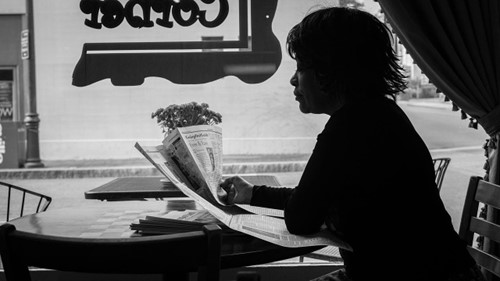 From 1993 to 1995, Rita Dove served as Poet Laureate of the United States of America. Photograph: Wikimedia / Eduardo Montes-Bradley
What does it mean to make fun of professionals’ poetic interests, I wondered? Because for many years, I kept my own love of poetry firmly outside work. Who would respect a manager that writes poetry in their spare time?
How much harder would it have been as a female chief executive (when we were still rare) if I admitted to writing verse. Even for me poetry conjures up inappropriately bucolic images of skipping among the fields and flowers.
So, it was unthinkable then. But is it thinkable now?
Shelley pronounced poets the unacknowledged legislators of the world. So, he saw no gulf between poetry and leadership. Neither do I. Want advice on grappling with difficult decisions? Try W H Auden. Want to hone your understanding of human joys and fragilities? Read Cavafy. Want to deepen your awareness of modern voices or struggles? Open a volume by Rita Dove or Kevin Powers or Daljit Nagra.
The list of teachers is long. From Rumi, philosophy. From Hopkins, ecology. From Wendy Cope, how to laugh.
Or from Tranströmer, sometimes the need to just stop and breathe.
All human life is there. And yet, poetry – loving it, writing it, learning from it – is something I’ve left at home. Now, I watch mounting claims that ‘you’ can be ‘you’ wherever you are. And alongside that an army of online critics (or so it seems) implying you can’t. How do we reconcile this?
As usual poetry answers. Auden said, look if you like, but you still have to leap. Because: “Our dream of safety has to disappear.”
And there it is, the idea that you can split yourself into two – keep work and home self apart – may make us feel safe, but it’s probably no more than a dream. A comforting fiction.
So, my advice, for what it’s worth, after so many years of not doing this, is: by all means take a good look at the downside of being yourself.
Then jump.
Being Well Together programme:
www.beingwelltogether.org
Samantha Peters is Chair of the BSC Being Well Together Committee