
Retailers have welcomed a UK government decision to make assaulting a shop worker a standalone criminal offence in England and Wales, but civil liberties groups have criticised plans to ramp up the use of facial recognition technology in town centres to help catch shoplifters.
News
Assault of retail workers to become a standalone crime in UK shoplifting crackdown
By
on 10 April 2024
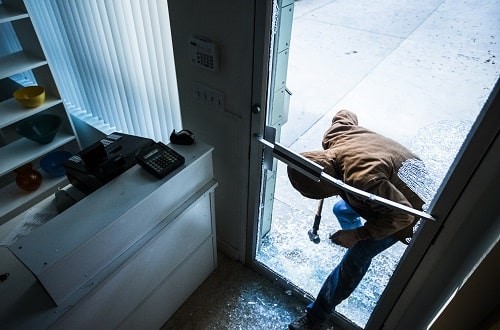
The UK Home Office announced the measures on 10 April as part of a plan to crack down on retail crime, which has been soaring in recent months. The British Retail Consortium (BRC) said in February that incidents of violence and abuse against shop workers had increased by 50 per cent to 1,300 a day in the year to September 2023, compared with the previous year.
 Photograph: iStock/stevecoleimages
The trade group has been campaigning for five years for the government to introduce a standalone offence in England and Wales to cover assaults, threatening behaviour and abuse against retail workers, as is already the case in Scotland. Responding in October to a petition calling for the measure to be introduced, however, the government had said that it did “not think more legislative change is required or will be most effective”.
It now says it will amend the Criminal Justice Bill to make assaulting a retail worker a standalone offence, resulting in a prison sentence of up to six months, an unlimited fine and a ban on returning to the premises in which the crime was committed. In the most serious cases of assault, such as causing grievous bodily harm with intent, perpetrators could face a life sentence.
BRC chief executive Helen Dickinson has welcomed the move: “After relentless campaigning for a specific offence for assaulting retail workers, the voices of the three million people working in retail are finally being heard,” she said. “The impact of retail violence has steadily worsened, with people facing racial abuse, sexual harassment, threatening behaviour, physical assault and threats with weapons, often linked to organised crime. Victims are ordinary, hardworking people – teenagers taking on their first job, carers looking for part-time work, parents working around childcare.”
British Safety Council has also welcomed the move, and has re-emphasised why worker safety must form a cornerstone of government policy.
“The government’s decision to make assaulting a shop worker a standalone criminal offence in England and Wales reflects the rising risks faced by retail workers,” said British Safety Council chief executive Mike Robinson. “To date, the retail sector has largely shouldered the weight of protecting staff against intimidation and violence, through enhanced de-escalation training, self-defence training and the introduction of body-worn cameras.
"Providing law enforcement agencies, and our courts and tribunals service, with the powers that they need to combat and prosecute violent offenders should serve as an effective deterrent to would-be offenders.”
Robinson added that a standalone offence “reflects the severity of the recent rising trends in anti-social behaviour, intimidation and physical violence faced by those in customer-facing retail roles, and reminds wider society why worker safety must form a cornerstone of government policy, our society and our economy”.
The government also announced that its retail crime crackdown would include a £55.5 million investment over the next four years in ramping up the use of facial recognition technology, to identify people wanted by the police for shoplifting and other crimes. This will include a £4 million investment in mobile units with live facial recognition technology, which will be deployed in high streets and crowded town centres across the country.
Civil liberties groups have warned against the widespread use of such technology, however, citing privacy concerns. Emmanuelle Andrews, policy and campaigns manager at Liberty, said late last year when the plans were mooted: “The expansion of facial recognition technology in supermarkets is a threat to our rights, targets people affected by poverty, and fails to address the root causes of shoplifting.
“Surveillance tech like facial recognition monitors all of us as we go about our daily lives – and has, in particular, been used to discriminate against minority groups, and particularly people of colour. It has no place on our streets or in our shops.”

NEWS
British Safety Council calls on UK Government to ban silica-containing materials
By on 20 August 2026

Network of welfare hubs for Hyderabad gig workers planned by entrepreneur
By Orchie Bandyopadhyay on 14 August 2026
A well-known Indian entrepreneur-turned-investor is set to launch the first of what he hopes will become a chain of subscription-based community welfare hubs providing rest and related facilities for the nation’s ever-growing gig workforce.
Mates in Mind launches free suicide prevention training for construction workers
By on 13 August 2026