
In a bid to expand the country’s social security safety net, the Modi government is working on a proposed social security scheme for gig and platform workers, Ministry of Labour and Employment secretary Chandra Bhushan Kumar revealed in a speech to the Confederation of Indian Industry (CII) in September.
News
Indian government developing social security scheme for gig and platform workers, says labour secretary
By
on 21 October 2026
According to news website Moneycontrol, Kumar told the CII’s National Conference on Industrial Relations and Labour and Awards 2026: “We [civil servants] have been directed to form a scheme for gig and platform workers on the lines of the ESI [Employees’ State Insurance] Scheme. The [Labour] Ministry is working on it, and we are constantly in touch with stakeholders to formulate this scheme.”
The existing ESI Scheme is a statutory social security and health insurance programme managed by the Employees’ State Insurance Corporation (ESIC), which in turn is overseen by the Labour Ministry.
Established in 1952 using powers set out in the Employees’ State Insurance Act, 1948, the scheme provides a number of basic medical and financial benefits for those workers enrolled in the system. These include free, basic medical care for the insured worker and their dependents, sickness benefits during periods of specific certified illness, and paid maternity leave for new mothers. Scheme members are also entitled to financial compensation up to a specified limit in the event of disablement and death due to employment-related injuries.
Under the ESI Act 1948, the scheme applies to all factories and other establishments employing 10 or more workers, although in some states, the compliance threshold is 20 or more employees.
In 2001, the scheme was extended to cover shops, hotels, restaurants, educational institutions, cinemas and private medical institutions meeting the minimum staffing threshold.
The scheme has grown significantly since its introduction, from an initial batch of 25,000 insured people to nearly 40 million insured workers and their families, covering a total of 150 million beneficiaries. It provides free outpatient, hospitalisation, specialist and diagnostic care through 169 hospitals, 1,609 pharmacies, 19 medical educational institutions, 612 branch offices and 117 dispensary/branch offices. Insured employees and their dependent family members, including spouses, children and dependent parents, are eligible for these services from the first day of employment.
The Labour Secretary said the new Code on Social Security 2020 recognised gig and platform workers for the first time and empowered the Union Government to formulate a scheme to provide them with social security benefits.
“In India, close to 88-90 per cent of the workforce is in the informal sector, and invariably our discourses were targeted at the 10-12 per cent workforce (in the formal sector),” Kumar said, according to the Moneycontrol report. He added that the “discourse” was now changing to focus on how best to provide adequate social security schemes and benefits for the informal sector.
Gaps in social protection
The proposed scheme was revealed against the backdrop of gaps in social protection for gig workers. A 2024 report by Fairwork, a global programme that evaluates the working conditions offered by digital labour platforms, stated that “workers in different categories are prioritised differently for grievance redressal, loss of pay, and insurance schemes”. Similarly, to date, generally only people employed under standard, formal employment contracts in the organised sector have been eligible to join most government social security schemes, leaving gig and platforms workers with limited access to social security benefits.
For instance, the PM Jan Arogya Yojana (‘PM-JAY’) scheme, a health insurance scheme for people on low incomes that covers the cost of medical and hospital treatment up to Rs 5 lakh per year for each eligible family, can help if a gig worker is admitted to hospital, but does not provide broader forms of social security and healthcare protection.
High exposure to occupational safety risks
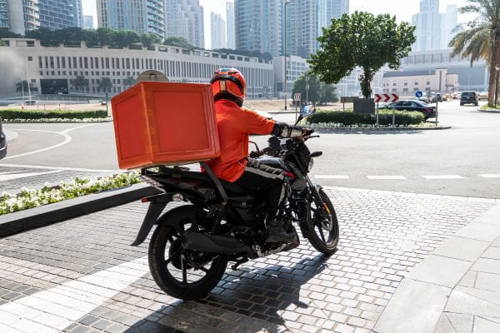
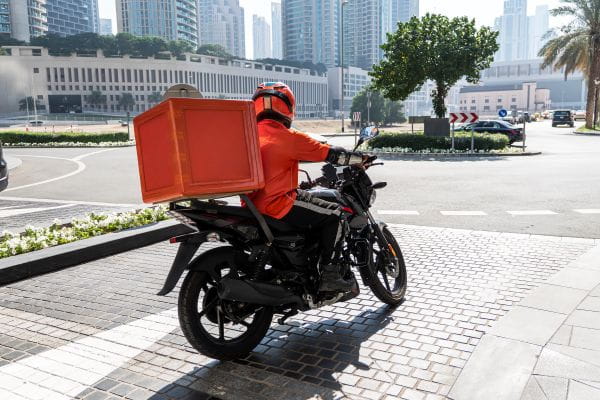
Meanwhile, a new nationwide survey has revealed that platform workers in India face high exposure to occupational safety risks but have limited access to welfare facilities, health and accident insurance and safety training.
The report, Occupational Safety and Health of Gig Workers in India: Report on a Nationwide Survey, surveyed 1,000 workers across 10 Indian cities. The research was conducted by labour rights organisation Janpahal and gig workers’ body the Gig Workers Association (GigWA).
The report found that a large proportion of platform workers work long hours, with over 57% of those surveyed working more than 49 hours per week, and almost 23% exceeding 70 hours. Exposure to extreme heat was highlighted as one of the main occupational safety risks, with 96.57% of the 778 workers who reported working in extreme weather stating that heat affected their ability to work. In addition, 75.5% of those who reported working in extreme weather said they experienced a moderate-to-severe impact on their productivity and safety, such as exhaustion or dehydration, according to a news report by Business Standard.
However, although the research revealed high exposure to occupational safety risks, workers reported poor access to welfare facilities, insurance and training.
74.6% reported a complete absence of rest areas, 43.9% relied on paying to use public toilets, and 53.8% reported paying for their own drinking water. In addition, 62.2% lacked health insurance, 44.2% lacked accident insurance, and 80% of those who had tried to file an accident insurance claim found the process difficult.
Immediate reforms
The report called for immediate legal, policy and related reforms to improve the working conditions and health and safety of platform workers. In particular, the researchers recommend that occupational safety and health legal protections are extended to cover platform workers, so that platforms themselves are made responsible for identifying and mitigating risks associated with the work, reported Business Standard.
The researchers also called for standardised and accessible insurance products to be made available to platform workers to cover medical and other costs in the event of accidents and illness, and a simplified process for making insurance claims in the events of problems like road accidents and illness that prevent people from working.
The report also calls for heat to be recognised as an occupational hazard for platform workers, recommending that platforms provide heat mitigation measures such as paid cooling breaks and the suspension of penalties if workers are forced to stop or reduce work because of extreme heat, reported Business Standard. The researchers also called on local authorities in urban areas to ensure platform workers have access to basic welfare amenities, such as drinking water, toilets and shaded or designated rest areas.

NEWS
Indian government developing social security scheme for gig and platform workers, says labour secretary
By Orchie Bandyopadhyay on 21 October 2026
In a bid to expand the country’s social security safety net, the Modi government is working on a proposed social security scheme for gig and platform workers, Ministry of Labour and Employment secretary Chandra Bhushan Kumar revealed in a speech to the Confederation of Indian Industry (CII) in September.