
India continues to embrace remote and hybrid working, with large numbers of staff either working from home full time or following a mix of remote and office attendance. However, remote working can create feelings of isolation and loneliness, in turn affecting performance and mental wellbeing, so it’s essential employers have excellent communication and support procedures in place to prevent these problems arising.
Features
Remote and hybrid working: how can employers best provide support?
By
on 21 October 2026
For employers of people doing desk-based work, and the employees themselves, a question often being asked now is not simply whether people should work from home or return to the office: it is how different working models affect health, wellbeing, productivity and the boundaries between work and personal life.
After years of working from home, Tanisha Roy’s boss recently told her that he wants her to come into the office more frequently. This has made the graphic designer anxious, as she has a long commute and needs to be able to pick up her seven-year-old son from school. She explained her concerns to her manager, but he replied with points he has repeatedly made to the team: being near each other improves the quality and effectiveness of our work, and collaboration and innovation often flow better in the clamour of the office.
In today’s world of work, employees like Roy highly value having a degree of flexibility about how and where they do their work. Roy, like many other Indian professionals, firmly believes that organisations that win staff loyalty aren’t necessarily the ones offering the fattest pay cheques, but those offering thoughtful leave policies, flexible hours and growth paths that don’t compromise employee health, safety and wellbeing.
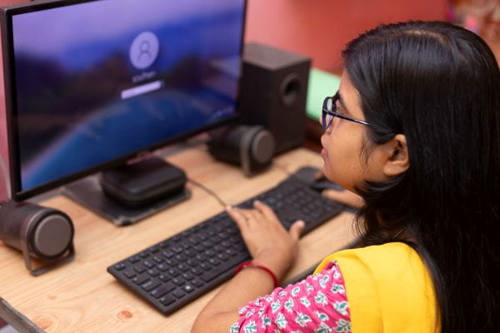
“The nine-hour workday has long been sacrosanct, but it simply doesn’t match how people like me function,” explains Roy. “My energy spikes and dips through the day. So, within a remote working environment, ‘microshifting’ allows me to break my standard workday into shorter, non-linear blocks, fitting work around personal energy or errands, or maybe fitting work around life rather than making life ‘fit the shift’.”
An ardent believer in the benefits of remote and flexible working, Roy says microshifting allows remote workers to accommodate most personal duties and demands in their lives, while still getting the work done. “Some days I just head to my favourite café and work from there for a few hours, while sipping on my favourite brew,” she says.
Roy adds that working remotely, and being granted the flexibility to carry out her work at the times that best suit her circumstances, mean she is also able to take frequent breaks between work tasks. She uses these times for tasks such as picking up groceries or her son from school, or simply chatting with friends. “This has made a world of difference to the way I approach work-life balance now,” she adds.
One factor that makes working from home especially attractive to Roy is that it means she avoids a lengthy daily commute. “But now I have to mentally prepare myself for that commute [by returning to the office on some days], at least once or twice a week,” she says.
A Delhi-based psychologist says: “Workers may feel anxious about returning [to the office] after years of working remotely. Gradual transitions can be more effective than abrupt changes, perhaps starting with one day a week before building up.”
Pranjal Kumar, co-founder of CandidShutters Media & Store, a visual storytelling company, says the huge growth in remote and flexible working kickstarted by the pandemic has shattered the long-held traditional business mindset that visibility equals productivity. “For decades, traditional office culture measured dedication by how early you arrived and how late you sat at a desk,” he argues. “Today, many professionals realise that saving hours on a brutal daily commute gives them the energy to actually perform better.”
Kumar adds: “This isn’t about slacking off; it’s about efficiency. When a company offers flexibility, the focus shifts from tracking attendance to measuring actual output. Of course, a physical workspace is still unmatched for hands-on collaboration, creative brainstorming and building real team bonds.
"But forcing a rigid [office attendance] mandate just for the sake of control is fading out. The businesses thriving right now are the ones finding a balance that respects both business needs and human sanity.”
Ankit Aggarwal, founder and CEO of Unstop, a community engagement and recruitment platform for Gen Z professionals, shares the same view. He believes that microshifting breaks the workday into smaller blocks of focused activity rather than one continuous stretch, in turn boosting work-life balance, flexibility, productivity, efficiency and overall wellbeing.
“As organisations move towards outcome-based evaluation and asynchronous collaboration, microshifting represents more than just a flexibility trend; it is a structural upgrade to how productivity is understood,” he points out.
However, some remote workers argue that home working can have a negative impact on productivity and wellbeing. For example, writing on Instagram, homeworker Divij said that the extra time gained from avoiding commuting and having greater flexibility over working hours sometimes make him less productive.
“Work from home sounded amazing until I actually started doing it,” he said. “It’s great that I have so much time, so much freedom. I’m pretty committed to it, and I love it when I’m actually doing work. But the second I don’t have any work, I tend to watch YouTube, Prime, Netflix, or just waste my time. And that part feels a little unproductive and not right that I’m wasting time.”
Divij also shared another negative aspect of homeworking that he feels often goes unmentioned.
“And another thing is that nobody really talks about is how lonely it can get. Like no one to randomly talk to or some random conversations or a little chai break with someone, a little bit of laughing. And then I realise that work from home does offer a lot of freedom, but it comes with a fair share of cons with it.”
There has long been concern that people who are deprived of social contact through work – for example, when working at home without regular contact with others – can feel isolated or disconnected, which may bring on pressure and stress. A study into the extent of feelings of loneliness among remote, hybrid and on-site workers in India found high rates in general among those surveyed, although the researchers concluded that location did not impact the extent or severity of loneliness. The study also highlighted the complexity of the problem of loneliness among workers, concluding that employees may experience loneliness regardless of the type of location they work from.
Remote and hybrid working
Research on remote and hybrid work models reveals both benefits and challenges. For instance, research has shown that hybrid work can increase productivity, improve work-life balance and reduce staff attrition rates.
Hybrid working also blends some of the benefits of both home- and office-based work – for example, by reducing commuting time while retaining opportunities for face-to-face interaction.
However, hybrid working also poses challenges around communication, inclusion and psychological safety, which is loosely defined as a workplace environment where people feel confident speaking up, asking questions, admitting mistakes, and sharing ideas without fear of negative consequences.
“Hybrid and remote work have made psychological safety even more important,” wrote Nitin Nahata, group chief human resources officer at online gaming company Gameskraft, in an article for People Matters.
“Without physical cues and informal conversations, misunderstandings can escalate quickly. Silence becomes easier. Employees may hesitate to speak up in virtual environments where hierarchy can feel amplified.”
Nahata added: “Organisations now need to be more intentional through structured feedback loops, inclusive meeting norms, and visible access to leadership. Without these, disengagement can grow quietly.”
Commentators add that the benefits of hybrid working therefore depend not simply on where employees work, but on how organisations manage challenges such as communication, workload and employee wellbeing.
As of 2024, research suggests 12.7% of full-time employees in India work from home, while 28.2% work a hybrid model. Other research has shown that 98% of workers want to work remotely at least some of the time.
Commentators argue that hybrid and flexible working can boost employee loyalty and reduce staff turnover. For instance, a 2024 randomised controlled trial found that hybrid working arrangements reduced staff turnover by 33%. The researchers found that female staff – who often have childcare and other domestic-related responsibilities – non-managers and employees with long commutes, particularly valued the flexibility of hybrid work.
However, research that sought to measure and track individual productivity found that fully remote work was associated with a 10% drop in productivity. Hybrid working, however, appeared to “have no impact on productivity”, found the researchers.
The evidence therefore suggests that there is no single model of remote, home or hybrid employment that is most suitable for everyone. More importantly, each model presents its own health, safety and wellbeing considerations.
Remote work and the law
The arguments about whether remote and hybrid working bring benefits such as increased productivity and improved work-life balance also highlight the wider, ongoing public debate about whether India’s legislation sets any rules about the right of employees to work remotely, or request remote working.
In May, when Prime Minister Narendra Modi appealed to citizens to work from home to counter the rising cost of importing oil and gas for purposes such as road transport, employees across the country were left wondering whether India’s labour laws contain any clauses formally requiring employers to consider or grant employee requests for home or remote working in general or specific circumstances.
However, according to labour law experts, there is currently no statutory right to work from home under current Indian labour laws, and instead workplace attendance, homeworking and flexible working rules continue to depend largely on employment contracts, company HR policies, internal protocols, state labour laws and government notifications. “Unless remote work is part of the employment contract, company policy, collective agreement or mandated through a government notification, employers retain discretion over attendance requirements,” said one labour law expert.
A labour law expert at Kapgrow, a legal advisory firm, said: “The evolving remote work laws in India mainly focus on balancing flexibility with employee protection.
“Employees assume remote work automatically means flexible timing without restrictions. Not exactly.”
The expert at Kapgrow explained that under India’s new Labour Codes, employers still need to maintain reasonable working hours and comply with limits on overtime when applicable. “Just because someone works from their living room doesn’t mean labour protections disappear,” he added. “In practice though, this gets tricky. Many [remote] employees now work beyond standard office timings without realising it because home and office boundaries blur together. Companies are gradually creating clearer digital attendance and work-hour tracking systems to manage this issue better.”
The expert added that employers need to retain oversight of workers’ health, safety and wellbeing during remote working, as well as managing other business-critical issues such as adequate data protection arrangements: “Businesses are increasingly expected to consider employee wellbeing, data protection standards, cybersecurity protocols, safe working conditions and clear communication policies,” he stated.
“For example, if employees regularly use personal devices for company work, businesses may need stronger internal IT and privacy policies than before.”
Although research shows homeworking can improve work-life balance and make it easier to manage personal responsibilities, such as care commitments, India’s workforce is also reportedly experiencing high levels of digital overwork. Long working hours, constant connectivity and the expectation of being “always available” have blurred the boundary between professional and personal life, say employment relations commentators. Many employees are routinely expected to respond to emails, messages and calls outside their designated working hours, making it difficult to disconnect from work even during personal time, weekends or holidays.
According to experts at the Indian Institute of Technology (IIT), Madras and the Indian Institute of Management (IIM), Amritsar, the Covid-19 pandemic forced many organisations to allow their employees to work from home for the first time, as the government issued stay-at-home mandates.
For many organisations, this has led to welcome savings – for instance, from lower maintenance costs as offices remain closed or have been sold off. Since the pandemic, significant numbers of businesses have continued to allow – or instruct – staff to work remotely or on a hybrid basis, driven by a mixture of employee preference for homeworking and the financial savings from running smaller office space. However, commentators say that many employees have struggled with the move to remote working, particularly during the pandemic itself.
“The boundary between work and home was blurred, work affected family life negatively and vice versa, which is known as ‘work-family conflict’,” Rupashree Baral, from the Department of Management Studies at IIT Madras, told PTI (Press Trust of India). “Employees find the situation ‘unbearable’. They also feel like a failing parent and a failing professional. The persistent traditional gender ideology in a country like India increased the stress during peak pandemic, especially for women since they were expected to take care of the household, children and their profession all at once and in one place.”
Right to disconnect
Against this backdrop, the Right to Disconnect Bill, 2025, has drawn national attention. Introduced in the Lok Sabha, the bill proposes giving employees a statutory right to ignore work-related calls, emails and messages outside their agreed working hours. By seeking to regulate after-hours digital communication – and mandating employer compliance through an Employees’ Welfare Authority – the bill attempts to address a structural problem created by today’s digital work culture.
Introducing the bill, MP Supriya Sule emphasised that the aim is to enhance workplace wellbeing, reduce burnout and promote a healthier work-life balance.
Office working
Concerns about how effectively employers are managing risks to the health, safety and wellbeing of desk-based workers are not limited to the challenge of supporting the health, wellbeing and productivity of remote and hybrid workers. Where an employers has office-based workers, they remain responsible for providing a safe and healthy physical working environment, including managing risks around ergonomics, indoor air quality, fire safety and welfare facilities.
Mental health is also becoming a more prominent workplace concern. According to a new report by digital employee health benefits platform ekincare, the provision of counselling sessions for staff across large Indian corporations has grown 44% since 2023.
Employees aged 20-25 recorded 203% growth in the take-up of counselling over a two year-period starting in 2023, compared with 18% among those aged 31-35. The use of counselling surged 408% in banking, financial services and insurance, and 122% in healthcare and pharmaceuticals, according to the report.
For years, employers’ efforts around employee wellness often simply meant offering gym memberships, yoga classes, walking contests, and fruit in the staff cafeteria. Although commentators say these offerings are useful, clearly employees experiencing stress need appropriate management and possibly medical support, and a parent like Roy trying to balance work meetings and school pickups may need support in the form of flexible hours.
“The workplace is increasingly becoming an important gateway through which one can access mental healthcare,” stated a psychologist. “For employers, the challenge is not simply deciding where people should work, but creating working arrangements that protect productivity, health and wellbeing.”

FEATURES

AI at work: why employee monitoring may be creating new pressures
By Orchie Bandyopadhyay on 21 October 2026
India’s information technology companies are rapidly expanding their use of AI in a bid to drive business efficiency and boost innovation. However, commentators warn that the growing use of AI to monitor employees’ work outputs and activities poses a risk to workforce mental health and wellbeing.
Remote and hybrid working: how can employers best provide support?
By Orchie Bandyopadhyay on 21 October 2026
India continues to embrace remote and hybrid working, with large numbers of staff either working from home full time or following a mix of remote and office attendance. However, remote working can create feelings of isolation and loneliness, in turn affecting performance and mental wellbeing, so it’s essential employers have excellent communication and support procedures in place to prevent these problems arising.