
As the world’s second-largest supplier of seafarers, India makes an indispensable contribution to international shipping, trade and global supply chains. However, concerns are rising about seafarers being stranded in foreign ports when shipowners fail to pay wages or arrange for them to be repatriated, and about the dangers of commercial vessels crewed by Indian sailors entering military conflict zones.
Features
Who protects Indian seafarers in troubled waters?
By
on 19 November 2026
People often romanticise the life of a commercial shipping crew member for the opportunities for international travel, the sight of beautiful sunsets and the chance to earn a high salary. However, the everyday life of a worker on a huge container ship or an oil or gas tanker has a dark side, involving long voyages, demanding work, potential dangers, and the risk of ‘seafarer abandonment’, where a crew is left stranded on a vessel or in a port by the ship’s owner. The challenging working conditions and dangers are something the global maritime industry can no longer afford to ignore, argue commentators.
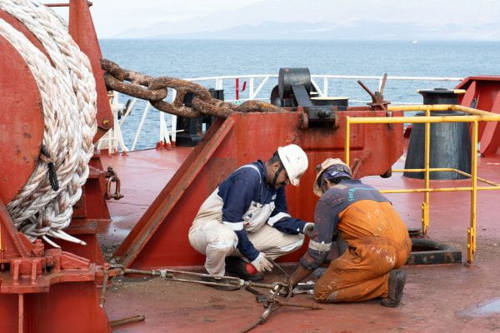
According to the UN Trade and Development (UNCTAD), the world’s commercial shipping fleet in 2025 comprised around 112,500 vessels, with a combined carrying capacity of approximately 2.44 billion tonnes.
“There are around 1.9 million seafarers, and together, they help enable the movement of more than 80% of global trade. But ships don’t move global trade – seafarers do!,” said one commentator on LinkedIn.
He added: “They work 24 hours a day, seven days a week, often thousands of miles from home and away from their families for months at a time. Yet, for most of the world, they remain almost completely invisible.”
India is now the world’s second-largest supplier of seafarers, contributing 311,936 maritime professionals to the global shipping industry, according to the BIMCO-ICS Seafarer Workforce Report 2026. The report estimates that India now accounts for 12.16% of the global seafaring workforce, ranking behind only the Philippines and ahead of China, the Russian Federation and Indonesia. India’s share of the maritime workforce has climbed sharply, from 5.2% in 2015 to 6% in 2021, and then more than doubling to 12.16% in 2026.
The BIMCO-ICS report also estimates that the global merchant fleet, which currently employs 2.57 million seafarers, could require an additional 113,735 officers by 2030. To address the projected shortage, the Indian government has set a target of raising India’s share of the global seafaring workforce to 20% under Mission 20% by 2030. In short, Mission 20% aims to make one in every five global seafarers an Indian national.
Global maritime manpower hub
The growth in the number of Indian seafarers follows a concerted drive by the Modi government to make India a global maritime manpower hub. Commenting on the BIMCO-ICS report, Union Minister of Ports, Shipping & Waterways (MoPSW), Sarbananda Sonowal said: “India’s rise from the fifth-largest supplier of seafarers in 2015 with just 5.2% of the global workforce to the world’s second-largest maritime manpower nation with a 12.16% share in 2026 is a story of vision, resolve and transformative leadership.
“This remarkable turnaround has been made possible under the dynamic leadership of Hon’ble Prime Minister Shri Narendra Modi, whose unwavering commitment over the past twelve years has fundamentally reshaped India’s maritime ecosystem. From investing in world-class maritime education and modern training infrastructure to digitising seafarer services, reforming maritime laws and creating globally benchmarked standards, his government has empowered thousands of young Indians to compete and excel on the world stage.
“Today’s achievement is not merely a statistical milestone, it is a reflection of New India’s growing global credibility, the confidence that international shipping companies place in Indian talent, and our collective resolve to establish India as a leading maritime nation.”
However, as India seeks to greatly expand its share of the global maritime workforce, an important question arises: who protects civilian seafarers when the waters in which they work become a battlefield?
Killed at sea
As many as 16 Indian seafarers have been killed in attacks on merchant ships in the Persian Gulf and Black Sea regions since the West Asia conflict began, the highest casualty rate of any nationality. Four remain missing, and 33 have been injured since 28 February. All but one of the dead were working on foreign-flagged vessels.
Speaking on the sidelines of British Safety Council India’s Achieving Continual Improvement through Safety Excellence 2026 conference in New Delhi, retired Rear Admiral JS Mann, NM, VSM, a shipbuilding expert at Boston Consulting Group, said: “While India has not banned its seafarers from sailing into the conflict zone, the Directorate General of Maritime Administration has asked them to assess the security situation before taking up jobs in conflict zones.”
He added: “Indian seafarers can make an informed decision and refuse to sail through high-risk maritime areas. However, many are willing to take the risk because the financial rewards outweigh the perceived risks of injury or death. When the pay is way higher than normal wages, they take the risk.”
Retired Rear Admiral Mann added that the primary protective mechanisms for Indian seafarers sailing through conflict zones and high-risk maritime regions include the Maritime Labour Convention 2006 (MLC 2006), International Convention for the Safety of Life at Sea (SOLAS), India’s Merchant Shipping Act 1958, and India’s Merchant Shipping (Safety and Environmental Protection) Rules 2020.
Manoj Yadav, general secretary of the Forward Seamen’s Union of India (FSUI), said that the union has raised concerns about seafarer safety with Prime Minister Narendra Modi, the International Maritime Organisation (IMO), the United Nations, the International Labour Organization (ILO) and India’s Ministry of External Affairs since the West Asia conflict began. “We have also called for a high-powered crisis management team comprising the Indian Navy, intelligence agencies, the Ministry of External Affairs and other bodies associated with shipping,” he said.
The urgency of these concerns was reflected in a recent post on X by FSUI India, highlighting safety concerns about a Marshall Islands-flagged vessel, the AM Pioneer, and its 16 Indian crew members.
The post alleged that the shipowners and managers were pressuring the master to take the vessel through the high-risk Strait of Hormuz, despite the crew’s refusal.
“…The crew has clearly refused,” the post on X read. “They will not put their lives in danger. They will not sail under dark conditions with communications switched off. No seafarer should risk death for owners’ profits or convenience. Immediate repatriation with full wages and dues is non-negotiable. All reporting protocols followed. @dgshipping_IN – time to act.”
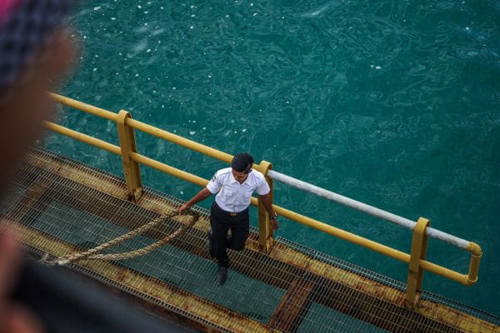
Attacks on commercial shipping
Addressing the 81st UN General Assembly in New York, India’s External Affairs Minister S Jaishankar highlighted the number of attacks on commercial shipping and seafarers across the Gulf, Red Sea and Black Sea since the West Asia crisis began.
He said Indian seafarers, along with others from other nations, had lost their lives and called such attacks “completely unacceptable”.
Jaishankar said India has joined Liberia and 23 other countries in an initiative, known as Group of Friends on the Safety and Security of Shipping and Seafarers or GoF on S4, to build global support against the targeting of commercial shipping.
However, while the risk of coming under attack from missiles and drones while sailing through troubled regions is clearly the most obvious danger for commercial ships and their crews – seafarers, including Indian crew members – also face additional risks, such as ‘seafearer abandonment’. This happens when a shipowner breaks their legal and financial duties by leaving a crew stranded on a vessel or in a port without basic supplies, medical care, or a way home, often accompanied by months of unpaid wages. Seafarers who have been abandoned by the ship’s owner often face prolonged uncertainty over repatriation, with no clear indication of which authority will intervene to help them.
Under international maritime rules – specifically the Maritime Labour Convention (MLC, 2006) – a ship is officially considered abandoned when the shipowner fails to cover the cost of the seafarer's repatriation; leaves the crew without necessary maintenance and support (such as adequate food, drinking water, fuel, and medical care), and/or unilaterally severs ties with the vessel or fails to pay contractual wages for at least two months. Abandonment is therefore considered to have occurred when the master of the ship has been left without any financial means in respect of ship operation, says the IMO.
According to the International Transport Workers’ Federation (ITF), Indian seafarers were the worst-affected national group in 2025, with 1,125 seafarers abandoned by the end of 2025.
Blacklisting vessels
In a bid to protect Indian seafarers, and crew members of other nationalities who find themselves abandoned on ships docked at or near Indian ports, the Indian Government announced plans to take ‘blacklisting’ measures against vessels with a record of repeat abandonments and other bad practices.
However, there is no international treaty to regulate vessels that have been blacklisted for abandoning crews in this way. Some of the ships are registered in tiny island nations that issue registrations to vessels but have not established regulatory mechanisms to oversee the operation of the ships. And when a ship owner ceases ‘paying for its flag’ – meaning it is no longer paying the required registration fees to the nation where it is registered – the ‘flag state’ withdraws the registry, washing its hands of abandoned ships and seafarers in distress.
When an Indian seafarer is recruited in – for example – Kochi, hired by a firm based in Singapore, placed on a ship flying the Liberian flag, carrying Iraqi oil, attacked off the coast of Oman and detained in another country, his family is left feeling helpless as there is no single authority fully responsible for resolving the situation.
For the families seeking to repatriate a crew member and ensure their wages are paid, they face a confusing and challenging situation: should they approach the flag state; the country in which the ship is registered; the port state, where the ship is docked or anchored; the shipowner, the company or individual that owns the vessel; or the ship’s insurer, which may be required to provide financial security for certain claims, such as abandonment of the crew and failure to pay seafarer salaries?
One Indian seafarer who was abandoned alongside three other Indian crew members spoke to the ITF about his ongoing ordeal. He and his crewmates have been aboard the Eleen Armonia, off the coast of Nigeria, since June 2025 without receiving their wages. The ITF reported the ship as abandoned in August 2025.
Despite repeated appeals and the expiry of their contracts, the crew had not been repatriated by the shipowner, a company named Eleen Marine. They had also watched other crew members sign off and return home while they continued to wait to be relieved by a replacement crew and repatriated.
“Every month we’ve asked the company to pay our wages and send us home, but they don’t care. We’re in touch with many authorities, including the ITF, who are trying to help us, but right now it feels like we will only go home when the company decides,” the seafarer said.
The prolonged uncertainty was also taking a toll on his health and family life.
“It’s become a daily routine for me that I can’t sleep from stress, and if this continues, I honestly don’t know how it will affect my health,” the seafarer stated. “I joined this vessel quickly because the assignment meant I could spend Christmas and New Year with my new daughter and family – I have now missed Christmas, New Year and an important family event. As seafarers, it feels really shameful that we’re treated this way.”
Shipping experts say that, despite international mechanisms designed to protect the rights of seafarers, crew members can become trapped in prolonged disputes over wages, repatriation and representation.
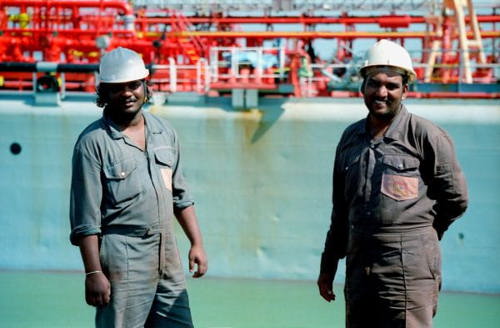
Insurance, accountability and the families left behind
Although abandonment is a serious problem for seafarers and their families, another concern is the validity of a vessel’s insurance and the accountability of those responsible for allowing a ship to operate in dangerous situations, such as conflict zones.
Following the deaths of three Indian seafarers after the US military struck a commercial oil tanker in the Gulf of Oman in June, the father of one of the deceased crew members, deck cadet Aditya Sharma, expressed concern about allegations the vessel had fake or invalid insurance documentation. In a statement, US military forces said the vessel was violating an American blockade on Iran-linked shipping by attempting to transport oil from Iran and had ignored repeated warnings to stop.
Speaking at the recent #HeartbeatoftheOcean Global Seafarers Solidarity meeting, Manoj Yadav, general secretary of the Forward Seamen’s Union of India (FSUI), stated that, in at least one case, the protection and indemnity insurance submitted by the vessel’s owner to India’s Directorate General of Shipping was understood to be fake. The families of the three deceased crew members have also described the enormous difficulties they have faced in securing compensation for the loss of their loved ones from the ship’s owners.
Commentators say this leads to a broader question: how can a seafarer be expected to assess the safety of a vessel before boarding if even fundamental documentation, such as insurance, is misrepresented?
Also speaking at the #HeartbeatoftheOcean Global Seafarers Solidarity meeting, Fabrizio Barcellona of the International Transport Workers’ Federation (ITF) said that stronger systems are required to ensure that a vessel's insurance certificates are properly validated by the flag state they are registered to.
He argued this could be achieved by strengthening the Maritime Labour Convention, an international treaty established by the ILO to safeguard seafarers’ rights, alongside more stringent inspections of vessels by port authorities at locations where ships are docked to ensure compliance with international maritime regulations.
Barcellona added that although international conventions and legislation already contain a number of duties for vessel owners designed to ensure the safety of seafarers, there is inadequate implementation and enforcement of these rules. Some shipowners still ask seafarers to enter areas where vessels should not be operating, despite the known risks, he said.
Operating in conflict-affected waters
The gap between rules and enforcement was underlined during the #HeartbeatoftheOcean Global Seafarers Solidarity meeting when several ship captains spoke of their experience of operating in conflict-affected waters.
One captain, Raman Kapoor, described how he spent approximately 75 days trapped in the Persian Gulf conflict zone. Ships were stranded, sea routes were blocked and airports were closed. He said the location where he was trapped could not be described as safe and reported how military missiles were seen across the region.
Captain Anil Raj provided an equally powerful account. He described being pressured to sail through the Strait of Hormuz despite the security situation. The crew resisted and expressed their desire to return home.
He described how crews were offered additional money by the ship’s owners to undertake the voyage. He also explained that he had documented conversations between the ship owners and crews, and the crew’s views on the safety of voyages in the Strait of Hormuz, as he was concerned teh shipowners might later claim the captain and crew had given “consent” for their ship to enter the strait’s shipping lanes.
The meeting therefore considered another uncomfortable question: can seafarer consent to enter a military conflict zone really be called consent when a seafarer is effectively presented with a choice between taking an extraordinary risk and losing his employment, while being offered enhanced wages as an inducement?
The alleged experiences of Captains Kapoor and Raj demonstrate that this is not an abstract legal debate – it is potentially a matter of life or death.
As India prepares for Mission 20, with its aim of increasing India’s share of the global seafaring workforce to 20%, commentators say the country’s maritime ambitions depend not only on training and deploying more seafarers but also on ensuring that those who work aboad international vessels have fair employment practices, safe working and living conditions, timely payment of wages, access to quality medical care, social security protections, and repatriation in accordance with applicable national laws and international maritime conventions.
Although the Directorate General of Maritime Administration states it is committed to protecting the rights, welfare and dignity of Indian seafarers, and the IMO has repeatedly stressed that the protection of seafarers must remain the overriding priority, the fundamental question remains: when a civilian seafarer is threatened, abandoned or killed at sea, who is ultimately accountable – and who ensures that the protections promised on paper are enforced in practice?

FEATURES
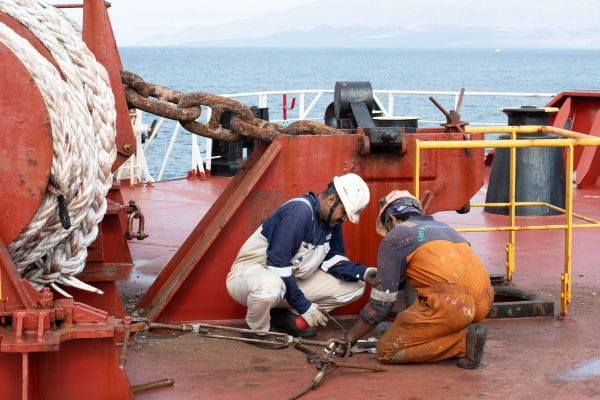
Who protects Indian seafarers in troubled waters?
By Orchie Bandyopadhyay on 19 November 2026
As the world’s second-largest supplier of seafarers, India makes an indispensable contribution to international shipping, trade and global supply chains. However, concerns are rising about seafarers being stranded in foreign ports when shipowners fail to pay wages or arrange for them to be repatriated, and about the dangers of commercial vessels crewed by Indian sailors entering military conflict zones.

India’s railway trackmen – walking the line of hidden dangers
By Orchie Bandyopadhyay on 19 November 2026
Railway maintenance in India is a dangerous and difficult task, with track workers facing a high risk of being struck by trains and challenging working conditions, such as punishing summer temperatures. The government has promised improvements to working conditions, but trade unions argue the pace of change must be drastically increased to make the work safer and more bearable.
Reducing lithium-ion battery fire risk in warehouses: new guidance points the way
By on 16 November 2026