
Prime Minister Modi’s recent appeal for Indians to voluntarily adopt austerity measures such as working from home to reduce fuel consumption amid the growing economic fallout from conflict in the Middle East has prompted renewed public calls for a right to request remote working to be enshrined in Indian law.
Features
Homeworking: Modi’s call to revive Covid-era practice reignites debate about lack of right to request remote work
By
on 11 June 2026
News that the founder of a networking startup fired an employee in April on WhatsApp for requesting remote working has left many wondering if the entrepreneur would have felt quite so confident refusing if the request had come after Prime Minister Narendra Modi appealed to the nation on 10 May to revive work-from-home practices and virtual meetings to reduce fuel consumption and economic pressure arising from the fall-out of conflict in the Middle East.
To help conserve foreign exchange reserves, the prime minister also called on citizens to avoid unnecessary foreign travel and defer gold purchases, as well as reducing fuel consumption by using public transport and electric vehicles. The aim is to reduce foreign exchange outflows required to purchase imported oil and gas, and reduce expenditure on fuel imports, as high oil and gas prices make all imports more costly, weaken the currency (in turn further pushing up the cost of imports), and push up inflation across the economy.

“We must make every effort to reduce the use of imported products and avoid personal activities that involve spending foreign currency,” he said.
The International Energy Agency, too, said people should change how they travel, work and cook to tackle the energy price crisis.
However, the PM’s appeal to work from home and adopt other austerity measures like refraining from buying gold and holidaying abroad did not sit well with investors, and the Indian stock market fell sharply the day after Modi’s comments.
Refusal to grant homeworking
Against this backdrop, a startup founder’s decision to fire an employee over a work-from-home request has reignited debate over whether employers can still refuse to grant outright to grant remote working.
Nikhil Rana, founder and CEO of The 15, a Gurugram-based networking platform aimed at startup founders, sparked a fierce debate online after sacking an employee just two minutes after the worker asked to work from home for a day. In a LinkedIn post, Naha shared screenshots from a discussion where the employee had informed Rana he was unable to attend a work event but was happy to provide remote support. The screenshots revealed that, just minutes later, Rana replied: “You’re fired. Take today as the last day.”
Rana argued that, for startups, traditional HR practices like notice periods are unnecessary and modern startups require people with qualities such a high level of ownership, dependability and personal accountability. He wrote: “I strongly believe in no-notice period policy. Notice period is theatre. A waste of time.”
The post quickly went viral, with users questioning his decision and leadership approach. It also raised wider concerns about the work culture in startups.
One user wrote, “Woah! Ruthlessly toxic.” Another post read: “Accountability seems to be one-way traffic here. Employees get judged, founders get justified.”
Lack of empathy
Many commentators argued that terminating someone’s employment over a request to work remotely for a single day demonstrated a lack of empathy and unhealthy expectations about what is deemed acceptable work practices. Others argued the decision could arguably be illegal, as Indian labour laws – such as the Industrial Disputes Act – generally require notice periods or compensation in lieu, when seeking to terminate an employee’s contract. Some commentators highlighted the fact employment contracts for Indian corporates often include a standard 30- to 90-day transition period for contract termination.
Other online posts highlighted the contradiction between expecting “dependability” from employees while offering poor job security in return.
Rana defended his position by arguing that modern startups require a different mindset to traditional HR approaches.
Outlining the key attributes he feels an employee at a startup should possess, such as treating the company as if is your own business and being consistently reliable, he wrote: “Nobody gives a dime for skills anymore,” adding that technical abilities are now “commoditised”. He argued technical skills are now common and easily available, meaning startups instead are seeking staff who take the initiative and drive positive business outcomes.
Toxic expectations
Social media users argued the issue was less about employee “accountability” and more about toxic workplace expectations. “The irony of asking for ‘dependability’ while being the most undependable employer is peak LinkedIn,” read one widely shared comment. A second comment argued that “high agency of founder” should not translate into “Zero Job Security”.
Taking a more sarcastic tone, one comment read: “Is that why there are only two people listed in your company?”
The incident reignited debate about whether the ‘founder-first’ culture found in some startups – where the entrepreneur runs their business in a way that suits, sometimes in direct contradiction to what are deemed standard HR practices – is healthy for employee wellbeing, productivity and motivation, or whether an ‘employee-first’ approach to HR practices creates more healthy working environments and in turn boosts the likelihood of a startup becomes a successful large business.
The incident also prompted widespread public discussion questioning whether India’s labour laws contain any clauses formally requiring employers to consider or grant employee requests for home or remote working in general or specific circumstances.
New Labour Codes
India’s new Labour Codes, primarily the Industrial Relations (IR) Code and the Occupational Safety, Health and Working Conditions (OSH & WC) Code, formally recognise flexible work arrangements, including home working, remote work and ‘virtual’ workplaces. According to a government source, the model standing orders for certain service sectors issued under the codes now explicitly allow working from home, although this is subject to mutual agreement between the employer and employee. “This improves flexibility,” the source stated. “Flexible conditions make it easier for workers to shift roles or negotiate terms informally.”
The source added: “During Covid, the government used the Disaster Management Act and Epidemic Diseases Act to mandate remote work, but no such enforceable notification exists now.”
In practice, say HR experts, workplace attendance rules in India continue to depend largely on employment contracts, company HR policies, internal protocols, state labour laws and government notifications.
No automatic right to remote work
White-collar jobs in India are primarily regulated through state-specific Shops and Establishments Acts that govern working hours, leave, overtime, employee welfare and workplace conditions, but none of these laws currently grant employees the automatic right to work remotely.
So, does that mean employees like the one who asked to work remotely and was then fired have no legal right to demand remote work? Labour law specialists say yes. “There is currently no statutory right to work from home under Indian labour laws,” a Bengaluru-based labour law expert told News18. “Unless remote work is part of the employment contract, company policy, collective agreement or mandated through a government notification, employers retain discretion over attendance requirements,” the expert added.
“Indian employees have no statutory right to work from home,” explains Vishwas Kumar, co-founder of Rising Bharat Technology, a Delhi-based tech startup. “The PM’s recent appeal is encouraging remote work. Employers generally have the right to decide attendance rules and the location of the employee, based on Indian contract rules.”
He added: “Work-from-home is not a legal right and flows from the employer’s policy and discretion. It is an internal organisational matter between the employer and employee. Till the Centre (government) enforces remote working under law, as was seen during Covid, allowing work-from-home rests on the employer.”
Strong grounds
However, experts say there are some situations when employees may have strong grounds to request and be granted flexible work arrangements. Under laws related to disability accommodation, maternity protection, workplace safety or medical needs, employees can ask for work-from-home or remote work arrangements.
For instance, section 5(5) of the Maternity Benefit Act, 1961, specifically allows employers and employees to mutually agree on work-from-home arrangements after childbirth.
These laws, however, do not mandate a universal right to work from home and are only exceptions.
Under the Draft Model Standing Orders Rules 2025 – which will implement various requirements of the new Labour Codes – work-from-home, remote work and virtual workplaces are formally recognised as valid employment arrangements. Employers may permit such arrangements based on the terms of employment or mutual agreement with staff, with flexibility on duration and conditions.
According to Corrida Legal, a corporate and employment law firm, the new Labour Codes are transforming how remote work is regulated. “These codes provide a clear framework covering remote work as well as hybrid models, ensuring equal benefits and responsibilities. The Labour Codes aim to balance the flexibility of remote work with necessary legal safeguards. They enforce structured working hours and ensure that remote employees receive the same benefits as their office-based counterparts.”
The Ministry of Labour and Employment has also issued directives aimed at streamlining work-from-home practices across various sectors. The regulation sets clear rules for work-from-home and work-from-anywhere arrangements, including rules about tax deductions for home-office expenses. The government has also issued tailored advice on home and remote working arrangements for the IT, BPO (business process outsourcing) and other industries.
“These guidelines not only set operational standards but also help companies implement robust work-from-home policies that comply with national regulations,” added Corrida Legal.
IT workers demand homeworking
Meanwhile, in a separate development, a body representing IT sector workers has called on the Union Government to issue an advisory notice making it mandatory for IT businesses to consider and grant remote working arrangements for IT workers. The Nascent Information Technology Employees Senate (NITES), which represents workers in the IT and ITES (information technology enabled services) industries, urged the Labour Ministry to make work-from-home provisions mandatory for technology employees across India.
NITES has reportedly argued that the IT and ITES industry is fundamentally digital in nature and many roles can be undertaken efficiently without the need to physically attend the office on a daily basis.
“Companies across sectors adopted work-from-home measures in 2020, which remained the norm for several years,” stated NITES in a letter to the Labour Ministry dated 11 May. “However, companies started moving back to offices in the past three years. The experience of the pandemic clearly established that mandatory work-from-home in suitable IT roles is practical, technologically feasible, and operationally sustainable.”
NITES said an advisory should direct IT and ITES companies to adopt work-from-home “wherever operationally feasible” for a defined period. Requiring millions of employees to commute daily despite the availability of alternative ‘digital’ workplaces in the form of home and remote working puts “avoidable pressure on fuel consumption, urban infrastructure and public transport”, the employee body added.
Meanwhile, India’s largest carmaker, Maruti Suzuki India Ltd (MSIL), has rolled out new workplace measures in response to the PM’s call for austerity. The company has asked employees to adopt work-from-home arrangements wherever possible, reduce commuting and cut fuel consumption. Foreign travel has been restricted to only critical business needs, while domestic travel will be kept to a minimum for the duration of the growing economic crisis arising from conflict in the Middle East.

FEATURES

AI at work: why employee monitoring may be creating new pressures
By Orchie Bandyopadhyay on 21 October 2026
India’s information technology companies are rapidly expanding their use of AI in a bid to drive business efficiency and boost innovation. However, commentators warn that the growing use of AI to monitor employees’ work outputs and activities poses a risk to workforce mental health and wellbeing.
Remote and hybrid working: how can employers best provide support?
By Orchie Bandyopadhyay on 21 October 2026
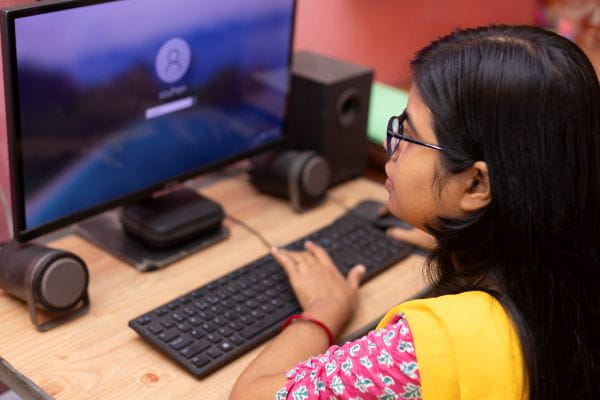
India continues to embrace remote and hybrid working, with large numbers of staff either working from home full time or following a mix of remote and office attendance. However, remote working can create feelings of isolation and loneliness, in turn affecting performance and mental wellbeing, so it’s essential employers have excellent communication and support procedures in place to prevent these problems arising.