
Gas detectors are a crucial tool for ensuring the safety of hazardous plants and processes, and developments in smart and connected technology now mean the equipment can more efficiently and quickly raise the alarm in the event of elevated gas levels or leaks, allowing immediate action to be taken to protect life and equipment.
Features
Gas detection – the power of smart safety systems
By
on 29 June 2026
The concept of smart safety has long been linked to gas detection, but recent technological advances are now reshaping what this means in practice.
Driven by developments in connectivity, data analytics and digital integration, gas safety is evolving from standalone monitoring to increasingly intelligent, interconnected systems.
These innovations are enabling organisations to move beyond reactive approaches and adopt integrated solutions that streamline operations, reduce complexity and significantly improve response times. As a result, gas detection is no longer just about identifying hazards; it is becoming a critical component of a wider, smarter safety ecosystem.
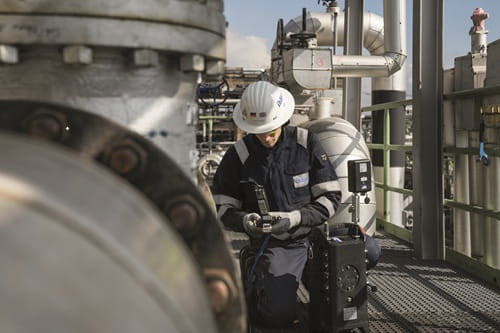 Smart gas detection continuously monitors air quality and equipment performance, allowing maintenance teams to identify issues before they become critical failures. Photograph: Dräger Safety
Improving workplace safety through connected systems
Although historically it has been more typical to have separate systems when it comes to portable and fixed gas detection devices, this creates a fragmented approach to gas safety.
When data is stored on different and isolated systems, to which other teams don’t have access, this can limit visibility of live safety situations, such as a gas leak, resulting in delays in response times when an incident occurs.
Conversely, when gas detection systems are integrated, this provides a more flexible platform that brings gas detection devices and software into one system that can be scaled across different sites.
By bringing together the data from both fixed and portable gas detection to create synergy, the systems can predict patterns and the most likely areas of gas exposure, therefore improving the overall safety of colleagues operating in a facility, as well as protecting valuable corporate plant assets – for example, by preventing fires and explosions.
By combining all data, a company can develop a comprehensive outlook that allows it to:
- Provide a more holistic overview so that gas hazards can be recognised more quickly
- Analyse correlations and anomalies more easily
- Identify causes more precisely and support the development of rectification plans
- And, as a result, enable proactive safety measures to be taken sooner and more effectively.
Benefits of integrated systems
As well as improving workplace safety overall, integrated systems also reduce complexity in everyday gas monitoring, providing greater clarity and clearer processes. Having a single system results in a single, coordinated platform and interface, making management, interpretation and oversight more straightforward.
In addition, having easier access to data across both fixed and portable gas detection systems delivers significant gains in asset management and maintenance efficiency by bringing all gas detection devices into a single cloud-based platform where equipment status, maintenance records, and compliance information can be managed centrally.
Real-time insights, automated alerts and predictive diagnostics allow organisations to monitor gas detector calibration schedules, testing requirements and critical elements such as battery life and sensor performance from a central platform, ensuring issues with the detectors are identified early and managed proactively.
Instead of frequent manual inspections associated with portable gas detection, smart gas detection continuously monitors air quality and equipment performance, allowing maintenance teams to identify issues before they become critical failures.
These systems can also remotely transmit data to centralised control panels and cloud-based platforms, allowing for monitoring of multiple sites simultaneously and faster responses to hazardous gas leaks or sensor malfunctions.
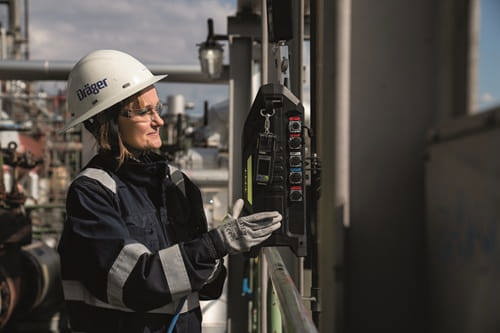 84% of the surveyed workforce said that they place the greatest trust in safety technology. Photograph: Dräger Safety
Improving communication
The capability to connect fixed and portable devices allows these devices to communicate with each other, therefore enabling crucial safety information to be displayed immediately via a cloud-based control panel.
This information can be accessed by anyone with the appropriate permissions, from anywhere, at any time. As a result, workers on site or managers in a remote or central location can pinpoint the position of colleagues and the gas safety status of the environment in which they are working at any given moment. This functionality means that any airborne hazard incidents – such as gas leaks or higher-than-expected gas levels – can be better and more easily managed.
Enhancing accountability and compliance
Regulatory compliance continues to be a core responsibility for health and safety professionals, but managing compliance manually across multiple systems can be complicated and time-consuming.
Gaps in records, inconsistent documentation, and delayed reporting can all heighten audit risk and erode organisational confidence, making it harder for businesses to demonstrate compliance and maintain trust. Smart integrated systems help strengthen compliance management by improving traceability, consistency and accessibility while improving efficiency and data integrity.
Connected systems also improve accountability by creating clearer visibility into processes and responsibilities. This supports stronger governance and helps organisations demonstrate that safety procedures are being followed consistently.
Trust in safety technology (with human oversight)
Trust plays a fundamental role in ensuring that workers feel safe in their place of work and have confidence that they will be kept safe. A constant theme in the annual Dräger Safety and Health at Work report has, for the past six years, been the role and importance of technology when it comes to workplace safety.
The most recent report specifically focused on the role of trust in relation to technology; how individuals perceive responsibility for their safety, and where they place most trust.
The research found that more than eight in every 10 respondents (84%) said that they place the greatest trust in safety technology, just behind people’s trust in themselves when it comes to workplace safety (91%) and ahead of their trust in their employers (76%).
But while safety technology is widely trusted, particularly when it comes to areas such as safety monitoring, detection and early warning, for now, at least, fully automated decision-making without human oversight is seen as a step too far, with less than a quarter of respondents (23%) placing trust in artificial intelligence.
Conclusion
Dräger’s research suggests that workers have an increasing level of trust in safety technology and enhancements to smart and connected technology in the field of gas detection, particularly across hazardous industries, whether it is the oil and gas industry or the chemical and petrochemical industries, mining or fire and rescue. Furthermore, there is little doubt that enhancements to these systems will continue, further improving functionality and efficiency.
For more information see: draeger.com/en_uk/Home
Megan Hine is gas detection expert at Dräger Safety.
Case study: maintaining safety during critical upgrades at remote unmanned assets
A recent upgrade project at a remote compression station located along a gas pipeline presented a particular challenge in respect of the fire and gas detection systems that were a critical part of the site’s safety infrastructure. Under normal operating conditions, detection data would be continuously monitored from a central control hub.
However, during the works, which required a full power shutdown, the fire and gas detection system was temporarily taken offline, removing this key safety layer.
Shutting down the entire facility for the duration of the upgrade would have removed the immediate fire and gas risk but would have resulted in substantial commercial losses and therefore it was ideal to maintain operational function.
This meant that it was essential to maintain continuous fire and gas monitoring during the three months required for the upgrade, particularly as the upgrade work required more people to be on site than under normal conditions, which increased the safety risks.
The dilemma faced by the organisation was that when power gets turned off, the fixed gas detection system can no longer send back signals to the central hub to raise the alarm in the event of a gas leak, potentially putting critical hazardous inventories and those staff operating on site at risk.
The solution to enable the facility to continue to function safely was the temporary installation of a cloud-connected gas detection and monitoring system, which transformed standalone portable gas detection devices into a portable monitoring station with an overlapping safety perimeter which operated during the upgrade period.
This system allowed for continuous local wireless gas detection for those personnel working on site while at the same time restoring remote visibility for operations and safety teams, so they could monitor for any gas leaks that could pose a risk of harm to workers or the plant.
By transmitting live data to a central hub, this solution helped maintain on-site awareness of the gas and fire safety status and, had there been a leak, would have allowed for timely decision-making.
By implementing temporary connected safety systems, the organisation maintained critical monitoring capabilities, supported safe working practices and reduced operational risk throughout the upgrade period.
The approach enabled the organisation to balance operational continuity with workforce protection, ensuring that the essential upgrade was able to proceed without sacrificing visibility of key process safety hazards, such as elevated gas levels.
FEATURES
AI at work: why employee monitoring may be creating new pressures
By Orchie Bandyopadhyay on 21 October 2026
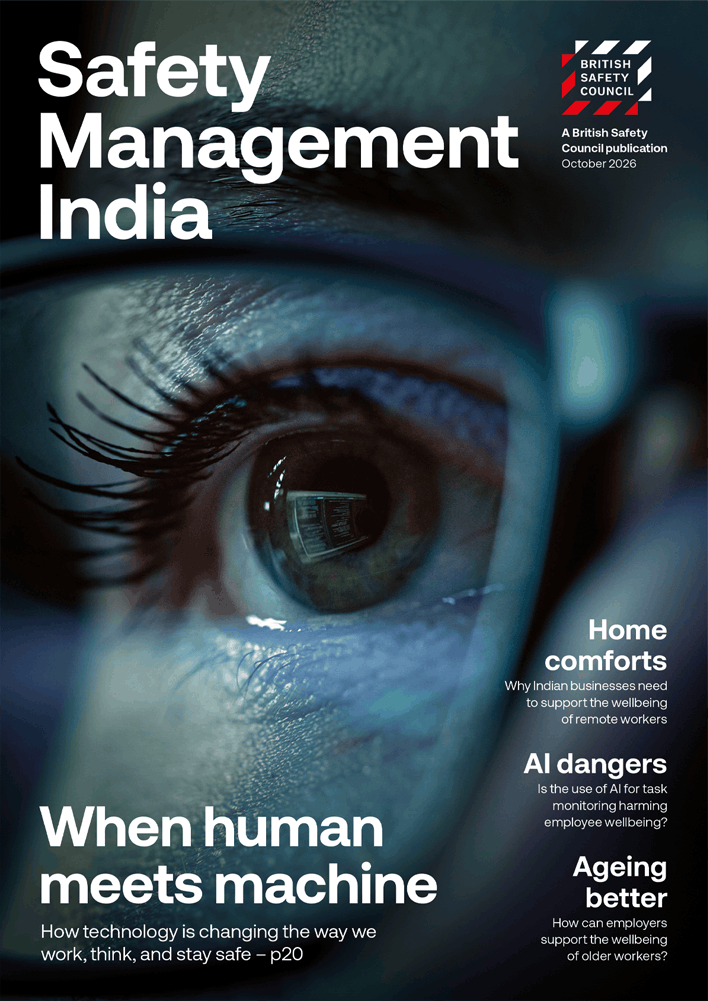
India’s information technology companies are rapidly expanding their use of AI in a bid to drive business efficiency and boost innovation. However, commentators warn that the growing use of AI to monitor employees’ work outputs and activities poses a risk to workforce mental health and wellbeing.

Remote and hybrid working: how can employers best provide support?
By Orchie Bandyopadhyay on 21 October 2026
India continues to embrace remote and hybrid working, with large numbers of staff either working from home full time or following a mix of remote and office attendance. However, remote working can create feelings of isolation and loneliness, in turn affecting performance and mental wellbeing, so it’s essential employers have excellent communication and support procedures in place to prevent these problems arising.