Technology like AI has great potential to improve workplace safety, but it could also negatively affect wellbeing through excessive monitoring of work performance or personal health parameters, reaching inaccurate conclusions without sufficient human oversight and analysis. Safety professionals are, however, uniquely placed to ensure new tech is used ethically, fairly and in ways that genuinely support employee safety and health.
Opinion
Why safety professionals must step up to ensure the fair roll-out of new tech
By
on 30 June 2026
For the first time in over 40 years, I no longer wake up and wonder what time it is. Instead, I wake up wondering what my sleep score was.
Since buying a smartwatch earlier this year, my morning routine has changed. Before I’ve even got out of bed, I’m checking how well I slept, whether my breathing varied overnight, what my body battery score looks like, how long I spent in deep sleep, and whether my training readiness has improved.
Within seconds of waking, I know more about my body than I did at any other point in my life. The strange thing is how effortlessly I’ve adopted this habit. It feels completely normal.
What would have seemed intrusive, unnecessary or even slightly unsettling just a decade ago is now accepted as part of daily life.
Millions of people willingly wear devices that continuously monitor their movement, heart rate, sleep patterns, stress levels, breathing and activity. Far from resisting the technology, many of us actively use the data to shape our daily decisions and behaviours.
As I glanced at my sleep score one morning, it struck me just how quickly this shift has happened. In a remarkably short period of time, we have become comfortable using data to understand ourselves, influence our behaviour and guide our decisions. We have become comfortable being measured.
If we are happy for technology to monitor us in our personal lives, how far are we prepared to go when that same technology enters the workplace? More importantly, what happens when those technologies begin influencing decisions about how work is organised, allocated and managed?
By 2036, these questions may fundamentally change what it means to be a safety professional.
 Julie Riggs: "Monitoring technologies may identify differences in physiological responses, but data alone cannot explain the context behind them."
Arriving at work in 2036
Imagine arriving at work in 2036. Before you’ve spoken to a manager, an intelligent system has already reviewed your fatigue levels, assessed your fitness for work, analysed environmental conditions, examined your workload, and compared your current condition with thousands of previous data points.
Your wearable device has detected that your sleep quality was lower than normal. Environmental sensors have identified elevated temperatures later in the day.
Predictive analytics have highlighted a potential increase in risk based on operational demands, weather conditions, staffing levels and historical incident data. A recommendation is generated automatically, advising you to take additional breaks and providing a detailed rescheduling breakdown for certain tasks.
This may sound like science fiction, but elements of this future already exist. Wearable technology can monitor fatigue, heart rate variability, stress indicators, movement and environmental exposures. Smart PPE (personal protective equipment) can detect hazardous atmospheres.
Artificial intelligence (AI) can identify patterns across vast quantities of safety data. Digital twins can model operational environments in real time. Advanced analytics can predict where incidents are most likely to occur.
The reality is that AI is no longer something on the horizon, it is already embedded within many of the decisions, recommendations and systems that shape our daily lives.
From the watches on our wrists and the phones in our pockets to the software we use at work, intelligent technologies are quietly influencing how we behave, what we prioritise and, increasingly, how decisions are made.
With each new generation of technology, its presence becomes less visible and its influence more significant. The challenge for occupational safety and health is ensuring that as technology becomes smarter, we do not become less thoughtful about the decisions it makes on our behalf.
Just because we can measure something, should we?
There is no doubt that technology offers extraordinary opportunities. For decades, safety professionals have relied upon lagging indicators. We have investigated incidents after they occur, reviewed reports after risks have materialised, and analysed trends after people have already been harmed. Technology offers the possibility of moving from hindsight to foresight.
For the first time, we have the ability to collect continuous data about conditions that directly influence health, safety, wellbeing and performance.
Every major technological advancement creates ethical questions. The more information we can gather about workers, the more important it becomes to ask why we are gathering it. Consider a fatigue-monitoring system.
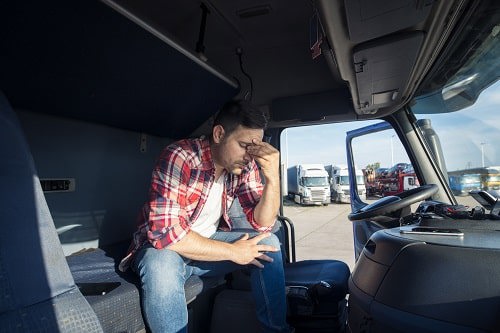 A wearable device may detect physiological changes, but it cannot understand the personal circumstances, motivations or experiences of the individual behind the data. Photograph: iStock
On one hand, it could prevent serious incidents and save lives. On the other, it may reveal information about an individual’s lifestyle, health, sleep patterns or personal circumstances.
Consider an employee managing diabetes, a heart condition, menopause symptoms, chronic pain, anxiety or a sleep disorder.
Monitoring technologies may identify differences in physiological responses, but data alone cannot explain the context behind them. Without careful governance, there is a risk that technology designed to improve safety could inadvertently disadvantage the very people organisations are seeking to support.
Technology is rarely neutral. It reflects the assumptions, values, and priorities of those who design and deploy it. These are not simply technology questions. They are questions of ethics, fairness, inclusion and trust. The challenge for organisations will be ensuring that technology helps us understand people better, rather than reducing people to a collection of data points.
And perhaps that is where the role of the safety professional begins to change. Traditionally, safety professionals have focused on identifying hazards, assessing risks and implementing controls. Increasingly, they may find themselves asking a different set of questions. Not just whether a system works, but whether it works fairly in a real-world setting.
As workplaces become more connected and data-driven, safety professionals may spend less time auditing workplaces and more time auditing the technologies that influence them. They will need to challenge how data is collected, how algorithms make decisions, what biases may exist, and whether technology is being used to support people or simply monitor them.
The future safety professional may become the critical voice in the room asking questions that others have not considered. Who benefits from this technology? Who might be disadvantaged by it? Are we solving a genuine safety problem, or creating a new one? Are we strengthening our safety culture, or unintentionally undermining it?
In a world increasingly shaped by AI and intelligent monitoring, the role of the safety professional may evolve from guardian of physical safety to guardian of the relationship between people and technology.
Human guardians in an algorithmic world
Perhaps the greatest misconception about technological progress is that it reduces the importance of people. In reality, history suggests the opposite. The more sophisticated our systems become, the more important human judgement becomes.
There is no doubt that technology can do extraordinary things. It can analyse vast quantities of information in seconds, identify patterns that would be invisible to the human eye, and highlight emerging risks long before they materialise. Increasingly, it can help organisations make faster and better-informed decisions about health, safety and wellbeing.
Yet for all its capabilities, technology remains limited in one critical respect: it lacks human understanding. An algorithm may identify a trend, but it cannot fully appreciate the context behind it. A dashboard may present data, but it cannot understand organisational culture.
A wearable device may detect physiological changes, but it cannot understand the personal circumstances, motivations or experiences of the individual behind the data.
Most importantly, technology cannot determine where the ethical boundaries should lie. It cannot decide how much monitoring is too much, how competing priorities should be balanced, or what constitutes fairness, dignity and trust in the workplace. Those responsibilities remain firmly in human hands.
My smartwatch provides me with an impressive amount of information. It can tell me how well I slept, whether I am fully recovered, if my stress levels have been elevated, and occasionally suggests that I should take it easy or head out for a longer run.
Yet for all its sophistication, it cannot tell me why.
It cannot know that I was awake worrying about a deadline, excited about an upcoming opportunity, or simply distracted by life. Nor does it understand that some of my best ideas arrive during a run, that a conversation with a friend can lower my stress faster than an algorithm, or that a walk by the sea can sometimes be more valuable than eight hours of perfect sleep.
Technology can measure an extraordinary amount, but it cannot fully understand context, motivation or what it means to be human. Some things remain stubbornly difficult to measure.
As technology becomes increasingly capable of identifying risks, predicting outcomes and influencing decisions, the need for human judgement does not disappear. If anything, it becomes more important.
For generations, safety professionals have acted as guardians of worker safety, health and wellbeing.
We have challenged decisions that place productivity ahead of people, advocated for healthier and safer workplaces, and sought to ensure that every worker returns home safe and well. As technology becomes increasingly embedded within our organisations, the safety professionals of the future may find themselves operating at the intersection of technology, ethics and human wellbeing.
A future worth shaping
As technology becomes more capable, the role of the safety professional will inevitably evolve. Future practitioners will still need to understand risk, human behaviour and workplace health. However, they may also need to understand data governance, AI, ethics and digital trust.
They will need to be confident asking difficult questions about how technologies are deployed, how decisions are made, what biases may exist and whether systems are genuinely improving wellbeing or simply generating more information.
In many respects, the safety professional of 2036 may become something entirely new. Not simply a manager of compliance or a reviewer of incidents, but an auditor of algorithms, a steward of ethics, and a translator between technology and people. Their role may increasingly be to ensure that innovation serves humanity, rather than humanity serving innovation.
As someone who has spent more than three decades working in occupational safety and health, I find many of these developments genuinely exciting.
The prospect of identifying fatigue before it contributes to an incident, understanding workplace health risks in real time, improving indoor air quality through continuous monitoring, or using AI to uncover patterns that humans might miss has enormous potential. For the first time in history, we have the opportunity to move beyond simply reacting to harm and towards predicting and preventing it. That is a future worth embracing.
Technology has the potential to help us create healthier, safer and more inclusive workplaces than ever before. It can help us better understand the risks people face, support wellbeing in ways that were previously impossible, and provide insights that could save lives.
What should occupational safety and health professionals do now?
The journey starts with curiosity. We do not all need to become data scientists, software engineers or AI specialists, but we do need to understand the technologies entering our workplaces and the ways they influence decision-making. The pace of technological change shows no sign of slowing, and those responsible for protecting people at work cannot afford to sit on the sidelines.
Equally important is engaging in conversations about ethics, privacy, inclusion and trust. These issues should not be left solely to technology specialists, software providers or legal teams. Safety professionals have a unique perspective on the relationship between people, work and risk, and their voices will be critical in shaping how these technologies are deployed.
Above all, workers must remain at the centre of every technological decision. The purpose of technology should be to support people, not simply to monitor them. Used well, intelligent systems can enhance safety, health and wellbeing. Used poorly, they risk eroding trust and creating new challenges that are far more difficult to manage.
The organisations that thrive in the years ahead will not be those with the most data, the most sensors or the most sophisticated algorithms.
They will be those that successfully combine the power of intelligent technology with the wisdom, empathy and judgement of human beings.
In a world where almost everything can be monitored, measured and predicted, perhaps the most important question is not what technology can do, it is what we choose to do with it.
The future of safety may be digital, but it must always be defined by people.
Dr Julie Riggs is education and membership director at the British Safety Council
For more information see:
britsafe.org
Connect with Dr Julie Riggs on LinkedIn