With rising temperatures posing a growing health risk to UK workers, the TUC is calling for HSE guidance to be updated to require employers to take specific steps to protect workers' wellbeing when temperatures exceed pre-set trigger points.
Opinion
Heat at work: why Britain needs stronger protections for a hotter future
By
on 01 August 2026
A few years ago, heat at work might have been considered an occasional inconvenience. Today, it is a growing occupational health and safety challenge.
Britain has already had four heatwaves this year, including one that led to a red heat health alert. And in recent summers, heat health alerts have become increasingly familiar, with temperatures reaching levels that would once have seemed exceptional in large parts of the UK. Climate change means these conditions are no longer rare events. They are becoming a regular feature of working life.
For occupational safety and health professionals, this raises an important question: are our workplaces ready for a hotter climate? The answer is that many are not.

Heat is a workplace health and safety issue
Working in high temperatures is not merely uncomfortable – it can pose serious risks to workers’ health and safety.
Heat can lead to dehydration, fatigue, dizziness, muscle cramps and impaired concentration. In more severe cases it can cause heat exhaustion, heat stress and loss of consciousness. For outdoor workers, prolonged exposure to the sun creates additional dangers, including sunstroke and an increased risk of skin cancer.
These risks affect workers across a wide range of sectors. Construction workers, delivery drivers, transport staff, manufacturing workers, warehouse workers, agricultural workers, refuse collectors, care workers, teachers and office staff can all be affected by excessive heat, albeit in different ways.
Importantly, heat does not only affect people working outdoors. Many workers spend their days in poorly ventilated offices, factories, workshops, kitchens, vehicles and public buildings that were never designed to cope with prolonged periods of extreme heat.
The evidence from union safety representatives is clear. In the TUC’s latest survey of more than 2,700 health and safety representatives, 56% identified high temperatures as a workplace hazard. Concern about heat has risen significantly, with the proportion of reps citing high temperatures as one of their top five workplace hazards increasing from 15% in our 2022/23 survey to 38% in 2025/26.
In manufacturing, high temperatures emerged as the number one concern. And it featured prominently across sectors including transport, education, health and local government.
For many workers, excessive heat is no longer an occasional issue; it is becoming a routine workplace risk throughout the summer months.
The UK’s regulatory gap
What makes this situation particularly striking is that the UK already recognises the dangers posed by extreme heat in many other areas of society.
We have a heat health alert system. We have government plans for managing the public health impacts of extreme weather. We adapt infrastructure during heatwaves and provide guidance for schools, care settings and vulnerable groups.
Yet when it comes to employment, there remains a significant gap.
There is a minimum workplace temperature in Health and Safety Executive (HSE) guidance. In most workplaces, temperatures should normally be at least 16°C, or 13°C where work involves strenuous physical effort.
But there is no equivalent maximum temperature.
Instead, workers and employers are left to navigate increasingly severe heatwaves without the clarity that a clear maximum temperature framework would provide.
The TUC has long argued that this gap needs to be addressed. Encouragingly, there are signs that the debate is moving forward. The government’s Make Work Pay programme includes a commitment to modernise health and safety guidance with reference to extreme temperatures. More recently, the Climate Change Committee, which reports to Parliament, highlighted the need for maximum working temperature regulations as part of the UK’s wider climate adaptation efforts.
Those commitments must urgently be turned into action.
Updating HSE guidance with maximum temperatures
The TUC is calling on HSE to urgently review and update guidance on workplace temperatures.
We believe that employers should be required to take steps to reduce workplace temperatures when they exceed 24°C and workers feel uncomfortable.
We are also calling for workers to have the right to stop work when workplace temperatures rise above 30°C, or 27°C where work is physically demanding.
This is not a radical proposal. Some European countries already have stronger protections relating to workplace heat, including guidance and requirements linked to specific maximum temperatures. This includes Spain’s maximum of 27°C for office work, and Belgium’s scale starting at 29°C for light work that steps down to 26°C, 22°C and 18°C depending on humidity and physical exertion.
Maximum temperatures would establish a clear framework for managing foreseeable risks. And strengthening regulation with their addition would create incentives for long-term investment in more resilient workplaces.
Adapting workplaces for a hotter climate
The challenge is not simply about managing the next heatwave. It is about preparing the UK’s workplaces for the decades ahead.
Many buildings, transport systems and workplaces were designed for a cooler climate. But frequent periods of extreme heat are now exposing weaknesses in their design and operation.
We need sustained public and private investment to ensure workplaces remain safe, comfortable and productive during hotter summers.
That includes better ventilation, improved shading, modern cooling systems, energy efficiency measures and building designs that minimise overheating.
This is not simply an issue of worker comfort. Productivity, service delivery and business continuity are all affected when workplaces become excessively hot.
Well-adapted workplaces benefit employers and workers alike.
What employers can do now
While policy reform is necessary, employers do not need to wait for regulatory change before taking action. Many practical measures are straightforward and inexpensive.
For indoor workers, employers can relax dress codes, provide cold drinking water, allow more frequent breaks, use fans and cooling systems where appropriate, and move staff away from direct sources of heat.
Flexible working arrangements, including adjusted start and finish times and home working where possible, can also help workers avoid the hottest parts of the day.
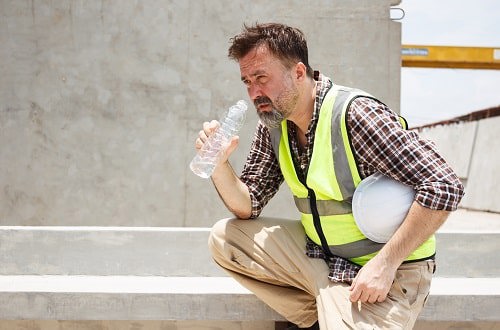
For outdoor workers, additional precautions are essential. Employers should provide sunscreen, ensure access to drinking water, schedule physically demanding tasks for cooler parts of the day, and offer shaded rest areas wherever possible.
Above all, employers should talk to workers and their union representatives. The people experiencing workplace heat first-hand are often best placed to identify practical solutions.
The role of workers and union reps
One of the clearest findings from our safety representatives survey is the vital role that workplace reps play in identifying emerging risks.
Many of the concerns raised by reps relate not only to heat itself but to the failure to adequately assess and address temperature-related risks.
The survey found that workplace temperature was among the most commonly cited hazards that safety representatives felt were not being adequately addressed through risk assessments. It also found that only around one-third of workplaces had specific safety measures triggered by high temperatures.
This underlines the importance of effective worker consultation.
Union health and safety representatives are often the first people to hear concerns about overheating, inadequate ventilation, lack of breaks or unsafe working conditions during heatwaves. When employers engage constructively with reps, problems can often be addressed before they become serious.
That is why the TUC continues to support workers through practical resources on keeping workplaces cool, campaigning for a maximum workplace temperature, and climate action as well as workplace organising around heat safety.
A workplace issue whose time has come
The conversation about heat at work has changed.
What was once regarded as an occasional seasonal challenge is increasingly recognised
as a permanent feature of a changing climate. Workers can see it. Safety representatives can see it.
Occupational health and safety professionals can see it.
Britain is adapting many aspects of society to the realities of extreme heat. Workplaces should be no exception.
Protecting workers from excessive temperatures requires action from government, employers and regulators. It requires investment in resilient workplaces. And it requires workers to have a meaningful voice in how heat risks are managed.
The climate is changing. Workplace protections must change too.
For more information see:
tuc.org.uk