
Technologies such as AI have the potential to transform how organisations record and analyse EHS risk. However, successful adoption depends on more than technology alone. Jose Arcilla, CEO of HSI, explains why organisations that engage with their frontline staff and utilise their knowledge to design and implement new solutions, will benefit the most.
Features
Human-led/AI-accelerated: how to build the trust that makes safety tech work
By
on 25 June 2026
Environment, health and safety (EHS) technology has never been more capable. The EHS software platforms available to safety professionals today are more intelligent, more accessible and more integrated than ever before.
The ambition to use data to genuinely prevent harm, rather than just record it, is real. But capability alone doesn’t drive outcomes.
Many organisations still struggle to achieve consistent workforce engagement with EHS technology like software and maintain the level of reporting needed to generate meaningful insight. The instinct, almost every time, is to blame technology. That’s usually the wrong place to look.
In my experience, working with organisations globally, the most common reason safety technology fails has nothing to do with its technical capability. It’s more fundamental than that. Workers don’t believe the system is for them.
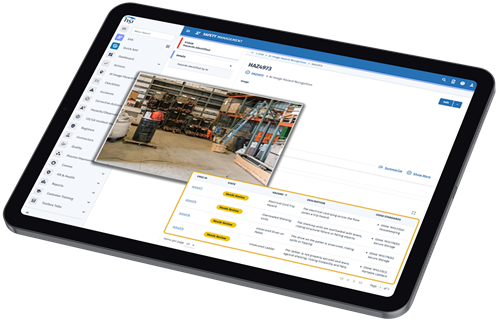 AI hazard identification. Photograph: HSI
They don’t trust that raising a concern will lead to anything. They suspect, sometimes with good reason, that the technology is there to monitor and penalise, rather than help. So they don’t engage, and the data that safety leaders are trying to build their programmes around never materialises.
This dynamic has always existed in EHS technology adoption. But as artificial intelligence (AI) enters the picture, it becomes significantly more consequential.
The psychology of adoption
When a frontline worker encounters a new safety system for the first time, they’re making an almost instantaneous assessment. They’re reading the situation: does this feel like something designed to help me, or to catch me out?
That perception is shaped by several things, including how the rollout was communicated; whether they were involved in any way before go-live; and how complex the first interaction feels.
And, critically, what they’ve seen happen in the past. If previous safety reporting went into a void, or was used to attribute blame rather than drive improvement, those experiences don’t get erased by a new platform. They transfer onto it.
The ‘big bang’ implementation approach can often compound this problem. When organisations try to deploy everything at once – all modules, across all teams and sites – they create exactly the conditions where trust breaks down.
People are overwhelmed, the system feels imposed, previous lessons learned cannot be incorporated and the first experience is usually confusion rather than clarity. The chances of early wins, essential to adoption, are low.
The organisations I’ve seen succeed take a fundamentally different approach. They start with a narrow, high-impact use case, often incident reporting, and make it work well before expanding.
They involve frontline stakeholders in the process, not as a consultation exercise but as genuine co-designers of how the system should function in their environment. And when those stakeholders see the system go live in a form that reflects their input, the relationship with the technology is different from the start.
 Usability of tech is often underestimated until you see the cultural shift that follows when it’s done well. Photograph: HSI
Usability is a safety issue
There’s a connection between system design and safety data quality that doesn’t get discussed nearly enough. It’s direct, it’s significant, and it has implications for decisions an organisation makes based on its reporting data.
If a system is difficult to use, if it’s not mobile-friendly, if it requires multiple steps to log a near miss, if the language doesn’t reflect how workers actually describe what they do, people will use it only when they have to. They’ll report the incidents they can’t ignore. Everything else, the near misses, minor observations, the early warning signals, go unrecorded.
The result is a dataset that looks cleaner than reality. Safety leaders make decisions based on it. And the underlying risk of under-reporting continues to build.
The usability point is often underestimated until you see the cultural shift that follows when it’s done well. One large organisation I’m aware of rolled out a new system with a deliberate focus on simplicity – mobile-first, minimal steps, plain language throughout.
Within a year, company-wide participation had increased dramatically, not just among frontline workers but across management and leadership too.
People started raising concerns and asking questions they’d never raised before. Not because the hazards were new, but because for the first time the process of flagging them felt accessible rather than bureaucratic. Ease of use, it turned out, was the catalyst for cultural change.
This matters enormously as organisations start using AI to bring to the surface patterns and predict risk. The insight is only as good as the input. If the data foundation is incomplete because the system wasn’t trusted or usable enough to generate real engagement, AI-powered analysis will reflect that incompleteness, faster and at greater scale.
What effective change management actually looks like
The organisations that get technology adoption right tend to share a few common characteristics, none of which are particularly sophisticated. They’re disciplined and sequencing-focused, rather than driven by innovation.
First, they close the feedback loop. This is the single most impactful thing an organisation can do to build safety or EHS reporting culture. When a worker raises a concern and receives, through the system or in person, a visible acknowledgement that it was received and acted upon, something shifts.
Trust is not built by telling workers the system is trustworthy; it’s built by demonstrating it, repeatedly, in small ways that accumulate. Automated status updates, simple notifications when actions are assigned and completed, dashboards that show what’s been raised and what’s in progress: none of this requires advanced technology. It requires intention.
Second, they make visible the people behind the system. Technology doesn’t build trust, people do, through the platform. Leaders who visibly champion the system, who use it themselves and reference it in conversations, signal that this is serious and that it matters.
Sceptics in the workforce are often watching those leaders very closely. If they appear to have ‘checked a box’ and moved on, that signal is read clearly too.
Third, they define success narrowly at first and share it broadly. Early wins, communicated back to the workforce – such as a hazard that was raised, investigated and resolved; an improvement that came directly from a reported observation – are worth more than any amount of pre-launch communications. They answer the question that workers are actually asking: will this lead to change?
The connection between trust, engagement and data quality is circular: better trust drives more reporting, more reporting improves data, better data enables visible action, and visible action builds more trust. The technology doesn’t create that loop but when it’s designed and deployed well, it sustains it.
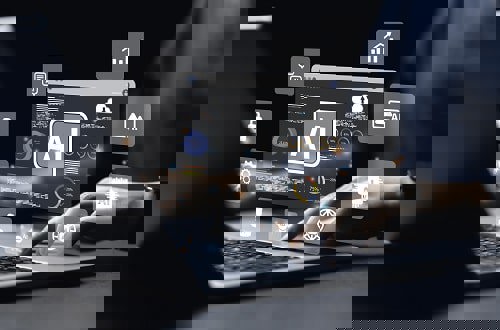 AI can analyse safety data at a scale and speed that’s simply not possible manually. Photograph: iStock
The AI question
All of this becomes more pressing as AI enters EHS. The potential is huge – AI can analyse safety data at a scale and speed that’s simply not possible manually, bringing to the surface patterns that would otherwise go unnoticed and enabling safety teams to shift from reactive to proactive actions. But the trust conditions required for AI to work are more demanding, not less, than those required for conventional software.
Workers are already wary of monitoring technology, including computer vision. AI that appears to make judgements about their behaviour, about when they reported, how often, what they said, amplifies that distrust. How this is framed matters enormously.
At HSI, the principle we work to is ‘human-led, AI-accelerated’. AI handles the analytical work connecting patterns across millions of data points, identifying correlations, generating recommendations. But the decisions remain with people.
For example, a safety professional sees the night shift has a significantly higher incident rate with a particular piece of equipment, and here’s what the data suggests about why. They then decide what to do about it. The human is not removed from the loop. They’re equipped to act more effectively within it.
This framing also changes how workers experience the technology. A system that generates insights for safety professionals to act on feels different from a system that is itself making judgements.
One supports the people responsible for safety. The other appears to replace them.
As AI capability in EHS grows rapidly, the organisations that will benefit most won’t necessarily be those with access to the most sophisticated tools. They’ll be the ones that got the trust conditions right first – the human infrastructure that determines whether any technology, however capable, actually gets used.
For more information see: donesafe.com/uk
Jose Arcilla is CEO at HSI
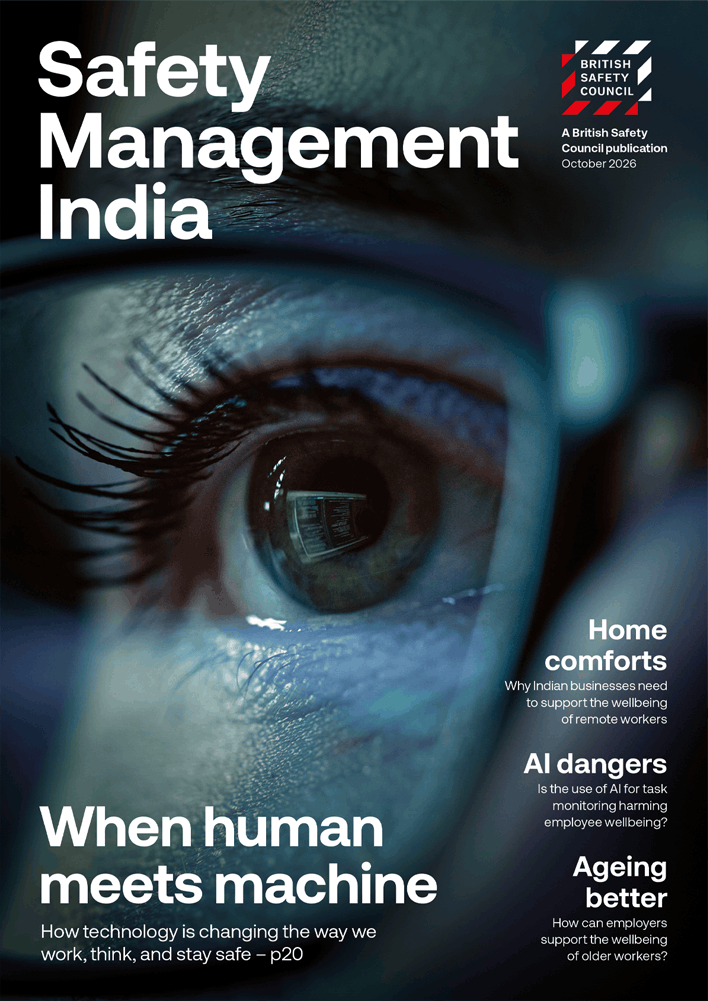
FEATURES

AI at work: why employee monitoring may be creating new pressures
By Orchie Bandyopadhyay on 21 October 2026
India’s information technology companies are rapidly expanding their use of AI in a bid to drive business efficiency and boost innovation. However, commentators warn that the growing use of AI to monitor employees’ work outputs and activities poses a risk to workforce mental health and wellbeing.

Remote and hybrid working: how can employers best provide support?
By Orchie Bandyopadhyay on 21 October 2026
India continues to embrace remote and hybrid working, with large numbers of staff either working from home full time or following a mix of remote and office attendance. However, remote working can create feelings of isolation and loneliness, in turn affecting performance and mental wellbeing, so it’s essential employers have excellent communication and support procedures in place to prevent these problems arising.