
New Year’s resolutions get all the glory, but the quiet summer lull is secretly the best time for a reset. Before the September rush hits and work resumes at full speed, why not test out a few new skills? As part of our summer special, we look at how two evidence-based psychological tools can help safety professionals sharpen their communication, win over colleagues, and begin to drive lasting change.
Features
Communicating for impact: tools to pack this summer
By
on 30 July 2026
Tool one: find their motivation
Chartered psychologist Dr Nick Bell discovered 'motivational interviewing' (MI) working as a probation officer in Wales many years ago. Probation officers were “qualified social workers back then” and it was here that he was trained in MI.
MI is a collaborative, non-confrontational approach. Its principles can be applied through a practical, structured framework for workplace conversations (see below).
Although it originated in person-centred clinical counselling, you don’t need a therapeutic background to use it on-site, just good active listening skills and empathy. “At its heart is a belief that people deserve to be treated with dignity and respect, and an assumption that workers and leaders want to do the right thing and have the capacity to change,” explains Nick.
The 5 Steps of Motivational Interviewing
The context: introduce yourself and ask what task they are currently doing.
The positives: ask what is going well with their current method to understand their rationale.
The risks: ask what isn't going well or what the risks are to build their own motivation to change.
The alternative: ask them to suggest a safer or healthier approach – encourage the individual to explore their own ideas.
The barriers and benefits: ask what makes the new way hard (to spot barriers) and why it's worth it (to hook into personal motivators like family or health).
In probation, it was transformative as a communication tool because so many offenders had learned to mistrust those claiming to help them. “MI is designed to help build rapport, and gently challenge people to explore and reflect on their choices. Those conversations aren’t critical or confrontational. We start with the assumption that people are making decisions that make sense to them,” says Nick.
So how is this tool relevant and useful for health and safety professionals?
Health and safety is still perceived as rules-based (‘people second’), and trust is low when workers are surveyed about it. More than two-thirds, or 73%, of 1,000 workers polled for Dräger’s 2025 Safety and Health at Work report considered safety training to be a mere “tick-box exercise” rather than genuinely protecting the worker.
Its 2026 report found that over half believe that people who raise health and safety concerns are viewed as “troublemakers” and perceived negatively by their employer.
From his experience as a safety consultant and, more recently, through his research and presentations on applying psychological approaches to health and safety, Nick saw how safety professionals were frequently seen as out of touch, or as ‘police officers’.
“Imagine us walking onto site with a clipboard, talking to people in a way that comes across as judgemental, suggesting solutions that are impractical, or quoting procedures or regulations – it’s easy to see how this would reinforce those beliefs and divisions,” he says.
Nick believes we need to evolve the health and safety role from one focused on enforcement toward that of a coach and facilitator. Rather than assuming we have all the answers, MI starts from the belief that people are the experts in their own lives.
As Nick explains, “People understand their own experiences, motivations, and circumstances,” adding that leaders are far more likely to engage when an approach encourages ownership, reflection, and problem-solving.
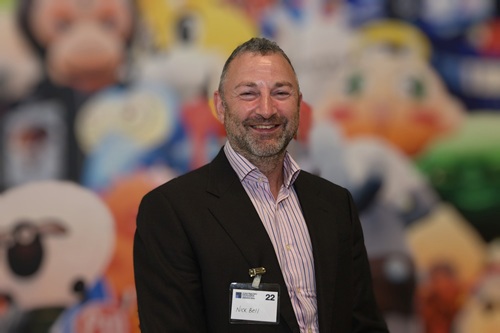 Nick Bell: "Motivational Interviewing isn't critical or confrontational."
MI can also be helpful when supporting someone to make health-related changes. To be sustainable, the motivation for such changes usually has to come from within.
Step five, for example, asks the ‘interviewee’ what the advantages or benefits will be of a new approach. “This encourages workers to put into their own words the reasons for doing things differently.
For example, ‘I want to see my grandkids grow up’ or ‘I want to keep playing sports for as long as possible’ are highly personal and powerful motivations for safeguarding their health – often more meaningful than simply being told that they must comply with a rule about wearing PPE.”
But MI does take time, and the technique is not for anyone seeking ‘quick wins.’ Often, Bell says, you might have a chat with someone that, on the face of it, hasn’t moved the dial at all.
But then, weeks later, they might come back to you to discuss next steps for implementing a change to a process, or making a healthier life choice.
Nick argues that the safety professional’s role is not to replace people’s judgement with our own: “Rather it is to create the conditions where people can use their own judgement more effectively.”
Dr Nick Bell is honorary principal lecturer at Cardiff Metropolitan University and was recently shortlisted as the OSH Influencer of the Year and Lifetime Achievement Awards at the IOSH awards.
Tool two: spinning the DISCs
We are all different. Different people need different things from their communications with others. That’s the basis of DISC, a behavioural decoding tool that was presented engagingly by Natalie von Tersch, founder of health and safety consultancy Mint H&S, at this year’s SHW Live Show in July.
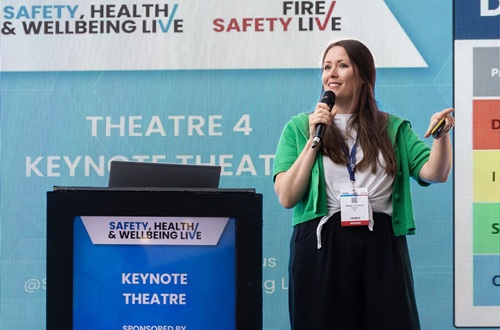 Natalie von Tersch presenting on the DISC profile system at SHW Live in July. Photograph: SHW Live
Based on a theory developed by American psychologist William Marston, it identifies four basic behavioural drives: Dominance, Influence, Steadiness, and Compliance (DISC). We can apply it in the workplace to understand people better and adapt our communication styles accordingly, explains Natalie, who we catch up with via email after the show.
Natalie set out for the audience how safety professionals can use the DISC system to work out how other people prefer to receive information and even make decisions.
If your CEO is a high ‘D’, you’ve got to ‘talk their language’
For example, if you’re approaching the CEO to ask for financing for a safety initiative, it may involve two entirely different approaches depending on where they fall on DISC.
“A highly dominant, results-focused manager may respond best to concise information linked to efficiency, performance, or commercial outcomes. An influential, people-focused leader may be more persuaded by stories, engagement, and the impact on teams,” she says.
DISC is especially useful given the restrictions most safety professionals face in terms of power and authority. “One of the biggest challenges for health and safety practitioners is that we are rarely responsible for operational delivery, yet we are often trying to influence the decisions of those who are,” says Natalie.
“Even if we have hierarchical power, ‘telling’ people what they should do is rarely enough to create lasting change. Communication is a two-way exchange.”
DISC works, she argues, because it helps shift the focus from ‘what’ we say to ‘how’ we say it. This acknowledges the well-founded truism that knowledge is often less important than delivery. Research by the Stanford Research Institute found that 75 per cent of long-term job success is attributable to soft skills, while only 25 per cent is down to technical knowledge.
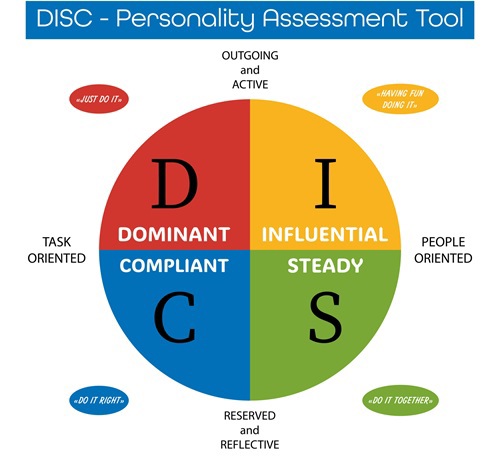
DISC identifies four basic behavioural drives: Dominance, Influence, Steadiness, and Compliance. Image: iStock
Just like MI, the approach seeks to put us on the ‘same side’ as the person we’re addressing, meaning that it works as well for colleagues as for directors. “Rather than appearing to sit in opposition to operations, we are able to position ourselves as a partner who understands the concerns and priorities of the people they are trying to influence,” says Natalie.
Natalie argues a workshop is a great way to understand the real-world application of DISC, but even a basic understanding of the model can be incredibly useful.
Next time you’re on a site walk, in a toolbox talk, or talking on Teams with a manager, start by observing how they present information – even if it’s just about their weekend. This can help you adapt your approach when it comes to your part.
“Are they focused on outcomes and quick decisions? Do they want detail and evidence? Do they value relationships and conversation? Or do they prefer time to reflect and consider change? Are you losing the room?”
“When used in this practical way, DISC becomes less about labels and more about developing situational awareness and emotional intelligence. That is something every safety professional can begin using immediately.”
Using DISC can also help us have compassion for ourselves. “If you’ve got conflicts and you can’t build rapport with someone – it’s just not gelling – this gives you another way to look at it. You can see that it’s not about you, it’s not about them. It’s just that we think in different ways.”
 "'Telling’ people what they should do is rarely enough to create lasting change." Photograph: iStock
It sounds simple, but in reality, does it rather highlight that it’s hard for people who don’t share behavioural drives to work effectively together? If you’re an ‘I’ you will value people, while a ‘D’ will be more outcome-oriented. Aren’t these types always going to end up talking across a fundamental divide?
Natalie is more optimistic. Difference, she says, is essential for creativity and productivity. “The beauty of our communities and teams is the diversity within them – we all have different ways of thinking, and that’s how we get stuff done.”
Natalie von Tersch is founder of health and safety consultancy Mint H&S.
FEATURES
Eliminating barriers in reporting: how conversational AI can unlock safety engagement
By on 01 January 0001
Why UK employers need to rethink recruitment, retention and support for older workers
By on 01 January 0001