
British Safety Council’s Hidden Hazards campaign asks us to recognise workplace health risks that are easily overlooked because they are not always visible or immediate. The emerging science of human performance takes that challenge further, and we therefore need to ask: what if some hidden hazards matter not only because they can make people ill, but because they can quietly change how well people think, judge and respond while they work?
Features
When did health and safety become the science of human performance?
By
on 18 October 2026
When I started my career, some 35 years ago, when the cloud was still a weather concern rather than somewhere we stored our risk assessments, occupational safety was largely about protecting people from physical hazards. Over time, that extended to occupational health, wellbeing, leadership and culture. We looked at machinery, chemicals, noise, manual handling and unsafe conditions. We measured exposure and trained people to follow procedures. That work remains essential, but the boundaries of our profession have moved considerably.
Today, researchers are asking whether the air we breathe can alter the decisions we make, whether heat affects judgement before it produces obvious physiological symptoms, whether fatigue changes the way the brain processes information, whether psychosocial conditions influence operational safety, and whether artificial intelligence genuinely reduces cognitive demand or simply relocates it somewhere less visible.
That is closely aligned with the prevention-led thinking behind Hidden Hazards. British Safety Council describes the campaign as a way of bringing less visible workplace health risks into the open and acting before harm occurs. The campaign’s dedicated themes include stress and air quality, while the campaign launch also identified fatigue among the less visible hazards that can have serious consequences. Likewise, British Safety Council has highlighted that heat is often viewed as a risk that can be dismissed because its danger is not always immediately apparent. This article extends that same logic to the conditions that shape safe human performance.
The UK Health and Safety Executive (HSE) defines human factors as the environmental, organisational and job factors, together with human and individual characteristics, that influence behaviour at work in ways that can affect health and safety. HSE explicitly includes workload, the working environment, shift timing, breaks, mental demands, communication, leadership and organisational culture within that system. The definition is not new. What is changing is our ability to observe, measure and understand these influences with greater precision.
Researchers are no longer studying only whether a person was exposed to a hazard. They are increasingly examining whether the conditions surrounding that person altered attention, judgement, memory, emotional interpretation or the capacity to respond. That has important consequences for the occupational safety and health (OSH) profession. It suggests that the next evolution of risk management may be less about asking only “What could harm this person?”, and increasingly about asking, “What conditions might change this person’s ability to perform safely?”
The air around us may be part of the decision-making system
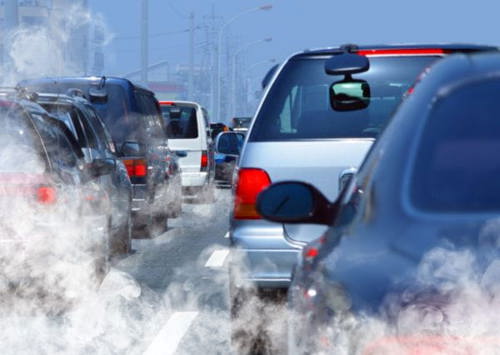
Let us take one of my favourite subjects, indoor air quality. We tend to think about air quality primarily as an occupational health issue (and therefore look to reduce respiratory exposure at work), and our worries often centre on the impact poor air quality has on human health, such as causing or aggravating conditions like asthma, cardiovascular problems, infection or long-term disease. But can the air around us alter how well we think, judge and make decisions? One of the most striking demonstrations comes not from a factory, construction site or control room, but from chess.
Künn, Palacios and Pestel studied 121 players across three official chess tournaments in Germany and linked indoor air-quality measurements with more than 30,000 individual moves. Chess software allowed the researchers to compare each move with a computational benchmark and estimate both whether an error occurred and how serious it was.
A 10 µg/m³ increase in PM2.5 was associated with a 2.1% increase in the probability of a meaningful error, a 26.3% relative increase and, among erroneous moves, a 10.8% increase in error magnitude.
But perhaps the most interesting finding was what happened when another familiar workplace factor was added, namely time pressure. During moves 31–40, when players were approaching the point at which a fixed number of moves had to be completed within the time limit, the effect became stronger. A 10 µg/m³ increase in PM2.5 was associated with a 3.2% increase in the probability of an error, while the magnitude of errors increased by 20.2%.
Chess is useful to researchers because performance can be measured objectively, move by move, against a computational benchmark.
The study therefore provides an unusual window into what happens when highly skilled people undertake complex cognitive work in changing environmental conditions.
Reviews of fine and ultrafine particulate matter describe several plausible mechanisms through which pollution may affect the central nervous system, including inflammatory and oxidative-stress pathways, effects involving the blood–brain barrier and, for some ultrafine particles, potential transport through olfactory pathways. The evidence is developing regarding the relative importance of these routes.
More recent experimental research adds another layer. In a 2025 controlled study, 26 healthy adults were exposed for one hour to either high particulate-matter concentrations or clean air. When tested four hours later, particulate exposure was associated with poorer selective attention and emotion-expression discrimination, while working memory and psychomotor vigilance were not significantly affected. Importantly, the effect was not uniform across every cognitive function.
Intervention evidence is also beginning to emerge. A 2026 randomised crossover trial, 119 adults used a working high-efficiency particulate air (HEPA) purifier for one month and a sham unit, an otherwise similar device that did not provide effective HEPA filtration, for another month.
Cognitive performance was assessed using the Trail Making Test, a timed task in which participants draw lines connecting items in sequence. Part A requires them to connect numbers in order, while the more demanding Part B requires them to alternate between numbers and letters, testing executive function and mental flexibility.
Across all participants, HEPA filtration produced no significant improvement in completion times. Among those aged 40 or over, however, the average completion time for Part B was 12% shorter after the month of HEPA filtration than after the sham period.
The authors cautioned that further research is needed, but the study is useful because it shifts the discussion from documenting exposure towards testing a practical preventive measure.
The lesson is not that every increase in particulate matter will produce a predictable workplace error. A person may still be able to operate equipment, attend a meeting, analyse information or make a decision while becoming marginally less able to filter distractions, interpret information, manage complexity or choose correctly under pressure. It challenges a familiar assumption that if people are physically capable of continuing to work, their decision-making ability must also be intact.
Ventilation deserves the same broader discussion. Carbon dioxide (CO₂) in occupied buildings is often used as an indicator of ventilation, although researchers have also tested whether CO₂ itself can influence cognitive performance. Research shows that relatively small changes in the environments in which we work and learn can influence human performance.
In experimental work, CO₂ concentrations approaching 1,000 ppm, generated simply through human respiration in inadequately ventilated spaces, were associated with reductions of around 30% in cognitive performance, including reaction times and decision-making. Controlled studies have reported poorer decision-making under higher CO₂ conditions and higher cognitive scores in office environments with lower pollutant loads and greater ventilation. The precise mechanisms and effect sizes vary between studies, so this should not be reduced to a simplistic “CO₂ number equals performance” rule. But the overall evidence is enough to make ventilation relevant not only to comfort and infection control, but to the quality of the environment in which cognitive work is carried out.
Now change the setting. Imagine a pilot managing an abnormal situation, a control-room operator interpreting multiple alarms, a surgeon making a time-critical judgement, or a leader deciding how to respond to an emerging emergency. Suddenly, air quality is not simply a question of comfort or wellbeing. It is part of the risk environment and may be one of the conditions that supports, or degrades attention, judgement and decision quality.
This is precisely why the Hidden Hazards campaign’s future focus on air quality matters.
We should not consider indoor air only through the lenses of respiratory disease, infection control and legal exposure limits. The less visible question is what the working atmosphere may be doing to human performance before anyone appears obviously unwell.
Heat may affect the mind before it incapacitates the body
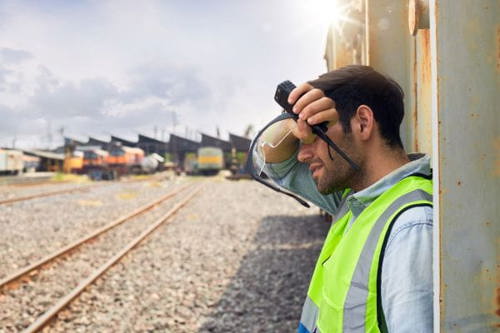
The health dangers from heat have traditionally been managed by seeking to prevent or minimise the physiological consequences, including dehydration, heat exhaustion, heatstroke, cardiovascular strain and, in severe cases, death. These remain the most urgent risks. But research increasingly indicates that heat can also affect cognitive performance.
A 2025 systematic review and meta-analysis drew together 30 studies of temperature and office-type work. Compared with a reference range of 21°C to 25°C, temperatures above 25°C were associated with slower responses and lower composite work performance. Effects became clearer when exposure lasted for more than one hour and were more pronounced for tasks requiring higher cognitive ability.
The work most vulnerable to heat may therefore not always be the most physically demanding. It may be work requiring sustained judgement, planning, memory, vigilance or the management of competing information.
A small controlled study published in 2026 offers a more detailed picture. Twenty middle-aged manual workers with experience of heat-exposed occupations completed six cognitive tasks under four wet-bulb globe temperature conditions while their brain activity was monitored using electroencephalography. Executive-memory performance followed an inverted-U pattern; it improved under moderate thermal stimulation before declining as heat stress increased. By contrast, sensorimotor performance remained stable or improved across some warmer conditions. The researchers also observed heat-related changes in brain activity, with frontal regions appearing particularly sensitive.
What this illustrates is more interesting than a simple “heat makes performance worse” message. Human performance under heat can be task-dependent and nonlinear. A person may continue to complete a familiar physical response effectively while their capacity for planning, working memory or complex judgement is beginning to deteriorate. This helps explain why waiting until a worker appears visibly distressed can be an unreliable control.
For safety-critical work, heat assessments may therefore need to consider not only metabolic demand, clothing, humidity and physical symptoms, but the cognitive demands of the task. What decisions must be made? How much information must be retained? Is the work time-critical? Can complex decisions be rescheduled? Are additional checking arrangements required as thermal exposure increases?
One way to describe this is cognitive safety, recognising that the brain is also an organ affected by occupational exposure. British Safety Council’s own commentary on Hidden Hazards has made a similar prevention point about heat – that a risk can be dismissed as an inconvenience precisely because its seriousness is not always visible.
Fatigue is not a feeling; it is a change in capability
Fatigue is often discussed as though it were a matter of personal discipline - whether someone slept properly, took sufficient breaks or managed their energy effectively. Human-factors guidance from HSE points towards a more systemic issue – highlighting that shift timing, break patterns, workload and mental demands are features of work design, not simply individual choices.
In a 2025 study, researchers measured 100 paediatric intensive-care nurses before and after night shifts. Following the shift, they observed reduced cerebral oxygenation measures, poorer verbal-fluency performance and increased anxiety. The study was conducted in a sub-plateau environment, so its findings cannot automatically be generalised to every workplace, but it provides physiological as well as behavioural evidence that night work can alter cognitive functioning.
The significance for occupational health and safety is not confined to healthcare. Shift timing, inadequate recovery, workload, monotonous monitoring and extended periods of wakefulness are present in transport, utilities, security, construction, manufacturing, emergency services and many other sectors. Yet fatigue is still frequently addressed through awareness training rather than through the design of working time.
We tell people how to recognise tiredness while retaining schedules, staffing levels and production expectations that may create it.
A fatigue-management programme that relies principally on the tired person identifying their own reduced capability contains an obvious weakness, as the person whose judgement may be impaired is being asked to judge the quality of that judgement.
Psychological health and operational safety are not separate systems
The evidence increasingly challenges the idea that psychological health and operational safety can be managed as separate disciplines. A 2024 systematic review and meta-analysis examined 85 studies involving 288,581 nurses. Burnout was associated with poorer safety climate and safety ratings, as well as more medication errors, patient falls, infections, adverse events and missed care. The associations were broadly consistent across age, sex, work experience and geography. Most of the included studies were cross-sectional, so the analysis cannot establish that burnout directly caused each outcome, but the consistency and scale of the associations are difficult to dismiss.
This matters because organisations often manage wellbeing and safety through separate structures. Wellbeing may sit with human resources or occupational health, but operational safety sits with the health and safety team. Productivity sits with management. Staffing sits with finance. Technology sits with IT. The human being, however, experiences all of them at once.
High workload can affect attention and decision-making demands. Poorly designed shifts reduce opportunities for recovery. Inadequate resources increase task demand. Organisational culture and leadership shape what people regard as normal and whether concerns are raised. These are not separate from human factors; HSE explicitly treats workload, work patterns, communications, leadership, culture and resources as part of the system that influences safe behaviour.
This is why psychosocial risk should not be treated simply as a question of employee wellbeing, sickness absence or resilience. It is also a question of human reliability and operational performance. A worker can be technically competent, appropriately trained and working within a well-designed procedure, but still be operating with reduced capacity because of fatigue, excessive demand, poor recovery, uncertainty, conflict or sustained psychological strain.
The Hidden Hazards campaign’s forthcoming focus on work-related stress is therefore more than a wellbeing conversation. It is an opportunity to connect psychological health with the way work is designed, resourced and controlled - and with the reliability of the people and systems expected to perform under pressure.
The question should not stop at “Could this work make someone psychologically unwell?” We should also ask “Could the way this work is designed reduce the person’s capacity to perform safely and reliably?”

AI is changing where human thinking happens
Artificial intelligence introduces a particularly interesting dimension to the science of human performance because it does not simply remove work; it changes its cognitive architecture.
A 2025 study surveyed 319 knowledge workers and analysed 936 first-hand examples of generative-AI use. Higher confidence in generative AI was associated with less reported critical thinking, while higher task-specific self-confidence was associated with more. Qualitative responses suggested that generative AI can shift critical-thinking effort away from producing information and towards information verification, response integration and task stewardship. In other words, cognitive effort is not necessarily eliminated; some of it is redistributed.
That distinction matters. A system may generate an answer in seconds, but someone still has to determine whether that answer is correct, relevant, sufficiently complete and, in a safety-critical context, safe to act upon. Highly fluent outputs can create an appearance of authority. The risk is not necessarily that AI produces obviously poor information; it may be that an apparently credible recommendation is accepted without sufficient challenge.
These are not entirely new human-factors problems. Research on automation has long warned about over-reliance, failures of monitoring and decision bias. Bainbridge’s classic “ironies of automation” described the paradox that automation can remove routine human involvement while leaving people responsible for the rare and difficult situations in which intervention matters most. Parasuraman and Riley later formalised concerns around automation misuse, including over-reliance and failures of monitoring.
Generative AI potentially extends these issues far beyond traditional high-hazard industries. OSH practitioners therefore need to go beyond cybersecurity, privacy and technical accuracy in their risk assessments. Has the worker retained sufficient knowledge to recognise an implausible output? Does the design of the system encourage verification or passive acceptance? What happens to competence when judgement is repeatedly delegated? How is responsibility defined when an employee acts on an AI-generated recommendation? And, perhaps most importantly, are we designing work in which the human remains meaningfully engaged, or simply present as the final layer of accountability?
AI is not a named theme of British Safety Council’s Hidden Hazards campaign, and it should not be presented as one. But it belongs in the wider argument this article is making; that some of the most consequential changes to risk may be subtle, distributed through the design of work, and difficult to see until performance begins to fail.
A broader model of occupational risk
Taken together, the research outlined in this article changes the unit of analysis in health and safety. Environment, work design, technology, time pressure, fatigue, leadership and organisational culture combine to create the conditions in which people can - or cannot - perform reliably. This does not mean OSH professionals must become neuroscientists, psychologists or artificial-intelligence engineers. It does mean our profession must become better at integrating their evidence.
Risk assessments need to identify conditions that degrade performance, not simply hazards that cause direct injury. Incident investigations need to look beyond “human error” and examine why attention, judgement or communication made sense in the circumstances. Occupational hygiene needs to connect exposure data with the demands of the work being performed. Technology procurement needs to assess cognitive load, human oversight and decision authority. Psychosocial risk management needs to be treated as part of operational resilience, not as a wellbeing campaign running alongside it.
None of this is a rejection of established human factors. In many respects it is the application of human-factors thinking to a richer evidence base. HSE has long argued that safe performance is shaped by the job, the individual and the organisation, and that work should be designed around both human limitations and strengths. The research now gives us increasingly specific ways to see how those conditions affect performance.
The evidence increasingly tells us that human performance is not a fixed personal quality that employees bring through the door each morning. It is dynamic. It is shaped by the environment, the task, the organisation and the technologies with which people interact.
A call to action
My challenge to employers and OSH professionals is to choose one safety-critical activity and examine it again through the lens of human performance. What air are people breathing? What heat are they experiencing? How long have they been awake? What competing information must they process? What interruptions are accepted as normal? What decisions have been delegated to technology? What pressures discourage them from pausing or speaking up? What assumptions are we making about the brain’s ability to compensate?
Then ask the question that should increasingly sit at the centre of modern health and safety – have we designed the work so that a human being can succeed, particularly when conditions are at their worst?
That is also the challenge at the heart of Hidden Hazards: learning to see what is easy to overlook and acting before harm occurs. Silica dust, poor air quality, stress and fatigue may be less immediately obvious than an unguarded machine, but invisibility does not make a risk less real. The same prevention principle should apply wherever the evidence shows that working conditions can quietly erode the capacity to perform safely.
If our profession continues to focus only on the hazard while ignoring what the working environment is doing to the human brain and body, we may be measuring only half the risk. The next evolution of OSH is not to move away from traditional prevention. It is to see prevention more completely, designing work around both the limits and the extraordinary capabilities of human beings.
Dr Julie Riggs is education and membership director at British Safety Council. Contact and connect with her at:
britsafe.org
linkedin.com/in/dr-julie-riggs-dprof-cfiosh-27283820/
FEATURES
Safety on demand: the role of renting safety equipment in the workplace of the future
By on 18 October 2026