
Businesses have traditionally purchased safety equipment like portable gas detectors or breathing apparatus outright. However, many employers are now supplementing asset ownership with rental models, valuing the ability to quickly source ready-configured equipment to meet fast-changing on-site requirements, and appreciating immediate access to specialist knowledge on the most appropriate kit for a particular hazard, and training on how to operate it.
Features
Safety on demand: the role of renting safety equipment in the workplace of the future
By
on 18 October 2026
Over the past decade, we’ve seen a profound change in the way that health and safety teams operate. What was once a function focused primarily on compliance and incident prevention is evolving into a strategic discipline that helps organisations navigate constant change.
The workplace of the future will demand greater agility than ever before. Projects are becoming shorter and faster-paced, workforces are increasingly mobile and geographically dispersed, while automation, AI and connected technologies are reshaping how work is performed. At the same time, organisations face relentless pressure to improve productivity while operating with fewer resources.
Yet as the workplace changes, the discipline of health and safety is becoming increasingly complex, requiring careful judgement to balance the opportunities created by technological innovation with the challenge of protecting workers in environments that are more dynamic, interconnected and unpredictable than ever before.
This is, for many organisations, prompting a fundamental rethink of how safety equipment is procured, managed and deployed.
Ownership options
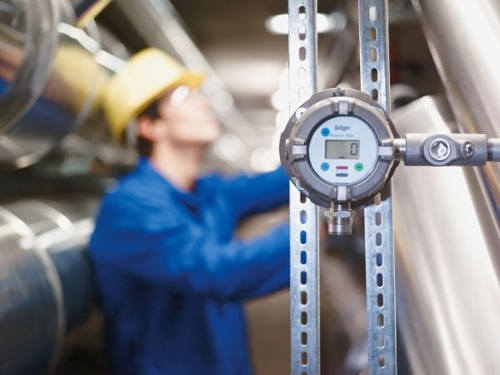
It is likely that there will continue to be a strong case for owning safety equipment where demand is consistent and predictable. Day-to-day operations, routine monitoring activities and established safety procedures can all be supported effectively by a well-managed in-house fleet of equipment, whether portable gas detectors or breathing apparatus.
The challenge, however, is when operational requirements change unexpectedly. Major projects, facility upgrades, shutdown or maintenance programmes, site expansions or changing compliance requirements can all create sudden spikes in demand. Equipment fleets that are perfectly suited to everyday operations may quickly become stretched when additional people or locations require extra safety equipment or when protection is required against new hazards.
In these situations, organisations face a choice: invest in equipment that may sit unused for long periods or find a more flexible way to meet changing requirements.
Flexibility is now a business necessity
For modern-day health and safety requirements, flexibility and scalability are no longer nice-to-haves; they are increasingly becoming essential within health and safety operations.
A project may need just a dozen gas detectors one week but several hundred the next. A risk assessment or compliance review might identify a safety monitoring requirement that needs addressing immediately. A new contract or site mobilisation can demand additional protection measures at very short notice. The question is not whether demand will fluctuate but whether health and safety provision can respond when it does.
The organisations that manage these challenges most effectively are increasingly those that build flexibility into their health and safety strategy from the outset. Rather than relying entirely on owned assets, they supplement them with more flexible equipment, expertise and support as the operational needs change.
This creates a more scalable model of safety provision, and one that reflects the way modern companies operate, while providing organisational resilience.
Moving beyond reactive rental
Renting safety equipment has traditionally been viewed as a last-minute solution when equipment is unavailable or demand unexpectedly increases. However, that perception is beginning to change.
Rental models are being used increasingly as a strategic component of safety programmes rather than an emergency fallback.
The difference lies in planning and support. Instead of simply supplying equipment, a proactive approach ensures that devices are correctly specified, configured, calibrated and prepared for the intended application before they arrive on site.
This reduces the risk of delays, incorrect equipment selection and last-minute compliance issues. It also gives health and safety professionals access to specialist knowledge that can help identify the most appropriate solution for a particular task or hazard.
For those balancing compliance responsibilities alongside operational demands, that level of support can be just as valuable as the equipment itself.
The rise of the specialist partner
The future of work may also change the relationship between organisations and their safety equipment providers.
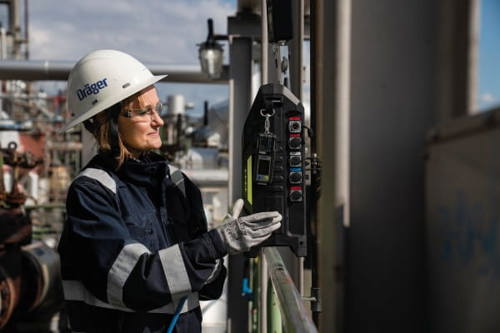
As internal teams become increasingly stretched, health and safety professionals have less capacity to manage every aspect of specialist equipment themselves. As a result, suppliers that can provide more than products, in the form of trusted advice, experience and expertise, are increasingly valued.
Equipment selection, configuration, calibration, servicing, maintenance, training and deployment all require time and expertise. In complex applications, choosing the wrong equipment can create unnecessary risk, delays and compliance issues, all of which have serious potential consequences for operations, efficiency and personnel safety.
A more strategic approach can transfer some of this complexity to a specialist partner, which can help determine what is required for the application, prepare equipment for deployment and provide the technical support needed throughout its use.
This approach aligns with a broader shift already taking place across many industries: organisations are increasingly focused on their core capabilities while using specialist partners to provide expertise and capacity where required.
For safety teams, the value is not simply convenience: it is the ability to access specialist knowledge at the point it is needed.
Turning equipment data into actionable insight
Another advantage of this type of approach is the data it generates. Tracking equipment usage across projects can provide valuable insight into how safety assets are being used, where demand is increasing and which areas may require additional training or support. It can also reveal patterns in equipment damage, maintenance requirements and utilisation rates that are difficult to identify through traditional fleet audits alone.
This information helps organisations move beyond simply meeting compliance requirements and towards a more proactive approach to risk management. As workplace technology becomes increasingly connected, many health and safety leaders are also looking for better visibility across their equipment fleets.
Understanding where devices are located, how they are being used and whether they are ready for deployment is becoming an important part of operational decision-making.
Confidence remains the priority
While flexibility and scalability are increasingly important, they should never come at the expense of protecting employees. Health and safety professionals need absolute assurance that the equipment protecting their people is fit for purpose, properly maintained and correctly configured for the hazards present.
The principle is straightforward: equipment should be ready to perform when it matters most. That means regular servicing, accurate calibration, full compliance and a verified state of readiness before deployment. Whether equipment is owned, rented or managed through a hybrid model, those fundamentals remain non-negotiable.
Connected safety
Looking ahead, another defining feature of the future workplace will be ever-increasing integration.
For example, many organisations currently manage fixed gas detection systems, portable monitoring devices, breathing apparatus and other safety technologies through separate platforms. The latest innovation is already bringing these systems together, providing a unified, real-time view of equipment status, location, condition and usage.
As connected safety ecosystems become more common, the benefits of flexible provision models will extend far beyond equipment availability. Access to real-time operational insight will help organisations make faster, better-informed decisions and maintain high safety standards in increasingly complex working environments.
For health and safety professionals, the key challenge is no longer simply acquiring equipment. It is ensuring that safety provision can adapt as quickly as the risks and operational demands around it. Those who embrace flexibility, supported by expert partners and scalable solutions, will be best placed to protect people while maintaining compliance and operational performance.
Preparing for the future
The future of work presents health and safety professionals with a complex balancing act. Organisations must remain productive and competitive, while continuing to meet their legal and ethical responsibilities to protect workers. Flexibility will be central to achieving that balance.
Safety teams need to consider not only what equipment they require today, but also how health and safety requirements might change as projects, technologies, workforces and risks evolve. They need access to the right expertise and the ability to increase or reduce safety provision without compromising standards.
Safety technology should no longer be viewed simply as an asset to be purchased and stored. It should be considered as part of a wider safety capability, combining equipment, expertise, data and flexibility.
For health and safety professionals, the objective remains unchanged: protecting people from harm. What is changing is the environment in which that responsibility is delivered. The workplace of the future will be increasingly dynamic, and it will be important that safety provision is equally dynamic to keep pace.
Those organisations that build adaptability, connectivity and scalability into their safety strategies will be best positioned to meet the challenges ahead – ensuring that, whatever the workplace of the future looks like, the right protection is ready when and where it is needed.
For further information, go to:
draeger.com/en_uk/Safety/Services/Draeger-Hire
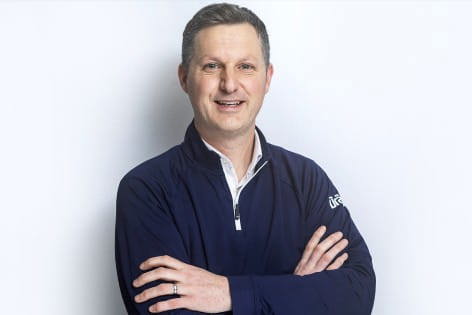
Euan McIntosh is safety technology lead at Draeger Hire.
FEATURES
Safety on demand: the role of renting safety equipment in the workplace of the future
By on 18 October 2026