New research from Dräger suggests a significant proportion of workers feel increasingly afraid to speak up about safety problems at work, making it more important than ever that leaders create the psychological conditions that enable workers to report concerns, make suggestions and challenge the status quo without fear of rejection or retribution.
Features
Psychological safety: exposing the intention gap
By
on 30 July 2026
Psychological safety in its true sense isn’t just a corporate soundbite which serves to tick a box that can be set to one side when businesses come under pressure. Instead, workers need to both feel, and to be, protected at all times, regardless of other business pressures.
They also need to feel comfortable asking questions, sharing ideas, raising concerns and pointing out errors without fear of embarrassment, rejection or punishment.
Yet the findings of independent research carried out for the 2026 Dräger Safety and Health at Work (DSHAW) report suggests that while there are signals of corporate intent to deliver psychological safety in the workplace, there is a growing ‘intention gap’. In other words, there is a disparity between the intention and the operational reality, with an urgent need for a paradigm shift to bridge this gap.
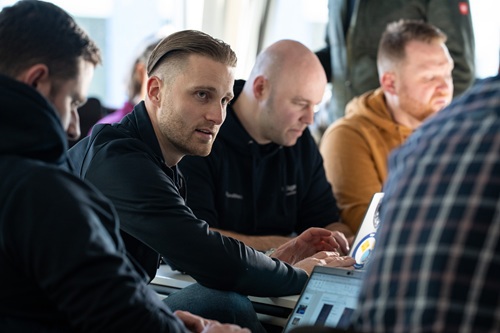 More than half of respondents (53%) say that the current economic climate makes them less willing to raise health and safety issues. Photograph: Dräger Safety
While four in five respondents to the research (80%) said that despite global uncertainty they feel that their organisation is managing workplace safety risks effectively, nearly a third (30%) said they feel that safety mistakes are rising because people feel increasingly afraid to speak out. A similar figure, 28%, believe there is less trust in leadership and reduced support.
However, the outlook is not entirely gloomy. There is an indication of positive news within the same research, with more than three quarters of respondents (76%) believing that their organisation is making efforts to actively engage and involve staff in health and safety matters.
This suggests a continued commitment, or at least an intent, to encourage participation and inclusion in safety-related decision-making, even if these efforts are not always followed through.
The reality appears to be that this picture is tempered by concerns about whether people feel able to speak up in practice. More than half of respondents (53%) say that the current economic climate makes them less willing to raise health and safety issues or to challenge leadership decisions.
This reluctance is particularly pronounced among younger workers: 62% of Gen Z (those currently aged 18-29) compared with just 29% of ‘baby boomers’ (those over 62), feel nervous about speaking up.
Critical paradox
Commenting on the findings, Magnus Magnusson, programme manager – Vision Zero at Dräger, says: “This year’s research for the Dräger Safety and Health at Work report exposes a critical paradox: while organisations invest in formal safety structures, the psychological conditions needed to use them remain fragile. The generational gap is telling.
"Younger workers are the most reluctant to speak up, which directly undermines ‘Vision Zero’ principles that require active participation from every employee.
“That 53% suppress concerns due to economic pressure shows that psychological safety is structurally contingent, not merely cultural. Leadership needs to recognise that silence is not compliance. It is undetected risk.
“Workers clearly prefer prioritising mental health over traditional hazards, signalling an important evolution in how people understand harm. Psychological safety must become the foundation of all safety management, not a parallel initiative.
“Trust must be earned, not mandated.”
The role of leadership
When seeking to create a psychologically safe workplace, employers need to ensure that the overall approach to psychological safety becomes an integral part of the organisation’s culture, supported by the leadership team.
Leaders should demonstrate openness, humility and respect, and create a culture where mistakes are learning opportunities, rather than instilling a blame culture which discourages workers from speaking up.
Commenting on the role of visible leadership to support trust, Hugh Maxwell, a health and safety leader with more than 30 years’ experience, said: “People respond to leaders who listen, respond and act. It is important to consider that psychological safety is built one conversation at a time.”
Magnus Magnusson also reinforces the role of leadership: “Safety is created where leadership provides direction and fosters an environment in which critical issues can be raised openly.
“A practical reference framework for positive leadership is provided by the International Social Security Association through its guidelines based on the PERMA Model. Factors such as trust, meaning, a sense of achievement and strong relationships are not soft issues; they are fundamental to attention, decision-making and safe behaviour in the workplace.
“The growing disconnect between leadership and operational reality further exacerbates the situation. Without reliable feedback on day-to-day operations, risks remain undetected or are systematically underestimated. Effective leadership is therefore demonstrated through presence, active listening and consistent action based on real working conditions.”
Those companies that succeed in creating a psychologically safe workplace environment are those where leadership encourages trust, respect and belonging, and, in this way, they unlock the full potential of their staff, boosting innovation, reducing absenteeism and improving health and safety.
Trust and perception of safety
If trust is a critical component in creating and maintaining psychological safety, our findings show an alarming trend when it comes to respondents’ perception of who they trust most when it comes to securing their safety in the workplace.
The research shows that an overwhelming 91% of respondents say they place the greatest trust in themselves when it comes to their own safety. This is followed by trust in safety technology (84%) and employers (76%). Confidence drops sharply beyond this core circle, with only 25% expressing trust in the Government and just 23% having faith that AI will keep them safe.
Ian Cooke, director of audit, consultancy and culture change at British Safety Council, comments: “Trust is fundamental to creating workplaces where people can stay safe, healthy and well. However, the findings suggest a weakening of the shared, collective trust needed for a strong safety culture, and in these conditions, trust becomes both more fragile and more important.
“Instead, strong leadership, open communication, visible action and shared accountability are what builds trust across organisations. When trust is present, people are more likely to highlight risks, collaborate effectively and look after one another – all of which are essential to safer, healthier and more resilient workplaces.”
Raising concerns
When it comes to the evolution of psychological safety, nearly three quarters of respondents (72%) say that if they raise a safety concern, they are confident that action will be taken.
A similar proportion (73%) report that their organisation operates open communication channels on health and safety and actively encourages discussion. This points to a nuanced picture in which formal mechanisms may exist, but confidence in using them is uneven and perhaps more shaped by a wider context than leaders may imagine.
Practical application
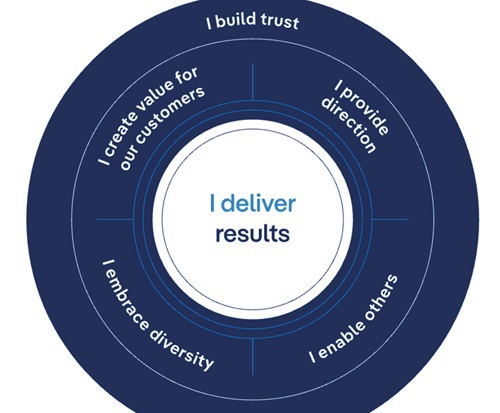
At Dräger, psychological safety is at the heart of our employee programme WeLEAD. This was first introduced six years ago and was updated last year to reflect that trust encompasses all, and that at the heart of the programme, as a customer service company, is the delivery of results for Dräger’s customers, achieved by working together.
The programme also provides the framework for successful and effective leadership and collaboration across the business to encourage engagement, mutual respect, psychological safety and teamwork.
WeLEAD plays a role in shaping our culture, whether you lead a team or contribute as an expert in your field. While everyone, at all levels, is encouraged to engage with and champion the WeLEAD culture (from senior leaders to sales teams out in the field), we also recognise the important role that leadership plays in ensuring that we live by the principles of psychological safety.
As a result, the leadership team is encouraged to create an environment where collaboration and leadership thrive, to lead by example by acting as role models and inspiring others through words and actions, while empowering others to take ownership, to grow in their roles and to contribute their strengths to create a difference.
Helen Smith, human resources manager at Draeger Safety UK, who is involved in running the programme, says: “WeLEAD provides a shared foundation for how we work together, support one another and achieve success as an organisation. Creating a culture where people feel valued, respected and empowered is the responsibility of all employees, but leaders play a particularly important role in setting the tone and creating the conditions for others to succeed.
“By developing trusting relationships, encouraging open dialogue and embracing diverse perspectives, our leaders help build psychologically safe environments where individuals feel confident to contribute ideas, challenge constructively and learn from experience. Where leaders consistently demonstrate the WeLEAD principles through their actions and decisions, they create a culture of accountability, collaboration and continuous growth.”
There are other positive examples of organisations that prioritise psychological safety and where it has been installed as part of the business culture. At Unilever, one of the UK’s largest employers, psychological safety is taken very seriously.
 Safety encompasses the mental and emotional wellbeing of the workforce and encourages stronger performance in the workplace and greater staff engagement. Photograph: iStock
Two years ago, as part of World Mental Health Day, Unilever launched a campaign to shine a light on psychological safety. ‘Speak Up, Listen Up’ encouraged people to feel more comfortable about speaking up and the importance of listening and not judging.
Today, psychological safety and the speak up process is integrated into Unilever’s business integrity programme and the programme promotes a culture where workers are encouraged to speak up about unsafe behaviours, fatigue or impairment without fear of negative consequences.
Meanwhile, in the UK’s largest employer, the National Health Service (NHS), strong and supportive leadership has been identified as a fundamental influence on safety culture, with an emphasis on psychological safety and its contribution to the delivery of high-quality patient care.
This is driven by a belief that when a psychologically safe environment is created, it provides the capacity, time and skills for people to learn, and this underpins key NHS values, including compassion, creativity and community.
Psychological safety, the bottom line
What is clear is that in today’s workplace, safety extends beyond the absence, mitigation or control of physical hazards; it encompasses the mental and emotional wellbeing of the workforce and, based on the examples above, encourages stronger performance in the workplace and greater staff engagement.
By encouraging workers to voice concerns, admit mistakes and share ideas without fear of retribution, leaders can create an environment where every individual feels valued and has a sense of both being safe and feeling safe, from which everyone benefits.
However, before this can become a widespread reality, it is essential to address the paradox which currently exists and for psychological safety to truly become the foundation of safety in the workplace.
2026 Dräger Safety and Health at Work report can be found at:
draeger.com/en_uk/Safety/The-Draeger-Safety-and-Health-at-Work-Report
Adam Pope is head of safety marketing at Draeger Safety UK