The measures in place to protect a work site from problems like trespassing or fly-tipping on adjacent premises can have a positive or negative effect on worker wellbeing, productivity and motivation, so it’s essential employers consider measures like effective site perimeters and security arrangements when assessing overall safety and wellbeing risks.
Features
Why physical security is a cornerstone of psychological wellbeing
By
on 03 June 2026
Wellbeing strategies have moved a long way in the last decade.
Mindfulness, nutrition, sleep, mental health support, ergonomic design and air quality are now routine considerations for any HSEQ professional building a credible workplace wellbeing programme.
However, something that is rarely considered is how the external environment immediately surrounding a workplace, and the visible state of the site itself, can positively or negatively influence how workers feel and perform.
The argument behind environmental psychology is straightforward. In short, people respond to more than just actual risk – they respond to the cues their surroundings give off.
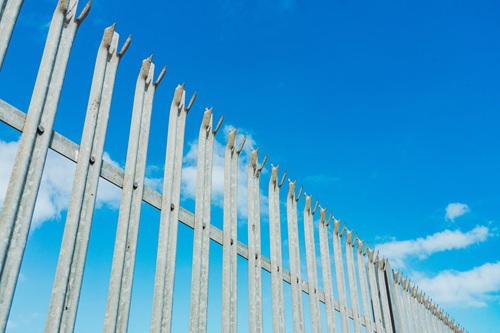 Visible, well-maintained security infrastructure communicates a sense of order. Photograph: iStock
A site that looks well managed, with intact fencing, clear sightlines and obvious access control, transmits a different signal to the people working there than one that looks neglected, exposed or surrounded by dormant property.
These different signals have positive or negative consequences for employee stress, vigilance and the sense of control that underpins good mental health at work.
For HSEQ professionals, this matters. It means the standards of the physical protection measures at a site are not simply a facilities management issue but something with a direct bearing on workforce wellbeing.
The link between perceived safety and psychological wellbeing
The principle that the physical environment shapes both crime and the fear of crime is well established.
Crime Prevention Through Environmental Design, the discipline most commonly known as CPTED, has informed UK policing and planning practice for decades. ‘Secured by Design’, the official police security initiative, publishes commercial design guidance built on these principles, covering perimeter treatment, surveillance, access control, lighting and maintenance.
The wellbeing dimension is worth drawing out. Perceived safety is about more than whether a workplace appears physically secure and there have been no incidents of crime, trespass or aggression – it is about whether the people on-site actually feel secure.
Feeling exposed to risk – whether it be aggression, theft, people trespassing or something else – has measurable effects on stress levels, concentration and a worker’s willingness to perform certain tasks.
Visible, well-maintained security infrastructure communicates a sense of order. It tells the workforce that someone has thought about their safety, and the environment is being actively managed to keep everyone safe, rather than risks being left to drift.
This signal becomes more important the further a worker is from the centre of an active site, the later in the day they are working, and the more isolated their role.
The wellbeing cost of an insecure environment
Recent reporting in Safety Management has set out how a threatening environment can affect the mental wellbeing and activities of lone and frontline workers. A SoloProtect survey covered by the magazine in March 2026 found that half of lone workers had avoided tasks or locations because of safety concerns, and 56% had experienced verbal or physical abuse in the past year.
When workers change how they approach their work because they feel unsafe, the cost is felt in service delivery, productivity and quality, alongside wellbeing.
Workers on late shifts, those conducting site visits, security staff and anyone whose role takes them to the edges of a property or beyond its perimeter can experience a constant feeling of low-level stress when their environment looks and feels uncertain. Sustained exposure to that kind of background anxiety contributes to fatigue, presenteeism and, over time, potentially to poor mental wellbeing.
One simple way of making the work site look and feel safer is visible perimeter security, such as adequate fencing, lockable gates and key- or access code-controlled entry points, such as doors and gateways. Although this will not solve every problem related to site security and employees’ perceptions of dangers, it changes what a worker sees when they look up from their task, and that matters.
The hidden risks of vacant and dormant adjacent property
A workplace rarely exists in isolation. Many active workplaces sit next to, or close to, vacant or dormant property, sites undergoing construction, or land awaiting redevelopment.
The condition of the adjacent space can affect how safe and secure the active workplace is and how safe and secure workers perceive it to be. However, the condition of adjacent properties is not always considered when conducting safety and security risk assessments for a workplace or work site.
One of the most visible symptoms of a poorly managed adjacent site – which can contribute to a sense of fear among those working in buildings nearby – is fly-tipping.
For example, Defra’s latest statistics show that local authorities in England dealt with 1.26 million fly-tipping incidents in 2024–2025, a 9% rise on the previous year. Commercial and industrial estates are often a target for fly tippers, and if dumped waste accumulates on or beside a vacant site, this can lead to other problems.
For instance, combustible materials increase the risk of fire, while hazardous waste can create contamination and pest problems. The visible decline of the surroundings, evidenced by dumped rubbish, invites further fly-tipping and other forms of antisocial behaviour.
Arson, squatting and structural decay sit alongside fly-tipping as part of the same cluster of risks. For HSEQ professionals in charge of active workplaces located close to dormant sites, these types of risks are a concern, since the safety practitioner will rarely have any control or influence over boundary protection on neighbouring sites.
In fact, as perimeter security barrier and security services provider Maltaward explains in a blog on fly-tipping on vacant industrial and commercial sites, a fly-tipping incident on an adjacent site can quickly also pose health, safety and environmental risks to an occupied work premises – for example, if hazardous waste is present, or if dumped rubbish attracts vermin like rats. In effect, the health, safety and environmental risks are ‘exported’ across the property line.
The health and safety hazard identification and risk assessment process generally classes the areas to address as ‘People, Environment and Tasks’.
The condition of an adjacent site falls squarely into the ‘Environment’ category, and the safety risks a site poses should be assessed with the same rigour as the tasks being performed or the people performing them on the occupied work site.
A wider view of risk assessment
HSE’s Management Standards for work-related stress provide a framework for assessing and controlling the health and safety risks arising from stress in the workplace. They cover six areas of work that can lead to stress if not properly managed – including demands, control, support and the work environment itself.
The standards are designed to be applied systematically, and there is a strong case for considering areas such as the presence and effectiveness of site perimeters, the state of physical site security infrastructure, and the condition of adjacent sites when considering environmental factors that could affect employee stress and mental wellbeing.
In practice, however, these factors are often handled separately by facilities or estates teams, who tend not to involve or consult the wellbeing or occupational safety practitioners. It therefore makes sense for employers to ensure the various teams work together to collectively and effectively consider and manage factors such as site security and the safety and security risks posed by adjacent vacant sites.
For example, it makes sense for the HSEQ team to carry out an assessment of the safety and security risks from an adjacent site, once they are aware it is about to change hands, is likely to be vacant for a period of time, or before contractors arrive to begin refurbishment or conversion works.
This will help identify possible hazards and risks in advance so action can be taken to reduce the risk of problems such as trespassing and fly tipping arising in the first place – such as contacting the site owner to secure the site as soon as it becomes vacant.
A proactive approach is also likely to be easier and less time-consuming than trying to encourage the site owner or other interested parties, such as local authority enforcement teams, to take action once problems begin to emerge.
Practical recommendations for HSEQ professionals
There are a variety of steps that can be taken to address the physical security of a work premises, and nearby vacant sites controlled by other organisations, that will in turn also help support the wellbeing of the organisation’s employees. These include:
- Mapping the active workplace and adjacent properties to identify any vacant, dormant or poorly secured sites that could affect the safety and security of the workforce
- Considering the quality, condition and effectiveness of the company’s own site perimeters and physical security features and arrangements (plus those on adjacent premises), when assessing environmental factors that could affect employee health and safety as part of general safety risk assessments
- Considering areas such as lighting, signage and access control measures when conducting risk assessments for the company’s site
- Consulting workers – particularly those on late shifts, those who work alone and security staff – on how the environment affects their sense of safety
- Building relationships with neighbouring landowners and local authorities so that issues on adjacent properties can be flagged and addressed before they escalate
- Ensuring perimeter security meets appropriate and recognised standards – including following police guidance on effective site security measures, where appropriate
- Treating investment in security barriers, fencing, lighting and access control as part of the wellbeing budget, rather than just expenditure on general facilities management
Reviewing the visible state and condition of the company’s site regularly, since suitable maintenance of features like fencing, gates and exterior lighting provides a deterrent against problems like burglary, trespassing and threatening behaviour by the public, and sends a positive signal to the workforce that the company cares about their safety, security and wellbeing.
In conclusion, investment in the physical security of a work site simultaneously delivers returns in relation to worker health, safety and wellbeing, facilities management and business reputation.
Site security should therefore be considered in advance as part of an overall and collective approach to worker safety and facilities management, rather than an afterthought once problems like vandalism, trespassing and fly-tipping have begun to occur.
The physical security measures, and the general condition of the work site and its perimeter, that workers see as they enter and leave the workplace can affect how they feel and perform at work. As a result, issues such as site security, and the condition of nearby premises, should be addressed in the same way a company would consider everyday work-related safety hazards and risks within its work site.
Note: this article is intended for informational purposes only and does not constitute professional legal or safety advice. Organisations should consult with qualified health and safety professionals and refer to the latest HSE guidelines to ensure full compliance with relevant UK regulations.
Chloe Miller is a business graduate and freelance writer, specialising in industry insight and the latest best practice for marketing, business and HR.
Contact her at:
chloe-miller.co.uk
E. [email protected]