
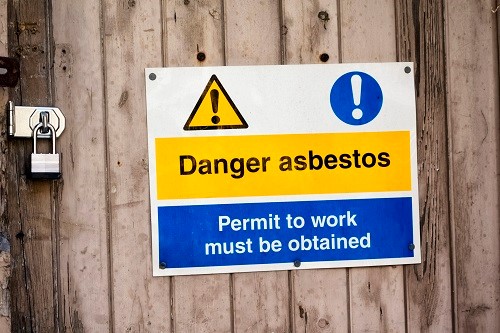
Almost half of UK tradespeople view asbestos as a problem of the past and more than a quarter have not followed the correct removal procedures when they have encountered the deadly material, according to new research.
News
New research reveals ‘alarming’ lack of awareness about the dangers of asbestos
By
on 12 November 2024
A survey of 500 tradespeople, commissioned by training provider High Speed Training and conducted in September, found that 49 per cent of respondents felt that asbestos was a problem associated with the past. A further 50 per cent of those surveyed said that asbestos had become less of a concern the longer they had spent in their trades, with 26 per cent of respondents stating that they had not followed the correct procedures to remove asbestos when they came across it.
 Photograph: iStock
Asbestos-related diseases claim the lives of around 5,000 people a year in the UK and the carcinogenic material is the greatest cause of work-related deaths, according to the Health and Safety Executive (HSE). When asbestos is disturbed, invisible fibres are released which, when inhaled, can cause incurable cancers such as mesothelioma to develop decades later.
Despite being banned almost 25 years ago, it is estimated that asbestos is still present in up to 1.5 million buildings across the UK. Earlier this year, HSE launched a campaign to raise awareness of the dangers of asbestos, to run alongside its ‘Asbestos and You’ campaign, designed to act as a guide to tradespeople about the risks of asbestos and the legal responsibilities when it comes to handling the material.
But that message is still not getting through. More than half (55 per cent) of those surveyed by High Speed Training either disagreed with or were unaware of the fact that asbestos is the biggest workplace killer. Of the 26 per cent of respondents who said they had not followed the correct asbestos-removal procedures, 55 per cent said it was too expensive to do so while more than a quarter said their boss or supervisor had told them to get rid of the material themselves. Forty-six per cent of those surveyed said they believed that asbestos training was insufficient.
Alongside the tradespeople survey, 500 members of the public were asked about their attitudes towards asbestos. Almost 70 per cent of respondents said they had never been concerned about asbestos at home or in the workplace.
The findings have prompted Mesothelioma UK, High Speed Training and Independent Asbestos Training Providers (IATP) to write a joint letter to UK education secretary Bridget Phillipson, urging the Department for Education to make asbestos awareness training compulsory for the next generation of tradespeople.
“The purpose of this open letter is to ensure that those entering into careers that have the highest chances of encountering [asbestos] have all the necessary information embedded into their education, so that they can protect themselves and those around them, now and in the future,” said Dr Richard Anderson, head of learning and development at High Speed Training. “This is a public interest issue and we’re asking for the relevant government body to do its part in aiding the future safety of everyone that could be impacted.”

NEWS

Remembering British Safety Council India colleague, Anindita Sengupta
By British Safety Council India on 17 September 2026
It was with great sadness that the staff of British Safety Council India learnt of the passing of their much-loved and respected colleague Anindita Sengupta, following a long and courageous health battle.

Government hails progress in rolling out social security for unorganised workers as e-Shram portal reaches 318.9 million registrations in five years
By Orchie Bandyopadhyay on 17 September 2026
Five years after its much-heralded launch, the Indian Government has announced that its e-Shram digital portal designed to enable unorganised workers to access eligible social security benefits has hit the milestone of 318.9 million individual registrations nationwide.
British Safety Council calls on UK Government to ban silica-containing materials
By on 20 August 2026