
Psychological stress in the workplace is rising and there is “no silver bullet” to resolve it, Marshel Rozario, an associate tutor at health and safety training provider RRC International, told delegates attending the SHW Live North conference in Manchester.
News
No silver bullet to address rising levels of workplace stress
By
on 28 January 2024
“There is no one thing you can introduce thinking it will solve stress,” said Rozario, emphasising that employers should adopt a “trial and error” approach to determine what works best for them.
His advice to organisations is to “start small”, ensure there is buy-in from senior managers and put a support mechanism in place, so that employees have somewhere to turn when they feel under pressure.
Developing awareness about stress and measuring it is a crucial first step. Once the seriousness of the problem is understood and employers have an appreciation of the stressors that workers commonly face, they can move to the “what are we going to do about it” stage, said Rozario.
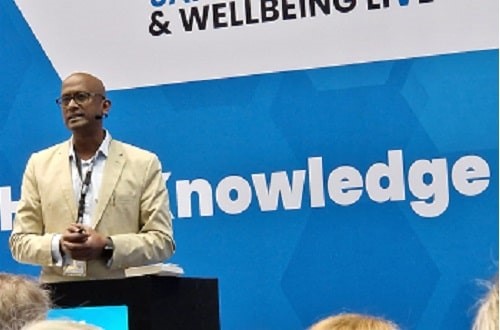 Marshel Rozario, RRC International: "There is no one thing you can introduce thinking it will solve stress." Photograph: British Safety Council.
The good news is that they “don’t have to reinvent the wheel” because “the wheel has already been invented”. Companies can conduct stress risk assessments “using the HSE [Health and Safety Executive] approach”. HSE has set out six areas of work design which can affect stress levels: demands; control; support; relationships; role; and change. Companies can then work towards training managers to support workers who are suffering from stress.
“It’s okay not to be okay,” Rozario said, adding that open and honest communication is key when it comes to managing stress.

NEWS

Indian government developing social security scheme for gig and platform workers, says labour secretary
By Orchie Bandyopadhyay on 21 October 2026
In a bid to expand the country’s social security safety net, the Modi government is working on a proposed social security scheme for gig and platform workers, Ministry of Labour and Employment secretary Chandra Bhushan Kumar revealed in a speech to the Confederation of Indian Industry (CII) in September.