
Chemical toxicity risks are underestimated and underfunded, a new report has stated, arguing that thousands of synthetic chemicals used in common and everyday materials are causing untold damage to human health.
News
Chemical toxicity a ‘health crisis in plain sight’: new paper outlines cancer and fertility risks of everyday chemicals
By
on 08 August 2025
Between 40,000 and 350,000 chemicals not found in nature are in commercial use and production, with production up fifty-fold since the 1950s.
The impact of pesticide use alone on cancer incidence may “rival that of smoking” says the report from the team at Deep Science Ventures (DSV), who analysed hundreds of scientific papers and spoke to dozens of investors to arrive at the results.
Exposure in the womb to pesticides increases the odds of childhood leukaemia by over 50 per cent. It is also linked to leukaemia, non-Hodgkin’s lymphoma, bladder, colon, and liver cancer in adults.
Chemicals use contributes to cancer, obesity, Alzheimer’s, pregnancy issues, ADHD, fertility problems, heart conditions, and respiratory ailments, says the paper Toxicity: The Invisible Tsunami, How pervasive toxicity threatens human and planetary survival, published this week.
 Experts advise avoiding heating and storing food in plastic. Photograph: iStock
Commenting on the findings, Dr Julie Riggs, British Safety Council’s director of education, said that more than 100 million synthetic substances have been created with the rise of industrial chemistry, with tens of thousands currently in commercial use.
“New doesn’t always mean novel or dangerous, it could be a variation or derivative of an existing compound. Yet only a tiny fraction of these chemicals are ever tested for their effects on human health or the environment.”
DSV, an entity that spins out companies aimed at tackling big problems in environmental and human health issues, says that toxicity action is disproportionately small.
There is only one venture capital firm dedicated to the reduction of toxicity, whereas there are well over 50 dedicated to mitigating climate change, for example.
“Despite the scale of the crisis, chemical pollution receives far less funding, regulation, and public awareness than climate change,” agreed Julie.
“As society, we need to invest in green chemistry, PFAS (polyfluoroalkyl substances, or ‘forever chemicals’) in consumer goods need to be banned, we must start designing safer substances as alternative. AI and vitro tools can be used to screen chemicals faster. We must also demand transparency and accountability from manufacturers.”
In the UK, chemical safety is partly overseen by HSE. Through REACH, HSE carries out the registration, evaluation, authorisation, and restriction of chemicals. This includes substances used in a mixture, for example ink or paint, as well as in the manufacture of food packaging.
In July, HSE enacted a ban on C8 foam used in fire extinguishers, which contains the ‘forever chemical’ perfluorooctanoic acid (PFOA).
But DSV’s report argues that we need to go further, citing the ban on white phosphorus in matches in 1910 as one of the earliest examples of successful action to eliminate an industrial toxic chemical.
“In the best cases regulation and invention can work synergistically, with a robust regulatory environment providing an incentive for the development of safer chemicals,” it says.
At home, Julie says that individual actions like choosing safer products, such as fragrance-free or non-toxic products, can make a difference.
“Generally, avoid unnecessary synthetic perfumes, such as candles, sprays, air fresheners. Avoid heating and storing food in plastic, wash produce thoroughly, eat organic, cook with cast iron instead of non-stick pans,” she advised.
“People tend to fear massive, one-time chemical exposures (like spills or poisonings), but the real danger often lies in low-dose, often undetectable, long-term exposure, the kind we experience every day,” she said.
“It’s a health crisis hiding in plain sight, and ignoring it only guarantees more cancer, infertility, chronic disease, and developmental harm in future generations. But we do need to act and demand change.”
Toxicity: The Invisible Tsunami, How pervasive toxicity threatens human and planetary survival is available here
NEWS
British Safety Council calls on UK Government to ban silica-containing materials
By on 20 August 2026
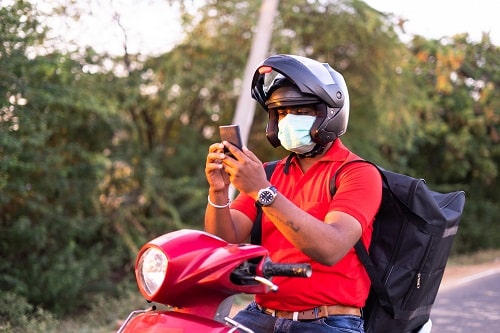
Network of welfare hubs for Hyderabad gig workers planned by entrepreneur
By Orchie Bandyopadhyay on 14 August 2026
A well-known Indian entrepreneur-turned-investor is set to launch the first of what he hopes will become a chain of subscription-based community welfare hubs providing rest and related facilities for the nation’s ever-growing gig workforce.
Mates in Mind launches free suicide prevention training for construction workers
By on 13 August 2026