No doubt you have heard or seen the ads marking the 50th anniversary of that famous fast-food restaurant with the golden arches. Those of you who’ve been paying attention will also be aware that it’s the 50th year since the Health & Safety at Work Act was enacted in the UK. I am sure there is no significance in this. But when I started thinking about it, there are perhaps some parallels we can draw between the success of the aforementioned restaurant chain and the landmark 1974 Act.
Opinion
Will we be celebrating AI fifty years from now?
By
on 01 September 2024
On the one hand, we have this simple, more predictable formula, which people get to know and rely on, and which stands the test of time. On the other, both allow space for innovation, change and new ideas, and both have reflected and catered for developments in society over the past 50 years.
 Photograph: iStock/Khanchit Khirisutchahual
Am I taking this too far? Perhaps. Admittedly, this year has seen quite a few of the things we now take for granted mark their half centenary: the Post-it note, the Rubik’s cube, the bar code, the robotic arm, the VW Golf, Bailey’s Irish cream and the Kinder Surprise egg, to name but a few.
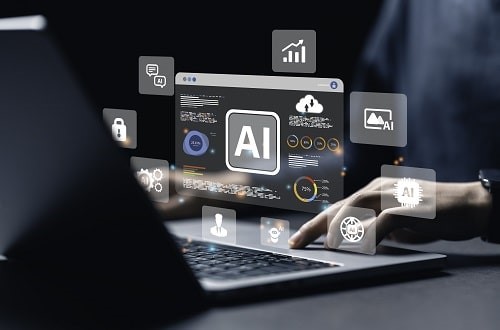
But we know that nothing stands still forever. All these successful products, especially fast food, have to keep up with rapid shifts in technology and behaviour, including artificial intelligence (AI).
And while we cannot know exactly how AI might transform the business of selling the humble burger, we can be pretty sure it will. Likewise, health and safety. Which is why we have taken the opportunity, 50 years on from the landmark health and safety legislation, to consider how new technologies, like AI, could transform how we keep people safe and healthy at work, and help them thrive.
 Mike Robinson FCA, chief executive, British Safety Council: "I can’t see why we cannot establish global and domestic regulations that prioritise worker safety and wellbeing, and avoid a race to the bottom on AI."
You will see in the September issue of Safety Management details about our new white paper, Navigating the Future: Safer Workplaces in the Age of AI, where we set out five big challenges we see for AI and health and safety:
- The first is that public debate about AI focuses too much on extremes and fails to address the real problems workers will face
- The second is that we need a strong, global regulatory framework for AI development and deployment
- The third challenge is that standards may be eroded due to a lack of agreed values
- The fourth is that AI is already exposing workers to risk, and;
- The fifth challenge is the need to ensure that domestic legislation and regulation can respond to the challenges of the future.
All of which point to the need for a global framework, based on an agreed set of values, which put human health, safety and wellbeing first.
Pie in the sky? Why?
If McDonalds can create a global business, where each and every one of its 41,000 plus restaurants operate from the same basic set of standards and rules, and if the UK can create a legislative regime for health and safety which stands the test of time and still provides a common framework, which not only works here but has informed other countries’ practices, I can’t see why we cannot establish global and domestic regulations that prioritise worker safety and wellbeing, and avoid a race to the bottom on AI.
As our white paper states, the UK’s health and safety regime remains a world leader and acts as “an inspiration to nations around the world and delivering safer and healthier workplaces at home”.
How we respond to the risks posed by new and developing technologies is a key question for practitioners, campaign groups and regulators.
But it’s also a question for all of us.
AI is really just a tool like any other, and how we all choose to use it will determine whether it becomes added to the list of things we just take for granted and value 50 years from now, or whether we end up wishing it had never been invented.