
Artificial intelligence (AI) and its impact on work practices was a significant feature of HSE’s AGM in which the regulator presented on its work and priorities.
News
HSE defends use of AI for protecting workers at AGM
By
on 12 August 2025
Questions were taken from the floor at the live streamed event on 29 July, including from Rob McGill, national health and safety officer at Unite. He said there was excessive use of AI to monitor workers in workplaces he had visited and asked HSE what they were doing about the problem.
HSE chief executive Sarah Albon said monitoring workers was not ‘Big Brother’ unless its use broadened out the purpose of safety. “Failing to wear PPE, stepping out of a safe area, AI can provide much more immediate, quicker surveillance which can protect that worker,” she said.
But she added: “It’s important that the communication and consultation takes place with unions in advance.”
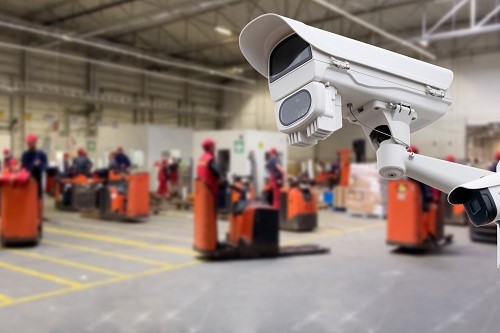 HSE chief executive Sarah Albon said monitoring workers was not ‘Big Brother’ providing it was used for purposes of safety and that consultation before use had taken place. Photograph: iStock
Albon said the regulator was in the process of compiling a database of real-world examples of AI across the industry sectors it regulates, which would be used as a ‘repository to aid the development of insights pertinent to the risk assessment of AI applications in industrial settings’.
Earlier, Chair of the HSE Board Sarah Newton told attendees that the regulator was also using different AI language models to understand risk profiles across the construction sector.
"This helps us to identify mismatches between the actual hazards causing workplace incidents and the risks our inspectors commonly focus on during site visits," she said.
"We have now expanded this beyond the construction sector and are using it to analyse risks within the major hazards sector."
HSE updated that it is adopting new technologies and data analytics to target inspections, assess risks, and modernise systems.
Its focus areas continue to be asbestos, noise, musculoskeletal issues and stress, with some new work on the impact of forever chemicals, including Per- and Polyfluoroalkyl Substances (PFAS) in fire-fighting foams.
Watch HSE's AGM on YouTube here
NEWS

Remembering British Safety Council India colleague, Anindita Sengupta
By British Safety Council India on 17 September 2026
It was with great sadness that the staff of British Safety Council India learnt of the passing of their much-loved and respected colleague Anindita Sengupta, following a long and courageous health battle.
Government hails progress in rolling out social security for unorganised workers as e-Shram portal reaches 318.9 million registrations in five years
By Orchie Bandyopadhyay on 17 September 2026
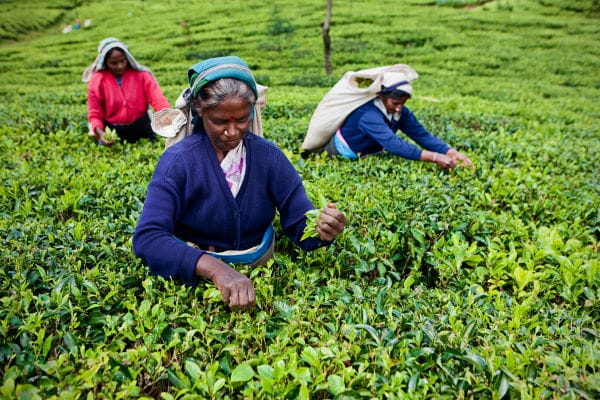
Five years after its much-heralded launch, the Indian Government has announced that its e-Shram digital portal designed to enable unorganised workers to access eligible social security benefits has hit the milestone of 318.9 million individual registrations nationwide.
British Safety Council calls on UK Government to ban silica-containing materials
By on 20 August 2026