
Four in five employees genuinely care for colleagues, but couldn’t help them in an emergency such if they had a cardiac arrest or were severely bleeding, new research from St John Ambulance has found.
News
Lack of first aid skills leave a third of workers feeling powerless, finds St John Ambulance study
By
on 29 August 2025
The charity says their study shows a gap between caring and capability, with many staff unable to help their colleagues in an emergency, even though they would want to.
Almost four in five (79 per cent) employees said they genuinely care about their colleagues, and the same proportion said they go out of their way to help their colleagues wherever they can.
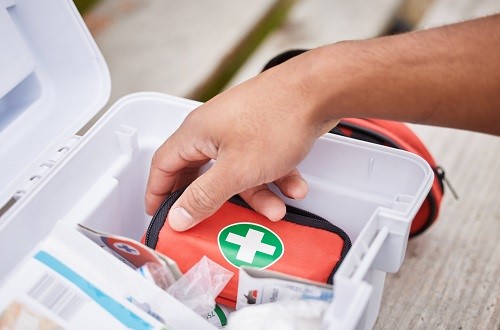 Nearly a third (29 per cent) of employees have been in a situation at work when no-one had first aid skills. Photograph: iStock
Popular ways employees show they care about their colleagues include making a colleague laugh when they’re stressed (43 per cent), taking on extra work to help a colleague (39 per cent) or making a tea or coffee when it’s not your turn (34 per cent).
“From cups of tea to emotional support, employees have shown that they’re there for each other at work. But while many people want to help their colleagues in an emergency, not enough would know what to do,” said Lisa Sharman, National Head of Education and Commercial Training at St John Ambulance.
September’s Save a Life campaign from the charity is calling on organisations to train more of their workforce in first aid after finding that nearly a third (29 per cent) of employees have been in a situation at work when no-one had first aid skills.
Nearly a quarter (22 per cent) of the workforce have never had any first aid training at all and of those who are trained, over a fifth (22 per cent) have skills that are more than five years old, meaning that they may have forgotten these skills and have outdated qualifications.
“Even if your workplace seems low-risk – like an office – accidents and emergencies still happen – choking, slips, allergic reactions, or even serious unexpected situations like terrorist attacks or natural disasters,” said Sharman. “Having multiple trained first aiders is an important safety measure that will protect both colleagues and the business.”
The charity calculated that employees make more than 10 cups of tea and coffee for colleagues each week on average, equivalent to three full working days of tea-making. This they say is more time than it would take to do a St John Ambulance first aid course, “which will equip them with skills to help in all manner of crises, including cardiac arrest, severe bleeding, or choking.”
Save a life campaign here
British Safety Council view
Dr Julie Riggs, Director of Education at British Safety Council, said: “First aid is a fundamental part of Occupational Health and Safety (OSH). It is key to preventing accidents and illnesses from becoming serious, saving lives, and promoting a healthier and safer work environment. Employers are legally obliged to provide adequate first aid provision, which includes conducting needs assessments, supplying first aid kits, and ensuring trained first-aiders or appointed persons are available.
“It is vital that staff know who their first aiders are, as there often won’t be time to check this in a real emergency. A rapid response can save lives, limit the severity of injuries, and give employees the confidence that their wellbeing truly matters. For businesses, it means fewer disruptions, reduced risks, and a stronger safety culture. And because first aid is a life skill, staff take that knowledge beyond the workplace, helping in their communities too.
“First aid training isn’t just about compliance, it’s about protecting people and building a safer, more responsible workplace.”
NEWS
British Safety Council calls on UK Government to ban silica-containing materials
By on 20 August 2026

Network of welfare hubs for Hyderabad gig workers planned by entrepreneur
By Orchie Bandyopadhyay on 14 August 2026
A well-known Indian entrepreneur-turned-investor is set to launch the first of what he hopes will become a chain of subscription-based community welfare hubs providing rest and related facilities for the nation’s ever-growing gig workforce.
Mates in Mind launches free suicide prevention training for construction workers
By on 13 August 2026