
Drug and alcohol testing can play a vital role in ensuring the safety of everyone at work, and simple, non-invasive testing devices are now available for fast and discreet results.
Features
Preventing drug and alcohol misuse through workplace testing
By
on 10 December 2025
There are indications that the rising prevalence of both drug and alcohol misuse is becoming an increasingly serious issue within the UK, and that this, perhaps unsurprisingly, is now also being recognised as having an impact on the workplace, ultimately compromising workplace safety. This view is supported by studies which suggest that 40 per cent of industrial accidents have been linked to substance misuse.
It is widely recognised that drugs and alcohol can impair judgement, coordination and reaction times, but it’s less widely understood that these characteristics of impairment continue long after consumption, and often into the next day.
These effects are clearly particularly dangerous in safety-critical roles – such as those involving the operation of heavy machinery or driving vehicles, whether forklift trucks or heavy goods vehicles - where any lack in concentration may impact not only the operator themselves but also other work colleagues and potentially members of the public.
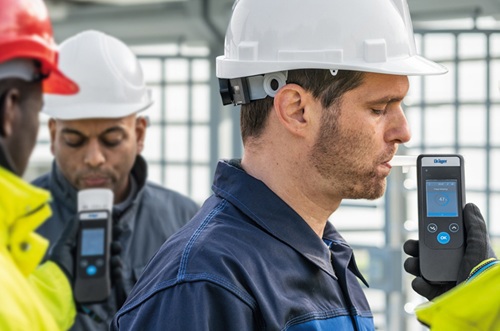 According to some studies, 40 per cent of industrial accidents have been linked to substance misuse. Photograph: Draeger
Research from the Chartered Institute of Personnel and Development suggests that one in 10 adults in the UK have used controlled drugs in the past year, while 15 per cent of adults consume alcohol at levels considered high risk, and two per cent show signs of dependency.
This is corroborated by research from leading medical insurer Bupa, which, earlier this year, reported that 34 per cent of respondents said that they had used or witnessed substance misuse or addictive behaviour during working hours.
Organisations are increasingly recognising that it is likely that they will have some employees who will be affected by substance misuse, and a growing number of companies are therefore taking proactive steps when it comes to alcohol, drugs and even some prescription medications. In the case of the latter, some commonly prescribed medications used to treat chronic pain, mental ill health or other conditions, can affect people in different ways and in some cases induce side‑effects such as blurred vision, dizziness and reduce concentration, thus having the potential to compromise safety.
While these prescriptions are clearly necessary, it is important that those employees involved are encouraged to let their employer know if they are taking medications that may impair safety so that appropriate steps can be taken to keep them and their colleagues safe.
Formal policies
Employers should establish formal policies on drug and alcohol misuse at work and (where necessary) substance impairment testing programmes to ensure they are meeting their general duty of care to ensure everyone’s safety but also to adhere to good risk management principles and procedures.
However, it is interesting to note that a proactive approach to drug and alcohol testing is not only being driven by decisions taken by employers but also increasingly by the expectations of employees themselves. Research undertaken as part of the Dräger Safety and Health at Work (DSHAW) Report 2022 found that 83 per cent of workers would comply with a corporate drug and alcohol testing programme as they believe it is in everyone’s interest to be safe at work.
This is set in the context that 78 per cent of managers surveyed said that their organisation had concerns about workplace impairment (and resulting injuries or accidents) due to alcohol, drugs and prescribed medications such as antidepressants.
 Bupa reported that 34 per cent of people said that they had used or witnessed substance misuse or addictive behaviour during working hours. Photograph: iStock
These findings are reinforced by further Dräger research for the 2023 DSHAW report which showed that almost three-quarters (71 per cent) of workers support all employees in their organisation being tested for drugs and alcohol as part of a wider safety at work initiative. This figure increases yet further in what many might consider higher-risk workplaces, such as the oil and gas and renewables industries, where over 80 per cent of workers were in favour.
In relation to how attitudes may evolve in future, opinions differ, but one suggestion is that the increasing use of illegal drugs, alcohol and prescribed medications could lead both to greater awareness of the issues in question and a better understanding of why corporate testing programmes are likely to play a growing role in keeping people safe at work.
Well-thought-out policy
A well-thought-out drug and alcohol policy is especially important where safety-critical tasks, as defined by the Health and Safety Executive (HSE), or workplace driving are involved. A good policy will explain the risks and outline the strategy and controls adopted by the organisation to prevent – and where necessary manage – substance misuse among staff, while also being fair, transparent and consistent.
When developing and implementing a workplace drug and alcohol policy – and seeking to comply with UK workplace drug and alcohol legal obligations – organisations should:
- Create and communicate a clear policy
- Conduct risk assessments to identify safety-critical roles
- Implement fair testing procedures, complete with employee consent and confidentiality
- Provide support and resources for employees with substance misuse issues
- Train managers to address misuse effectively.
This comprehensive approach will help ensure a safe working environment by managing the risk of substance misuse as well as ensuring compliance with health and safety, data protection, and equality legislation.
A strong policy should support employee health and wellbeing (and promote a culture of personal responsibility in relation to substance use and misuse), as well as reduce the risk of the organisation being subject to litigation or adverse publicity and the associated financial losses in the event of incidents caused or connected to substance misuse by employees. The policy should also align with – and complement – the organisation’s overall approach to the management of health and safety at work and should be deployed in a non-punitive way.
Testing methodologies
Effective management of drug and alcohol misuse in the workplace can include screening and testing, and depending on the circumstances within the specific workplace and workforce, this could involve:
- Pre-employment testing – screening at the recruitment stage, for instance prior to making an offer of employment or during an induction programme, helps to establish a baseline fitness for work, particularly in safety-critical roles.
- Random testing – random testing, where individuals or groups of individuals are selected in a random way for testing, acts as a deterrent against substance misuse and encourages a culture of personal responsibility and safety among employees.
- Post-incident testing – in the event of an incident, such as a workplace accident or near miss that suggests a dangerous situation could have occurred, post-event testing helps determine whether drugs or alcohol contributed to causing the event, including clarifying whether the event was the result of a genuine accident or error.
- Reasonable suspicion testing – if there are reasonable grounds to suggest an employee may be under the influence of drugs or alcohol, such as a smell of alcohol, signs of possible impairment, or reports about possible signs of impairment from an individual’s colleagues, a test will reveal any substance misuse, help to support a safety and wellbeing culture by allowing support to be immediately offered to individuals with a substance misuse problem, and improve education among the wider workforce about the company’s rules, procedures and test regime to prevent substance misuse.
- Ongoing monitoring and review – a regular screening programme can be used as an agreed support plan for an employee returning to work after substance abuse. This will also support the organisation’s overall safety and wellbeing culture, as these short-term plans can support an employee who may be at risk.
 Photograph: iStock
Non-invasive testing devices
Many companies are introducing in-house screening and testing for alcohol and drugs, using simple non-invasive devices that are quick, discreet and easy to use. Breathalysers capable of analysing a person’s breath alcohol content are commonly used as part of screening programmes and new innovations such as Bluetooth technology and data management software make both printing and the management of test results and data much simpler.
Also, as the requirement for portable and discreet drug testing methods has risen, there has been an increase in demand for saliva-based drug screening kits. These can be used to test for a combination of drugs – including opiates, amphetamines, methamphetamine, cocaine, benzodiazepines and THC (cannabis) – and give a fast reliable indication of recent drug use. Saliva-based test kits provide rapid results, allowing a manager to take immediate action to protect workplace safety – for example, by suspending the employee from work, pending further investigation and testing.
Alcohol interlock devices
When it comes to driving for work, the adoption of interlock devices in corporate vehicles provides an effective method of not only safeguarding against employees driving corporate vehicles while under the influence, but also supports alcohol reoffender programmes, if company drivers have been convicted of drink driving.
Alcohol interlock devices are becoming increasingly prevalent since the staged introduction of Regulation (EU) 2019/2144 began in July 2022. This regulation focuses on the general safety and the protection of vehicle occupants and vulnerable road users and requires new vehicles to be equipped with alcohol interlock ports, making installation into newer vehicles much easier.
Once installed, the interlock device requires the driver to undertake an alcohol breath test, which, if failed, prevents the engine from being started.
The introduction of this EU regulation was preceded by an extensive research project by the Parliamentary Advisory Council for Transport Safety (PACTS), which recommended the UK Government develop and implement an alcohol interlock programme, highlighting the potential role of the devices in preventing reoffending. Although this recommendation hasn’t been actioned, there has been a steadily growing interest in this technology, which, as well as being used in road vehicles such as cars, school buses and HGVs, can be installed in vehicles such as forklift trucks, cranes and other safety-critical machinery.
New Dräger and RoSPA guidance
For those who find the introduction of a testing policy a daunting prospect, Dräger has collaborated with the Royal Society for the Prevention of Accidents (RoSPA) to develop a comprehensive best practice guide to drug and alcohol impairment in the workplace. This provides a step-by-step guide to introducing workplace testing and addresses various considerations around testing methods. The document provides advice on the most common techniques for detecting substance impairment, such as breath tests and saliva testing techniques, and explains when the various methods are more effective.
The free guidance also highlights the importance of taking a balanced approach to tackling drug and alcohol impairment at work, to ensure both the safety of the workplace and the wellbeing of employees and provides advice on fostering a supportive environment to retain skilled employees, should anyone be revealed to have a substance misuse problem.
To find out more about workplace drug and alcohol testing and to access the guide, go to: draeger.com/en_uk/Safety/Drugs-Alcohol-Testing-At-Work
Mark Burrup is Drug and alcohol testing expert at Draeger Safety UK
FEATURES

Fatal falls in India: why are the numbers not declining?
By Orchie Bandyopadhyay on 17 September 2026
Despite widespread awareness of safe working procedures and equipment, falls from hieght remain one of the leading causes of workplace death and serious injury in India. Critics say problems such as time pressures and inadequate training lie at the root of many of these incidents, but others are hopeful that the new Occupational Safety, Health and Working Conditions Code will herald a reduction in falls by driving improvements in training, competence and supervision more widely.

Avoidable deaths, endless excuses: how can India improve its workplace safety culture?
By Orchie Bandyopadhyay on 17 September 2026
A recent series of high-profile workplace tragedies that claimed multiple lives across India have stoked public debate about the poor safety record of many of the country’s highest-risk industries. Trade unions argue that greater enforcement of safety laws is required to change business behaviour, while other commentators say many businesses require a huge internal cultural shift to safety excellence that must be led by directors and senior managers.
Why contact with electricity is this year’s leading powered access safety challenge
By on 14 September 2026