
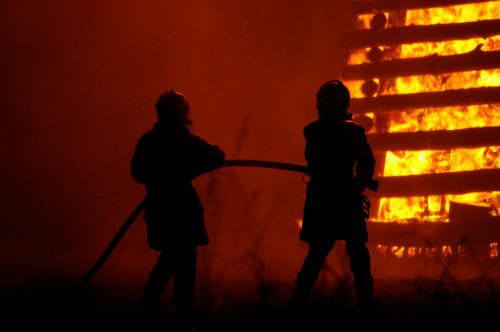
A deadly fire at a nightclub in Goa that claimed the lives of 20 migrant workers from across India made global headlines – and triggered fresh demands for government agencies to step up efforts to ensure the safety of low-paid workers in environments such as bars, nightclubs and hotels.
Features
Migrant workers: Goa fire tragedy reignites debate on poor safety protections
By
on 13 February 2026
India’s internal migration crisis is often discussed in numbers – millions on the move, billions in remittances to families in home villages and towns, percentage points of labour force participation. But in some cases, its true cost is borne in bodies and families. The recent fire tragedy at the North Goa nightclub, Birch by Romeo Lane, that claimed the lives of 25 people, most of them migrant workers at the club, exposes how India’s development model systematically relies on cheap, disposable labour while failing to guarantee even the most basic protections.
Workers’ rights campaigners argue that employment and underemployment remain at the heart of India’s widening inequality. For the bottom half of the population, the problem is not a lack of willingness to work, but the absence of stable, dignified employment near home. As a result, young men and women migrate repeatedly, often seasonally, sometimes permanently, to work in sectors such as hospitality, construction, domestic work and manufacturing, in cities, rural areas and holiday resorts. However, many commentators say these sectors take in labour without taking on responsibility for their working conditions, safety and fair pay.
Migrated for work
Unable to find work near home, Pradeep (24) and Binod Mahto (20), brothers from Fatehpur village in Lapung in the Ranchi district of Jharkhand state, migrated to Goa in 2025. They found work as helpers at the nightclub. The unmarried brothers sent home ₨30,000 a month to help their family pay for food, cooking gas and other essential household expenses.
Their untimely deaths in the catastrophic fire, which is thought to have begun when indoor fireworks set off as part of a stage performance ignited wooden ceiling beams, mean not just an emotional but also economic loss for their families. A third brother, Phagu Mahto, said: “We were three brothers, but now it’s only me. I work as a helper with my father, but the income is not enough. We depended on my brothers. Now it will be difficult to fulfil our basic needs.”
Phagu Mahto’s despair is not unique as it echoes through thousands of migrant households where survival depends on remittances sent home from distant cities and locations like seasonal agricultural farms and plantations.
Mohit Munda (22), another victim of the fire from Govindpur village in Jharkhand’s Khunti district, had left for Goa with his brother Vikas a year ago seeking work as chefs. Even though both brothers had studied up to the intermediate level in Ranchi, they could not find any work in their village. So, they decided to move to Goa where Vikas found work at a hotel in North Goa, while Mohit secured a job in the kitchen at the Birch by Romeo Lane nightclub.
Mohit was trapped in the kitchen of the nightclub, when the first and only floor of the building was engulfed in flames.
“My father and elder brother are farmers,” a distraught Vikas told The Print newspaper. “We were the only ones in our family earning, and we were their hopes. I don’t know what to say now. I don’t know how we shall survive from here on.”
Three migrant workers from Assam state also lost their lives in the fire.
Two of the three, Manjit Mal, 24, and Rahul Tanti, 32, were from the Cachar district’s tea garden community. Mal, a resident of the village of Silcoorie Grant and son of a tea garden worker, moved to Goa in 2024, where he secured work as a cook at the Birch by Romeo Lane. His family said he was their sole earner and had last returned home five months before the tragedy to help arrange his sister’s marriage. “He was supporting us by working hard in Goa, and our lives had started changing because of him,” said a family member.
Tanti, a resident of Kathal Grant village in Cachar, also worked in the nightclub. He is survived by his wife, two daughters and a two-month-old son. His wife, Sukriti Tanti, said that the family was expecting him to return home for a visit, but instead had received his body for burial. “My world is shattered. I do not know how I will raise my children,” she told reporters.
Another victim, Diganta Pator from Assam’s Dhemaji district, had been employed as a cook at the Birch by Romeo Lane for several years. When it came to repatriating his body to his home village for his funeral, his family struggled to even afford to cover the cost.
Poor work opportunities
In Assam, a general lack of job opportunities and major industries, plus the fact the tea gardens dotting the region’s landscape are unable to provide sufficient employment for all due to the poor growing yields they offer, forces many young people to migrate to other states in search of paid work. They work as guards, cooks and in other low-profile jobs where life security is low, said one resident.
According to eyewitnesses, the incident at the Birch by Romeo Lane occurred around 11:45 pm when the venue was reportedly packed with nearly 200 people. According to local officials, sparks from pyrotechnic guns came into contact with the club’s ceiling, which had constructed using bamboo, fibre sheets and palm-leaf materials. The venue, built largely with combustible décor, rapidly caught fire.
Attempts to tackle the fire were hampered by the building’s location. The club had been constructed on a small island, and the crossing to reach the island was a narrow lane, making it difficult for firefighters’ vehicles to reach the building. As a result, fire trucks had to be parked around 400 metres from the nightclub. A senior fire and emergency services officer told the Press Trust of India the restricted access made it difficult for responders to reach the nightclub, complicating efforts to control the fire. Officials, meanwhile, said most of the deaths were caused by suffocation.
Goa Chief Minister Pramod Sawant said a preliminary assessment indicated that the fire had begun on the upper floor. “From my preliminary enquiry, it appears the fire started on the upper floor. Because the doors were very congested, some people managed to escape, but once the fire intensified, others could not get out,” he said.
Sawant added the nightclub “had not adhered to fire safety norms” and ordered a magistrate-led inquiry to determine the cause of the incident and identify those responsible for the apparent fire safety failings.
At the time of publication, the owners of the Birch, brothers Saurabh and Gaurav Luthra, were in judicial custody following the issuing of a warrant for their arrest by a Goa.
The brothers had reportedly fled to Thailand on the morning after the fire, but were subsequently deported back to India by the Thai authorities. Goa Police arrested the two brothers on 16 December shortly after they landed in Delhi. Investigators said the duo had booked their flight tickets online within hours of the fire tearing through the illegal structure that housed the nightclub.
‘Systemic negligence’
Hitting out at the Goa state government, local social worker Rajesh Dabholkar said the nightclub fire was a shocking example of systemic negligence. He criticised the local government for allowing illegal operations – such as bars and nightclubs – to flourish in the tourist areas of Goa and said the tragedy reflects a complete breakdown in monitoring, enforcement and safety compliance by the relevant government authorities and agencies.
Dabholkar also demanded accountability from all the agencies involved in the oversight of fire and building safety in legal and illegal bars and nightclubs in Goa, and urged the Goa state government to stop turning a blind eye to building and fire safety violations that put lives at risk.
“An economy that depends on migrant labour while denying it safety and dignity is not merely inefficient, it is unjust,” added a labour activist from Goa.
“Accidents take place not because they are inevitable but because employers fail to prevent them,” the activist added. “Prevention means getting rid of hazards through proper workplace design, equipment maintenance, safety systems, and by enforcing protective procedures and training all workers exposed to risk, but these elements were evidently missing in this case.”
“While the Luthra brothers have been arrested under the Bharatiya Nyaya Sanhita [new criminal justice code] for negligence, our politicians need to understand that criminal accountability alone cannot address the systemic drivers that make such disasters likely,” stated the activist.
Benoy Peter, executive director at the Centre for Migration and Inclusive Development (CMID), a non-profit that advocates for the social inclusion of migrants in India, argues that if a migrant is killed at work, they should receive compensation under the Workplace Compensation Act. He added that trade unions should seek to encourage migrant workers to become members, so they advocate on their behalf for safer and fairer working conditions.
Challenge of decent work
According to the World Bank: “The United Nation’s 2030 Agenda gives due recognition to migration in achieving sustainable development. Furthermore, Sustainable Development Goal 8 seeks to promote inclusive and sustainable economic growth, with full and productive employment and decent work for all.
However, the challenge of decent work in India remains overwhelming, as India’s economy is largely informal and migration continues to be a key strategy for livelihood security.
“Most inter-state migrants face challenges of meagre wages, adverse employment conditions, inadequate onsite living conditions, and almost absent social protection.”
The World Bank further observes that India needs to take concrete steps towards safeguarding inter-state migrants and ensuring they have dignified labour. “The COVID-19 pandemic revealed the shortcomings of the existing inter-state migration policy,” it stated. “There is an imminent need to bring out a comprehensive inter-state migration protection and welfare policy as suggested by the Standing Committee on Labour in 2011–12.
“This will facilitate achieving the SDG-8.8 target to protect labour rights and promote safe and secure working environments for all workers, including migrant workers, women migrants, and those in precarious employment. Migrant welfare and protection should be central to labour policy in ensuring a decent world of work for inter-state migrant workers.”

FEATURES
Fatal falls in India: why are the numbers not declining?
By Orchie Bandyopadhyay on 17 September 2026
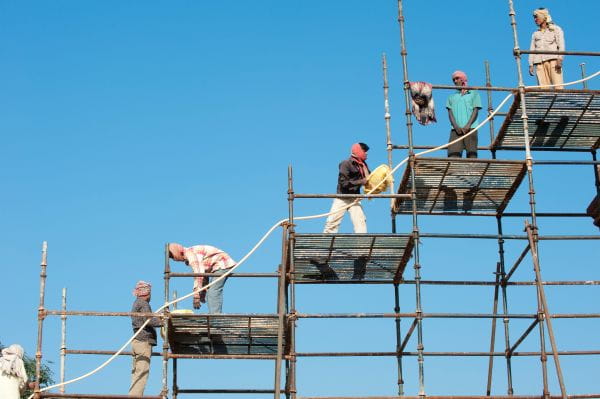
Despite widespread awareness of safe working procedures and equipment, falls from hieght remain one of the leading causes of workplace death and serious injury in India. Critics say problems such as time pressures and inadequate training lie at the root of many of these incidents, but others are hopeful that the new Occupational Safety, Health and Working Conditions Code will herald a reduction in falls by driving improvements in training, competence and supervision more widely.
Avoidable deaths, endless excuses: how can India improve its workplace safety culture?
By Orchie Bandyopadhyay on 17 September 2026
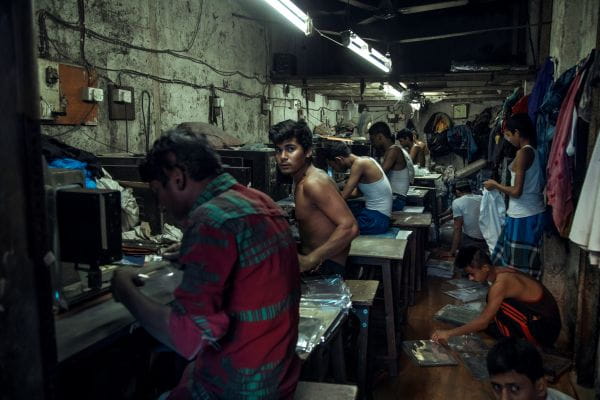
A recent series of high-profile workplace tragedies that claimed multiple lives across India have stoked public debate about the poor safety record of many of the country’s highest-risk industries. Trade unions argue that greater enforcement of safety laws is required to change business behaviour, while other commentators say many businesses require a huge internal cultural shift to safety excellence that must be led by directors and senior managers.
Why contact with electricity is this year’s leading powered access safety challenge
By on 14 September 2026