
Recent reports of suicides among workers ranging from police officers to electoral roll officials have prompted calls for employers and government agencies to do more to both reduce excessive workloads and provide better mental health support at work.
Features
Suicide at work: a major problem in India
By
on 11 December 2025
Trigger warning: this article mentions suicide.
On 7 October this year, an Indian Police Service (IPS) officer from Haryana, Y Puran Kumar, was found dead after suffering a gunshot wound at his home in Chandigarh.
In an eight-page typed and signed “final” note discovered after his death, entitled “Continued blatant caste-based discrimination, targeted mental harassment, public humiliation and atrocities by concerned senior officers of Haryana since August 2020, which is now unbearable, the 52-year-old accused nine serving Haryana police officers, a retired IPS officer, and three retired officials from the Indian Administrative Service (IAS), the arm of the Indian government which oversees the administration of police forces at state level, of caste-based discrimination.
The officer, who apparently used his service revolver to shoot himself, said the harassment included his official vehicle being withdrawn and requests for housing entitlements being unreasonably denied.
Kumar, who was from a Scheduled Caste (SC) and had served as a police officer for 14 years, also wrote that “mischievous anonymous and pseudo anonymous complaints” had been fabricated against him. “This is the extent of targeted vindictive and revengeful mental harassment, humiliation and atrocities being committed against Scheduled Caste officers like me... thereby compelling me to take this extreme decision today,” the note reportedly stated.
Kumar added that he had made various representations to the authorities urging them to investigate his treatment at the hands of fellow officers and IAS officials, and had hoped to receive “equity of treatment”. His note stated: “Instead of addressing the same, all the representations and complaints in this regard were ignored and are being used vindictively and in a revengeful manner against me.”
In the note, Kumar alleged that during a visit to a temple in 2002, the then director general of police for Haryana, Manoj Yadava, had publicly humiliated him for his caste; while separately, a now retired IAS officer, Rajeev Arora, had refused to allow him compassionate leave to visit his dying father. The note also accused Haryana’s current director general of police, Shatrujeet Singh Kapur, and police superintendent for the city of Rohtak in Haryana, Narendra Bijarniya, of “blatant caste-based discrimination, targeted mental harassment, public humiliation and atrocities”.
Kumar’s wife, Amneet P Kumar, a senior officer in the IAS, subsequently filed a police complaint, or FIR, against Shatrujeet Singh Kapur, Narendra Bijarniya, other serving Haryana police officers, a retired IPS police officer, and three retired IAS officials, accusing them of abetment to suicide, alleging their conduct contributed, or caused, her husband to take his own life. The FIR will now be investigated by police in the city of Chandigarh, the capital of Haryana and Punjab.
In her FIR, Amneet also alleged her husband had claimed that senior police officers were seeking to implicate him “in a frivolous and mischievous complaint by fabricating false evidence”, alleging this may have been a contributory factor towards him taking his own life.
“This is not a case of ordinary suicide but a direct result of systematic persecution of my husband – an officer from the SC community by powerful and high-ranking officers who have used their positions to mentally torture him, ultimately driving him to such an extent that he was left with no other option but to take his life,”
Amneet reportedly stated in her complaint to the police, according to the media channel NDTV.
She added: “Justice should not merely be done, but seen to be done – even for families like ours, shattered by the cruelty of the powerful.”
Allegations of sustained workplace pressure
Meanwhile, in a separate case that recently also hit the headlines, on 28 September 2025, a manager employed by Indian electric vehicle manufacturer Ola Electric committed suicide at his home in Bengaluru. In a 28-page hand-written note found at his home, 38-year-old Aravind Kannan, alleged he had been subject to mental harassment, sustained workplace pressure and had received his salary payments in time. The note also named senior company officials, including Ola Electric CEO Bhavish Aggarwal and the head of Vehicle Homologations and Regulation, Subrath Kumar Das, according to media reports.
Kannan’s brother, Ashwin, later filed a complaint to police to under Section 108 of the Bharatiya Nyaya Sanhita, accusing Bhavish Aggarwal, Subrath Kumar Das and other senior managers of abetment to suicide, resulting in an FIR being opened by police to investigate the allegations.
Kannan’s family allege that his salary was not always paid on time, and that he feared raising a complaint as others who had done so had allegedly been dismissed. Kannan’s family also allege that following his death, Ola Electric transferred ₨17.46 lakh transfer into Kannan’s account, further alleging this was an attempt by the company to “cover up” their failure to pay his salary on time.
However, Ola say that Kannan had never raised any complaints or grievances, or reported any instances of harassment, during his time with the company, and his role did not involve any direct interaction with the company’s top management. Ola added that there were no pending or outstanding salary payments due to Kannan at the time of his death, and the ₨17.46 lakh payment was in fact a “full and final settlement” paid “to provide immediate support to the family”.
In a statement, Ola said: “We are deeply saddened by the unfortunate demise of our colleague, Aravind, and our thoughts remain with his family during this difficult time.
“Ola Electric is fully cooperating with the authorities in their ongoing investigation and remains committed to maintaining a safe, respectful, and supportive workplace for all employees.”
The investigation into the circumstances surrounding Kannan’s death has since been transferred from Bengaluru police to Bengaluru’s Central Crime Branch (CCB), after his family expressed a lack of confidence in the original police investigation.
Lawyers for the family say the CCB will take over all further investigation in the case, including examining Kannan’s suicide note, any relevant financial transactions and the role of any company officials named in the family’s complaint to police, according to a report by media channel CNBC TV18.
Suicide of bank worker
Meanwhile, in July, a senior manager at Bank of Baroda allegedly committed suicide inside the bank’s Baramati branch in Maharashtra’s Pune district. Shivshankar Mitra, 52, was serving his notice period after resigning earlier in the month. A suicide note found at the scene cited “work pressure” as the driving cause.
On 11 July, Mitra submitted his resignation letter, citing health concerns and unbearable work stress. He was serving a mandatory 90-day notice period and was still carrying out his work duties when the incident occurred on the night of 17 July, after the bank had closed for the day. According to NDTV news channel, local police stated that although he had not blamed any individual managers or staff in the note found at the scene, the note did express concerns about the workload faced by bank employees and appealed to Bank of Baroda not to place excessive burdens on staff.
The All India Bank of Baroda Officers’ Association, a trade union representing staff at the state-owned bank, called the incident a wake-up call. “This needs serious introspection,” it said in a statement. “It is a fact that officers and executives are currently under severe stress due to poorly coordinated and overlapping campaigns. Staff shortage is another critical issue.”
The association has since called on all Bank of Baroda branches and offices to urgently reassess employee workloads, mental health support mechanisms and staffing policies.
Major crisis of workplace distress
Commentators warn that this apparent wave of high-profile suicides among professional workers suggests the country is facing a major crisis of workplace distress and institutional neglect cutting across the police service, corporate world, banking sector and even the electoral administration system.
For example, The Quint newspaper recently reported that at least six Booth Level Officers (BLOs) – government or semi-government officials appointed by the Election Commission to update local electoral rolls – have allegedly committed suicide in recent months, with alleged suicides reported in the states of Kerala, Rajasthan, Madhya Pradesh, Gujarat and West Bengal.
A ‘Special Intensive Revision’ (SIR) of the electoral roll is currently being undertaken in nine states and three Union Territories (UTs) to ensure voter names and registration details are up-to-date, and to prevent electoral fraud. BLOs play a significant role in maintaining the accuracy of the electoral roll, by using their knowledge of the local population to collect and verify information from all registered voters linked to the polling stations under their jurisdiction.
The BLO’s role involves distributing and collecting forms for voter registration, corrections and deletions, and carrying out door-to-door household checks to prevent duplication or bogus entries on the electoral roll. BLOs also help citizens understand the registration process, provide information about polling stations and voting procedures, and help vulnerable groups – such as the elderly – to access electoral services, such as informing them of their right to a postal vote.
Other responsibilities include promoting IT tools developed by the Election Commission to facilitate voting and ensure an accurate electoral roll, such as the Voter Helpline and Know Your Candidate apps, and distributing voting slips to voters’ homes before polling day.
A variety of local government and semi-government officials are selected by the Electoral Commission to work as BLOs, including teachers, Anganwadi workers (who provide basic childcare and related services in low-income villages), Panchayat secretaries (who form part of the local governance system in rural areas), and electricity meter readers.
Huge pressure
However, commentators say the Election Commission’s decision to speed up the revision of electoral rolls through the Special Intensive Revision programme is not only creating chaos but imposing huge pressure on the individuals responsible for the mammoth exercise.
The SIR process started on 4 November, and all electors in the 12 states and UTs had to submit up-to-date voter details by early December, in order for these to be listed on the draft electoral rolls soon afterwards.
On 19 November, a 51-year-old Anganwadi female worker in Malbazar, West Bengal, who had been given additional responsibilities as a BLO, was found dead, after reportedly committed suicide. Her family alleges that during the ongoing revision of electoral rolls in the state, she was single-handedly managing the workload of an entire electoral area..
Her family further allege that mounting stress, arising from long working hours, the demands of correcting faulty voter registration forms, and the lack of support from officials, left her mentally drained.
Rinku Tarafdar, another BLO based in West Bengal’s Nadia district, also allegedly died by suicide on 22 November, with her family alleging that she was subject to “severe mental stress” arising from her work on the SIR.
Her family said that she was stressed, especially after BLOs were assigned data entry responsibilities, as she lacked adequate computer skills.
“In her suicide note, she has blamed the Election Commission,” Tarafdar’s husband, Asish, told the media.
“She was unable to upload the forms online. She used to worry that she would be blamed for the non-completion of forms.”
West Bengal chief minister Mamata Banerjee posted on X: “Profoundly shocked to know of the death of yet another BLO, a lady para-teacher, who has committed suicide at Krishnanagar.”
“How many more lives will be lost? How many more need to die for this SIR? How many more dead bodies shall we see for this process? This has become truly alarming now,” she wrote.
Tarafdar’s apparent suicide occurred two days after Banerjee wrote to the chief election commissioner, Shri Gyanesh Kumar, accusing the Election Commission of rushing the voter list revision exercise and urging its immediate suspension.
Meanwhile, in a separate incident in the Raisen district of Madhya Pradesh, Ramakant Pandey, a primary school teacher, who has been assigned BLO duties, died on 21 November after reportedly collapsing following an online review meeting.
“He died of a heart attack, but we are awaiting the post-mortem report to shed more light on his death,” sub-divisional officer and electoral registration officer Chandrashekhar Shrivastava told The Indian Express. “The officer did not suffer from any pressure; I personally knew him. He used to be in high spirits most of the time.”
However, Pandey’s family claim he had been under mental and physical strain arising from his work as a BLO. His wife, Rekha, alleged he had not slept for several nights and feared suspension if the voter list targets were not completed.
“He joined an online meeting around 9.30pm on Thursday and collapsed soon after going to the bathroom,” she said.
‘Crushing workload’
In Uttar Pradesh too, BLOs have died in recent weeks. Their families allege the crushing workload and pressure from senior officials pushed them past their limits.
Just a day before his marriage, Sudhir Kumar, 35, a ‘Lekhpal’ (local government accounts worker), died allegedly by suicide at his home, while Sarvesh Kumar Gangwar, 47, a primary school teacher who had also been assigned BLO duties, collapsed and died at work, after apparently suffering a cardiac arrest.
The families of both Kumar and Gangwar allege their deaths are connected to work pressures arising from the SIR.
Sudhir Kumar’s relatives allege that he was threatened with dismissal from service from his government job as a Lekhpal for not finishing his SIR work on time.
Meanwhile, Gangwar’s brother, Yogesh, told The Times of India that Gangwar has lost his wife to cancer two months before his own death, and was the sole carer for their five-year-old twins. Following his wife’s death, he had become depressed and had asked Election Commission officials if he could be excused from compulsory BLO duties, but the request was refused.
At the start of December, following a petition by the Tamilaga Vettri Kazhagam (TVK) political party based in the state of Tamil Nadu and Paducherry Union Territory, the Supreme Court issued directions to state and UT governments and the Electoral Commission aimed at reducing some of the reported work pressures on BLOs across India.
In its petition to the court, the TVK highlighted multiple reported cases of suicides among BLOs in Tamil Nadu, apparently linked to excessive work pressures during the SIR electoral roll update programme. This includes the apparent suicide of ‘Lekhpal’ Sudhir Kumar, who was allegedly threatened with dismissal from his Lekhpal role for failing to complete his SIR work on time.
Lawyers acting for the TVK Party told the Supreme Court that Anganwadi workers and teachers assigned as BLOs were being overburdened and forced to work under fear of imprisonment, according to a report in India Today. The court subsequently issued directions to all State and UP governments to deploy additional staff to the Election Commission to help reduce the workload and working hours of BLOs, and for the Commission to consider requests from individuals to be excused from BLO duty for personal, family or medical reasons on a case-by-case basis.
The court also ordered that, if individuals are excused from BLO duty on grounds of personal, family or medical needs, the states, UTs and Election Commission should work together to ensure that the BLO workforce available to the Commission is not reduced in a way that will add further pressure on the existing BLOs across India.
The ruling has been welcomed by the TVK Party, which said it hoped the court’s directions will reduce the workload for people like Anganwadi workers and teachers who have been enrolled to work as BLOs across India, reported India Today.
Demands of the job
The International Labour Organization (ILO) in its publication, Workplace Stress: a collective challenge, states that work-related stress occurs when the demands of the job do not match – or exceed – the capabilities, resources or needs of the worker; or when the knowledge or abilities of an individual worker or group of workers to cope with work demands do not match the expectations set by the culture of an organisation.
Work-related stress can manifest itself in various ways - from feeling ill in the morning to much more serious health-related impairments, such as cardiovascular disease, burnout, depression, anxiety and suicide.
A Delhi-based advocate for preventive action to support employee mental health said that 10 years ago he struggled to get employers to listen to arguments about the human and business benefits of managing work-related stress. “Compared to now, when I’m getting calls from major conglomerates seeking me out, looking for answers and strategy; there’s almost too much to do.”
However, he warned that many employers are still failing to take appropriate action to prevent and reduce work-related stress and to support employee mental wellbeing more widely. “We need more awareness on mental health in the workplace and we need to help companies take steps to prevent suicides,” he stated.
“The hope is that someday, mental health will be a routine part of wellness programmes at companies, as routine as a flu shot or blood pressure check.”
Psychiatrists say that to adequately support the mental wellbeing of staff, employers should implement stress management programmes, ensure all employees have an appropriate work-life balance and deliver life-skills workshops so employees are able to better manage workloads, deal with work-related and personal stress and look after their mental health in general.
However, workplace mental health support should be a moral imperative, not a tick-box HR exercise, say commentators. “For employee wellbeing, companies must go beyond policy statements and truly embed empathy, psychological safety, and accountability into their cultures,” said one psychiatrist.
Dr Soumitra Pathare, consultant psychiatrist and director at the Centre for Mental Health Law & Policy in Pune, warns that employers should be taking adequate measures to ensure that workers are not exposed to excessive levels of stress that could increase the risk of suicide. “Instead, they should provide economic security, remain free of discrimination, encourage individual autonomy, and enable people to develop meaningful relationships and purpose.”

FEATURES
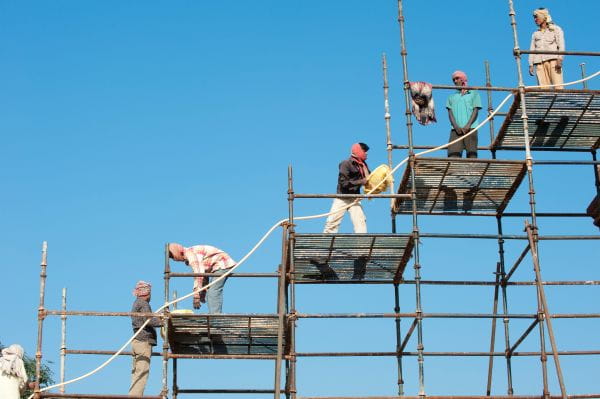
Fatal falls in India: why are the numbers not declining?
By Orchie Bandyopadhyay on 17 September 2026
Despite widespread awareness of safe working procedures and equipment, falls from hieght remain one of the leading causes of workplace death and serious injury in India. Critics say problems such as time pressures and inadequate training lie at the root of many of these incidents, but others are hopeful that the new Occupational Safety, Health and Working Conditions Code will herald a reduction in falls by driving improvements in training, competence and supervision more widely.
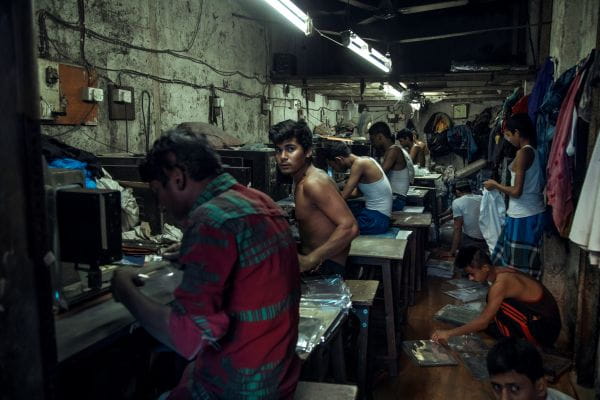
Avoidable deaths, endless excuses: how can India improve its workplace safety culture?
By Orchie Bandyopadhyay on 17 September 2026
A recent series of high-profile workplace tragedies that claimed multiple lives across India have stoked public debate about the poor safety record of many of the country’s highest-risk industries. Trade unions argue that greater enforcement of safety laws is required to change business behaviour, while other commentators say many businesses require a huge internal cultural shift to safety excellence that must be led by directors and senior managers.
Why contact with electricity is this year’s leading powered access safety challenge
By on 14 September 2026