
A behavioural safety training programme developed by Active Training Team for energy provider SSE has been carefully designed with neuroscientific principles in mind – resulting in a prestigious industry award for Best Training Initiative in 2024.
Features
Underpinning safety training with neuroscience for long lasting impact
By
on 09 December 2025
“We are storytellers,” says Adam Christopher, “and humans are wired for stories.” Adam is one of the founding directors of Active Training Team (ATT), a company whose behavioural safety programmes tap into that wiring, using neuroscientific principles to make messaging memorable and actionable for people participating in their training days.
ATT was formed in 2007 by Adam and Dermot Kerrigan, two actors who believed the role-play business training they found themselves working in, was dull and unlikely to have any lasting workplace effect. So they developed more impactful alternatives to ‘chalk and talk’ classroom learning or screen-based e-learning sessions.
In 2015 they created a day-long safety induction programme for workers on the £4.9 billion 25km Thames Tideway sewer in London. Since then, the training has been adapted for some of the UK’s major infrastructure projects, including the High Speed 2 rail project, the TransPennine Rail route upgrade and the Hornsey II Windfarm, off the Yorkshire coast. Most recently, ATT created the first non project-based version in the form of an ‘Immersive Training’ day for energy generator and network provider SSE at a specially fitted-out floor of the company’s training centre in Perth, renamed the Faskally Safety Leadership Centre.
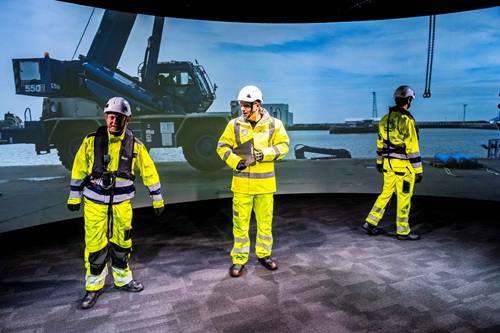 Photograph: SSE Active Training Team (ATT)
Award for Best Training Initiative
The ‘Immersive Training’, which won SSE the Utility Week award for ‘Best Training Initiative’ in 2024, features an acted story, mixing film with live action, followed by a facilitated discussion about what people have seen and heard in the story. The day incorporates practical safety leadership workshops exploring behaviour, with skills practice sessions built in. The training immerses attendees in the devastating consequences of a safety failure, then takes them back to the root causes and examines what behavioural choices and interventions by those involved could have prevented the worst happening.
The training is broken up into workshops and carried out in small groups, with a total of up to 39 participants per day. In each session, SSE has been careful to mix direct employees with contractors and senior managers with frontline staff, to increase the sense of shared responsibility for safety. Adam Christopher says the group aspect is important because it draws on the recognised Social Learning Theory, developed by Albert Bandura, which says people are more likely to develop new attitudes and behaviour by observing behaviours in action in a group dynamic, rather than just through solo direct experience.
Another neuroscientific principle that informs the content is ‘neuron mirroring’; mirror neurons in the brain are ‘fired’ when people see others behaving in a way that reflects accurately their own activities and habits. This means they are more likely to empathise with what they see, and empathy is a core component of behaviour change.
Participants in ATT’s training are placed in realistic locations – such as site offices and canteens – and engage with characters, played by actors, who are carefully auditioned and rehearsed with authentic scripts to create relevant and relatable situations. “The characters are talking with a vernacular and using terminology that is technically correct to the industry, making the situations wholly authentic, says Adam. “And because of the immersive and multi-sensory aspects of the day, more parts of the [participant’s] brain are activated, enabling better memory retention.”
Challenging situations
The workshops place the attendees in scenarios in which there seems to be real jeopardy for the characters they meet, and where the participants find themselves confronted by challenging situations they need to deal with in skills-practice exercises. In stressful situations the brain is controlled by the area known as the amygdala, which governs emotional ‘fight-or-flight’ responses.
Daniel Kahneman and Amos Tversky, in their book Thinking Fast and Slow, argued that when the amygdala is activated, the brain comes up with quick, instinctive answers (known as System 1 thinking). System 2 is the more considered, reflective mode, that weighs things up before responding. The immersive training engages both systems by placing participants at the centre in moderately stressful scenarios, linked to their lives, helps them recognise and review their System 1 reactions and then guides them in developing more rational, and often more helpful, System 2 thinking.
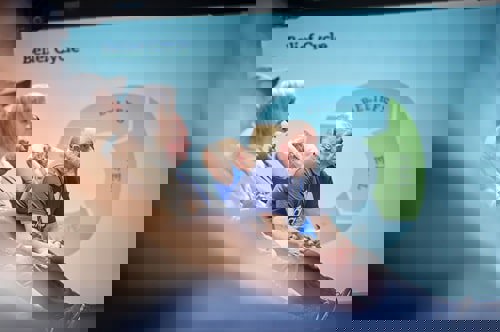 Photograph: SSE Active Training Team (ATT)
A research paper by Dr Natasha Sigala, associate professor in neuroscience at the University of Sussex, discusses the effect of ATT’s training methods on the internal representations, or models of the exterior world that individuals use to guide their decisions and actions. Dr Sigala says that the emotional content of ATT’s dramatisations is more likely both to keep participants’ attention and to lay down the experience as memory, a process known as ‘emotional encoding’. Their active participation in role-playing, or skills-practice, scenarios also strongly influences the likelihood of them retaining the sessions’ content for longer, she says. Revisiting the themes and scenarios through the training day helps further deepen the memories.
Avoiding the incident
In the second part of the day, during the ‘unpick’ session, the ATT lead facilitator helps attendees analyse how the serious incident they witnessed might have been avoided. If the characters involved in the story had made different choices, and/or intervened and questioned colleagues’ actions, there could have been a better outcome, where no-one was hurt. During the unpick, participants’ assumptions about the actions they witnessed are challenged. “We slowly pull up a mirror, and ask ‘Do we ever behave like that?’” says Adam. “We want people to take ownership of their behaviour. And we don’t want people pointing a finger at someone and saying, ‘That person’s foolish for doing that’”. Throughout the day, the participants learn and practice techniques to challenge constructively anyone they see behaving unsafely, giving them the confidence to step in when needed.
“I think a lot of what we want is for participants to play their part in creating a psychologically safe environment,” says Adam. “This sense that it is safe to speak up at work is essential in creating an interdependent culture, where we all look out for each other, isn’t that something that we all should be aiming for?”
Follow-up messaging
Dr Sigala says that though the intensity of the experience and participants’ involvement is important, the best way to ensure they turn its messages into everyday practice at work is through follow-up messaging to reinforce the training. “I think that the big challenge is encouraging people not to just do the day and then forget about what they’ve learned,” says Adam. SSE’s head of safety, health and environment engagement and development Liz Tessem-Cotton agrees: “I believe the only way we are going to embed the model is to keep it alive,” she says.
SSE’s training team worked with ATT to develop a suite of support materials to follow up the immersive training. These include films, animations and toolbox talks that recall the exercises and models used in the training to encourage more System 2 responses in stressful situations. Liz Tessem-Cotton says that the ATT models are incorporated into planned SSE campaigns to avoid some of its most common injuries, such as hand injuries among field staff. The company is also scoping an Immersive Training 2 session for employees three years after they have been through the initial day. “That will be a shorter day, offered in mobile solutions as well as the existing centres and it will be an energy-based scenario,” Liz says.
Healthy take-up
For now, the company continues to put all new employees and contractors through the day at the Faskally Safety Leadership Centre and other ATT centres in England. Liz says the company has had a healthy take-up on its offer to make the Faskally facilities available to other employers on the days when SSE is not using it.
At ATT, Adam says the company will keep refining and improving its training methods and is investigating state-of-the-art technological developments “If you’re a participant at one of ATT’s training events, imagine being able to talk to that character who’s climbing up a pylon without the necessary safety measures in place [on screen], and calling out, ‘Hey mate, come down and let’s have a chat’, and (on screen) he comes down and has a conversation with you,” he says. “We’ll consider anything that’s going to make our story and methodology more real, more relevant and more authentic.”
Whatever the technological advances, it is basic storytelling, one of the oldest techniques our species can use to catch and hold each other’s attention, that drives ATT and SSE’s safety training. Only now it has the support of neuroscience to help explain its effectiveness.
For information about using the centre, email:
[email protected]
FEATURES

Fatal falls in India: why are the numbers not declining?
By Orchie Bandyopadhyay on 17 September 2026
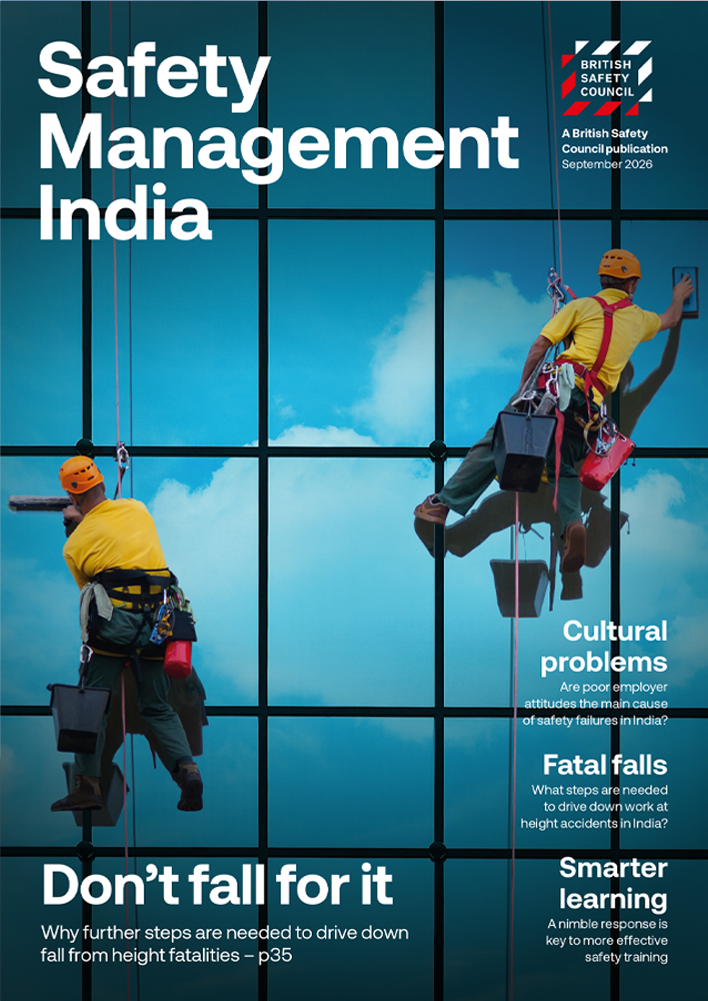
Despite widespread awareness of safe working procedures and equipment, falls from hieght remain one of the leading causes of workplace death and serious injury in India. Critics say problems such as time pressures and inadequate training lie at the root of many of these incidents, but others are hopeful that the new Occupational Safety, Health and Working Conditions Code will herald a reduction in falls by driving improvements in training, competence and supervision more widely.

Avoidable deaths, endless excuses: how can India improve its workplace safety culture?
By Orchie Bandyopadhyay on 17 September 2026
A recent series of high-profile workplace tragedies that claimed multiple lives across India have stoked public debate about the poor safety record of many of the country’s highest-risk industries. Trade unions argue that greater enforcement of safety laws is required to change business behaviour, while other commentators say many businesses require a huge internal cultural shift to safety excellence that must be led by directors and senior managers.
Why contact with electricity is this year’s leading powered access safety challenge
By on 14 September 2026