How does a personal injury lawsuit differ from a workplace safety investigation? In light of Stephen Fry’s claim over his 2023 stage fall, John Kushnick, legal director at the National Accident Helpline, highlights the key differences between civil and criminal safety law, from the power of a risk assessment to proving contributory negligence.
Opinion
“Claims like these help raise the profile of health and safety”
By
on 03 June 2026
"A civil claim is decided on the balance of probabilities – the judge listens to both sides and if they decide there is a 51 per cent chance the claimant’s version of events is correct, the claimant wins the entire case.
The goal is to obtain financial compensation to put the injured person back in the position they would have been in had the accident not happened (covering medical bills, lost earnings, pain and suffering).
In a workplace safety investigation, on the other hand, the goal is to protect public safety, identify systemic management failures, and prevent future harm. So the local authority in a case of this kind, if they decided to investigate, would be looking at it in the round. What is the risk of the incident occurring in the first place? What are the risks of injury as a result?
The goal in a workplace context is to hold the wrongdoer accountable to prevent future incidents. The law involved, the Health and Safety at Work Act 1974 (HSWA), is criminal law, and the burden of proof is much higher – beyond reasonable doubt.
 John Kushnick: "Health and safety is really important to try and reduce the number of accidents. We see some pretty awful outcomes for people."
There are aspects in common between personal injury and workplace safety law in terms of the courts reaching a decision. In this case of Stephen Fry, the risk assessment is the number one document the High Court will want to see. If there was no risk assessment, the defendants are probably going to lose any civil claim because it’s a legal obligation.
If your risk assessment, on the other hand, named a risk of a six-foot drop, but said that you used lighting to illuminate it, and rehearsed and trained actors in locating it, to mitigate against that risk, and if you could show that you did actually follow that, you’re going to have a very good defence. They have to follow through with it though. It’s not just a piece of paper.
Under the HSWA, it is incredibly difficult for a company to escape liability by simply pointing the finger at an injured person. In personal injury law it’s a bit different, but the bar is still high to prove contributory negligence.
An analogous case would be, say, someone doesn’t wear a seatbelt and, as a result, they go through the windscreen and suffer lots of injuries. Well, they’re only going to lose, say, 25 to 35 per cent of their compensation. They’re not going to lose everything because whose fault was the accident? It was still the other party’s fault.
In a high-profile case like this one, you won’t get a hearing date for a long time. Once court proceedings are issued, you go to what’s called a case management conference, where witness statements, medical reports and so on are exchanged. It’s only once all that’s finished that you then get a hearing window and it will then be set down for trial.
That could take over a year.
It’s a high-pressured time – each party is pushing the other to settle. No one wants a court hearing because the process is unpredictable, but for the client’s purposes, the more you can hold your nerve, the better settlement you will get because it’s part of that game you’re all playing.
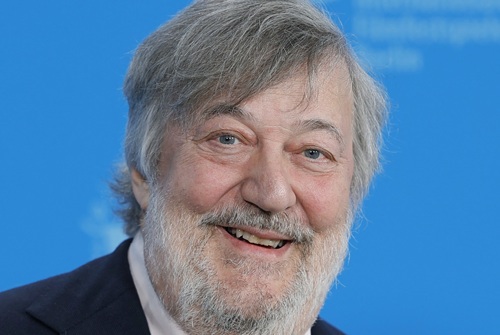 Stephen Fry at the Berlinale for the world premiere of his film 'Treasure'. He was injured in a fall off stage at the O2 in 2023, according to his High Court claim. Photograph: Elena Ternovaja
Stephen Fry’s getting a lot of publicity for this case and it’s really good that he is. It’s brilliant for raising the profile of health and safety, which is often dismissed as meaningless and ‘red tape’.
But health and safety is really important to try and reduce the number of accidents. We see some pretty awful outcomes for people. The money is there to compensate them and to get them back on their feet and to help them cope with what they’ve got, but it doesn’t put them back where they were. It can’t. So, we get the work if it goes wrong, but we’d much rather it didn’t go wrong in the first place.
The problem now, is that there are a lot fewer people claiming than who have accidents; numbers have gone down since the pandemic. Because there were fewer accidents during lockdowns, the large companies stopped advertising on television. It’s a strange thing, but people became less aware that they could claim.
We know through surveying that young people are being asked to sign NDAs (non-disclosure agreements) if they have an accident at work, which is absolutely appalling.
This particular case of Stephen Fry’s is an unusual one – we don’t hear of others like it really. But it is surprising it’s so rare given the very nature of stages being raised off the ground.
The biggest risks we see in the entertainment space are festival risks, because that’s where you find the largest uncertainties and you’re adding a massive volume of people. The other cases we get a lot of at event venues are trips and slips, because people are working in tight spaces, often with temporary equipment.
This case is unfortunate at the least. It’s certainly a timely reminder that event organisers have a duty of care – not just to celebrities, but to every speaker, performer, and guest who steps onto their stage."
John Kushnick is legal director at the National Accident Helpline