
Lisa Pinney has been appointed to lead the government’s new Fair Work Agency (FWA) when it launches in April.
News
Fair Work Agency: CEO appointed to lead new employment rights taskforce
By
on 13 March 2026
Pinney has spent more than 20 years at the Environment Agency, where she had responsibility for enforcing waste and environmental crimes. As CEO of the FWA, she joins Chair Matthew Taylor, the former government tsar tasked with writing a plan for ‘good work’ in 2017.
Unlike HSE, the FWA will not be an independent regulator, but an administrative executive agency of the Department for Business and Trade.
As it replaces the existing Gangmasters and Labour Abuse Authority and the Director of Labour Market Enforcement, initially it will just enforce criminal offences related to extreme labour exploitation, including modern slavery.
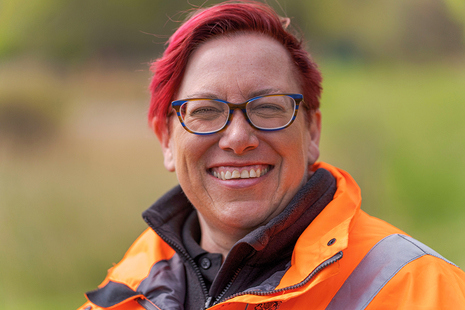 "Strong track record" of tackling rule breakers: Lisa Pinney is the new CEO of the Fair Work Agency
In time, however, it will have flexibility to take on a “wider range of employment rights” introduced under the Employment Rights Bill as this document explains. These could include a right to regular hours, whistleblowing protection for reporting sexual harassment at work and fire and rehire restrictions.
Helen Corden, an expert in sensitive employment issues with Pinsent Masons, said the launch of the Fair Work Agency would mark a fundamental shift in enforcing employment law in the UK.
Writing for the law firm, she said: “For large employers, this isn’t just a structural change - it’s a signal that compliance will be actively monitored and enforced,” she explained.
“With powers to pursue unpaid wages, holiday pay, and even bring tribunal claims on behalf of workers, the FWA removes historic reliance on individual claims and claimants.”
Manoj Dias-Abey, Senior Lecturer at the University of Bristol Law School, agreed the FWA will be an important plank in the government’s strategy on employment rights.
“The Employment Rights Act contains many new rights and protections that will have a positive impact on workers,” he writes for Industrial Law Journal on 9 March.
“It has been described as constituting a radical and ambitious set of reforms. However, these new rights risk becoming irrelevant unless they can be made real through proper enforcement. It is here that the work of the new FWA will become crucial.”
Employment Rights Minister Kate Dearden said of the appointment: “Lisa will be a great addition to the Fair Work Agency, bringing a strong track record of leading large enforcement organisations and tackling rule breakers head on.
“Under Lisa and Matthew’s leadership, the Fair Work Agency will play a vital role in delivering our Plan to Make Work Pay - ensuring workers get the rights and protections they are entitled to, while creating a simpler, fairer system and source of advice for employers.”
The Resolution Foundation estimates that 900,000 UK workers per year have their holiday pay withheld, valuing around £2.1bn.
Research also found that more than 1-in-10 of the lowest-paid workers report that they receive no paid holiday, four-times higher than the highest-paid.

NEWS

Indian government developing social security scheme for gig and platform workers, says labour secretary
By Orchie Bandyopadhyay on 21 October 2026
In a bid to expand the country’s social security safety net, the Modi government is working on a proposed social security scheme for gig and platform workers, Ministry of Labour and Employment secretary Chandra Bhushan Kumar revealed in a speech to the Confederation of Indian Industry (CII) in September.