For many years, hot weather in the UK construction sector was treated largely as a comfort issue, something to manage with extra water breaks and a shaded rest area.
Opinion
Heat exposure in construction: managing an emerging health and safety risk
By
on 28 July 2026
For many years, hot weather in the UK construction sector was treated largely as a comfort issue, something to manage with extra water breaks and a shaded rest area. However, as climate change drives more frequent, prolonged, and intense heatwaves, heat exposure is emerging as a significant occupational health and safety risk.
Construction workers are particularly vulnerable. Their work is often physically demanding, carried out outdoors or in poorly ventilated indoor spaces, and frequently requires personal protective equipment (PPE) that can limit the body’s ability to regulate temperature.
As UK summers become warmer, traditional approaches to managing hot weather are no longer sufficient. Heat must be recognised as a workplace hazard requiring the same level of planning and control as other construction risks.
 Alba Fuertes: "As the UK faces a warmer future, effective heat management will be essential to protecting workers."
The hidden impact of heat exposure
Heat stress is far more than a matter of discomfort. High temperatures place considerable strain on the body’s ability to regulate its internal temperature, increasing the risk of dehydration, heat exhaustion, and life-threatening heat stroke.
Excessive heat can also place additional strain on the cardiovascular and respiratory systems, increasing risks for workers with underlying health conditions. The impact is not limited to physical health. Heat can affect concentration, reaction times, judgement and decision-making, increasing the likelihood of errors and workplace accidents. It can also contribute to fatigue, irritability and reduced mental wellbeing.
Construction workers face a combination of factors that increase their exposure to heat: working in direct sunlight or enclosed areas with restricted airflow; exposed to reflective heat from materials such as concrete, steel and asphalt; and doing physically demanding tasks wearing PPE.
UK construction workers face additional vulnerability compared with those accustomed to hotter climates, as they are less likely to be heat-acclimatised due to the UK’s typically milder conditions. Workers in consistently hot climates often adapt through repeated exposure, whereas sudden UK heatwaves can expose workers to hazardous conditions before their bodies have adjusted.
Moving from reactive measures to proactive management
Effective heat management requires a planned approach that follows established health and safety principles: identify the hazard, assess the risk and implement suitable controls.
Weather forecasts and, where possible on-site heat stress index monitoring, should form part of daily planning. Physically demanding activities should be scheduled during cooler periods, while task rotation, additional recovery breaks and adjusted work-rest schedules can help reduce exposure.
Engineering and welfare controls also have an important role to play in reducing heat exposure. Providing access to cool drinking water and shaded rest areas remains essential and should form the foundation of any heat management approach.
However, these measures alone are not sufficient to adequately protect workers during periods of extreme heat. Employers should consider a wider range of measures, including air-conditioned rest areas, improving ventilation in indoor spaces where possible, and introducing suitable cooling measures such as portable fans, misting systems, cooling towels and specialist cooling vests.
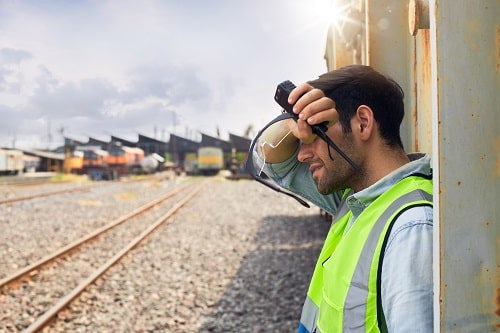 Basic controls such as water, rest breaks and sun protection remain essential. Photograph: iStock
Where appropriate, more advanced and personalised solutions, including wearable technologies, can provide real-time insights into workers’ physiological responses and offer early warnings of heat strain.
A combination of measures, tailored to the work environment and level of exposure, is needed to effectively manage heat risk.
Training is equally important. Workers and supervisors need to be able to recognise the early signs of heat-related illness and understand how to respond before conditions become serious. Buddy systems and clear emergency procedures can provide additional protection.
Heat risk management on UK construction sites: current challenges and gaps
Recently published research by the University of Reading examined how heat affects the UK construction workforce and how organisations currently manage occupational heat exposure. The study surveyed 307 managers and site workers from medium and large construction companies.
The findings highlight growing concern among construction workers: 67% reported concerns about heat affecting their health, while 44% had experienced a heat-related illness at work.
The research also identified a clear knowledge gap in heat health literacy across the construction industry, highlighting the need for specialised and practical heat-specific training. While managers and workers demonstrate awareness of common heat-related illnesses such as dehydration, heat exhaustion and heat stroke, knowledge of less common but potentially serious conditions remains limited.
In addition, confidence in responding effectively to severe heat-related incidents is low, particularly among operatives. This gap extends to understanding individual risk factors, indicating that existing awareness does not always translate into the ability to recognise, manage or prevent heat-related illnesses.
Although many sites have adopted basic measures such as providing drinking water, rest breaks and shaded areas, more comprehensive approaches, including formal heat-specific training, cooling strategies, modified working arrangements and structured heat management plans, are less consistently implemented.
The study also highlighted differences between management expectations and workers’ experiences. Managers were generally more confident that suitable controls were available and effective, while workers were more likely to identify limitations in access, communication and practical implementation. This suggests that improving heat resilience requires not only better controls, but also stronger engagement with the workforce.
Preparing for a warmer future
Heat exposure is likely to become an increasingly important occupational health challenge for the construction industry. As temperatures rise, organisations will need to move beyond treating heat as an occasional disruption and embed heat risk management into everyday safety planning.
A key priority should be developing structured heat-specific training that provides workers and managers with the skills to identify risks, recognise symptoms, understand individual vulnerabilities and respond effectively during emergencies.
This should be supported by clear procedures, refresher training and consistent guidance across sites.
Alongside improving knowledge, the industry should adopt a more consistent approach to prevention. Basic controls such as water, rest breaks and sun protection remain essential, but they should be supported by wider measures including site-specific heat assessments, improved scheduling, shaded recovery areas and appropriate cooling solutions.
Most importantly, workers should be involved in developing heat management plans. Their experience of site conditions provides valuable insight into whether controls are practical, accessible and effective.
The construction sector has successfully adapted to many evolving health and safety challenges. Managing heat exposure should be approached in the same way: through planning, prevention and continuous improvement. As the UK faces a warmer future, effective heat management will be essential to protecting workers and maintaining safe construction environments.
The report, 'Understanding the impact of heat on construction sites: from awareness levels to on-site practices', by Dr Alba Fuertes and Qamar Ayoubi at the University of Reading’s School of the Built Environment, can be found here.
Dr Alba Fuertes is associate professor at the School of the Built Environment – University of Reading.
Contact Dr Alba Fuertes at:
reading.ac.uk/cme/staff/alba-fuertes