
Research shows that driver fatigue may be a contributory factor in up to 20 per cent of road incidents, and up to one-quarter of fatal and serious incidents.
Features
Driver fatigue: always minimise the risk
By
on 01 November 2024
It’s a huge risk for fleets, drivers and for the general public – and commercial vehicle drivers are vulnerable to fatigue due to demanding workloads and high mileage on motorways and dual carriageways. These are the most common roads for sleep-related road incidents, due to the monotonous road environment and lack of interruptions. They may also be more likely to drive at night or in the early hours of the morning when our bodies’ natural rhythms are geared for sleep.
Driving when tired or unwell impairs judgement and reaction time, causing drivers to react slowly, brake late and is a major factor in a lot of rear end incidents. It also affects coordination, resulting in a variance in speed – slowing down and speeding up. Tired drivers also have what is known as microsleeps, which last from a fraction of a second to two seconds. At 56mph a van travels 25 metres a second, so microsleeping for two seconds means 50m of unconscious travel.

Fatigue is as dangerous and affects driving as much as being over the legal alcohol limit. A driver who has been awake for 17 hours has twice the normal collision risk. A driver who is awake for 24 hours is seven times more likely to have a collision.
Fatigue is very common
Several studies have shown that many UK adults seriously underestimate the amount of sleep they need and are permanently in sleep debt. Experts believe adults require between seven and eight hours of good quality sleep, with six hours being the absolute minimum. The Royal Society for Public Health says that 40 per cent of UK adults routinely get insufficient sleep, and 20 per cent seek help for poor quality sleep.
This can have a devastating effect on long-term health, as poor or insufficient sleep is linked to poor mental health, diabetes, stroke risk, and many other debilitating conditions. It also means that at any one time, a significant number of drivers are chronically sleep deprived.
Middle-aged overweight men – who are significantly over-represented in the HGV driver sector – are also most at risk of sleep disorders such as sleep apnoea. This is a very serious condition, for their health as well as their driving safety. However, screening and treatment is effective, and all such drivers with any symptoms of fatigue should check with their doctor.
Health and safety responsibilities
Driving tired is not an offence. However, not taking reasonable precautions as a business to ensure that drivers are fit to drive could lead to prosecution if the driver was involved in a serious incident. That means employers need to be able to prove the steps that they are taking to make sure their employees only drive when fit to do so – this should be documented in your driving for work policy.
Fatigued drivers can also face charges of death by dangerous driving or death by careless driving if involved in a fatal collision. The maximum penalty for death by dangerous driving is a prison sentence of 14 years under UK law.
Keeping drivers fit to drive
- Encourage drivers to get enough sleep
- Encourage them to eat healthily and avoid heavy carbs during the day, and to keep well hydrated
- Ensure that shift pattern and organisational pressures do not create undue fatigue in drivers
- If a fleet driver is too tired to continue a journey, have them relieved or allow them to park up safely to rest properly before moving on
- Do not rely on caffeine – this is a temporary and ineffective solution. The only effective solution for fatigue is sufficient sleep.
Get the free Van Driver Toolkit safety card on Driver Fatigue.
Click here for more work-related road safety guidance from Driving for Better Business.
FEATURES

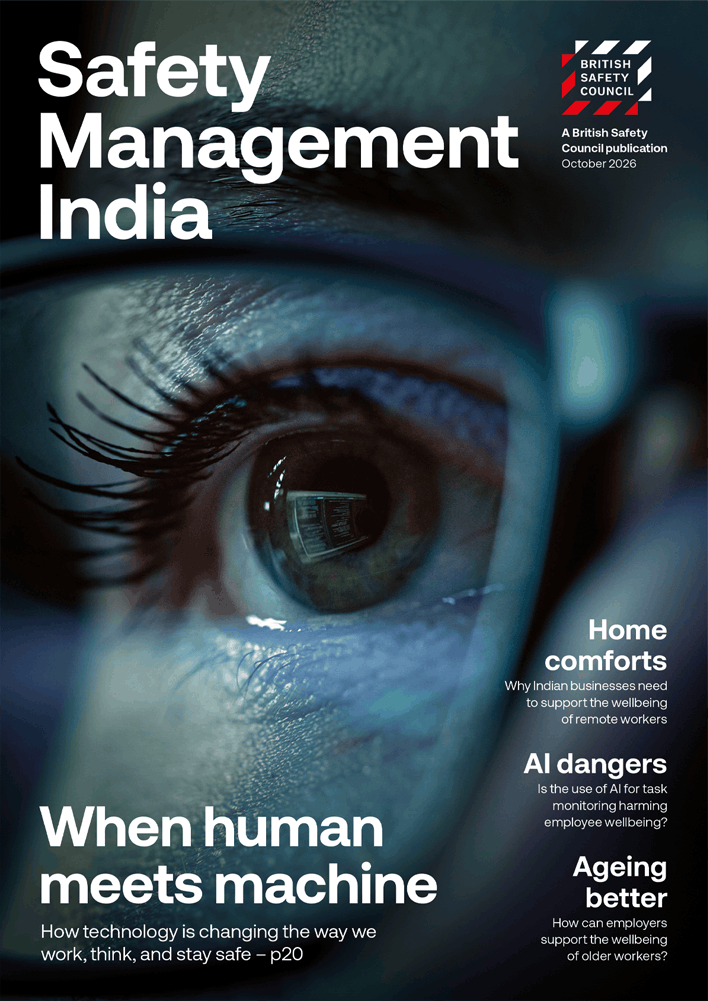
AI at work: why employee monitoring may be creating new pressures
By Orchie Bandyopadhyay on 21 October 2026
India’s information technology companies are rapidly expanding their use of AI in a bid to drive business efficiency and boost innovation. However, commentators warn that the growing use of AI to monitor employees’ work outputs and activities poses a risk to workforce mental health and wellbeing.

Remote and hybrid working: how can employers best provide support?
By Orchie Bandyopadhyay on 21 October 2026
India continues to embrace remote and hybrid working, with large numbers of staff either working from home full time or following a mix of remote and office attendance. However, remote working can create feelings of isolation and loneliness, in turn affecting performance and mental wellbeing, so it’s essential employers have excellent communication and support procedures in place to prevent these problems arising.