
One in 13 people have attempted suicide, but in workplaces the issue is often masked by stigma. We explore how a new landmark standard is moving suicide awareness out of the shadows of ‘hushed conversations’ and into the light of clear, actionable guidance.
Features
Breaking the Silence: Why every workplace needs the new suicide awareness standard
By
on 02 February 2026
In November 2025, the British Standards Institution (BSI) launched the world’s first standard dedicated to addressing the risk of suicide and its impact in the workplace.
Photos taken at the Houses of Parliament launch of the around 70-strong drafting committee including MPs, academics, healthcare professionals, campaigners and psychiatrists stood out among the other LinkedIn posts in the lead up to Christmas.
The event looked and sounded momentous. But the real story lies in the practical application of BS 30480. How can it be used by organisations? And crucially, will it save lives?
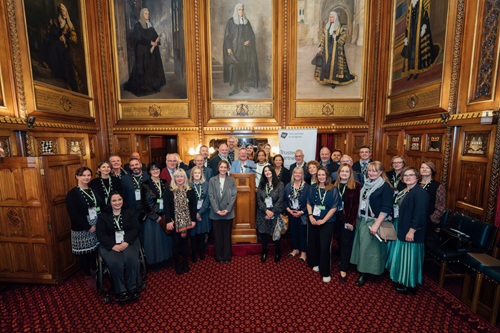 Members of the drafting and communication committee of BSI's suicide prevention and awareness standard, pictured at the Houses of Parliament for its launch in November 2025. Photograph: BSI
Practical advice
BS 30480 is a voluntary standard which provides comprehensive guidance to help organisations prevent and respond to suicide risk. It includes support for developing clear, effective policies and offers practical advice on identifying warning signs and addressing suicidal thoughts or behaviours.
It’s also about responding to suicide when it does happen – and it has chapters on communicating with those affected by suicide and practical implications for those dealing with suicide loss.
But while the word ‘standard’ might have helped launch this best practice guide into the professional world of work, it’s vitally important to its creators that those applying it in their workplaces don’t feel daunted.
‘Something positive had to come out of this’
“It is absolutely not meant to frighten – it is meant to help,” says Marcus Long, who has worked for 20 years in the assurance industry, latterly as the Independent International Organisation for Assurance’s chief executive, checking organisations conform to standards they espouse.
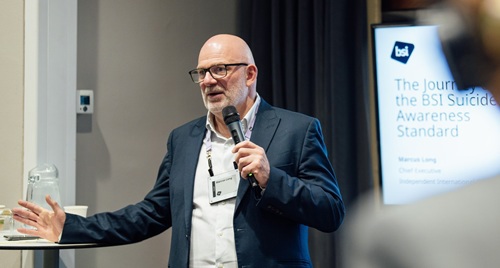 Marcus Long led in the development of the standard in memory of his son who he lost to suicide.
He believes standards can and do make a difference because he has seen their positive impacts. It was this realisation and a personal tragedy that propelled him to approach BSI with an idea.
In 2020 his son Adam took his life. He was just 21. “Adam’s death was a complete surprise and as you can imagine knocked me like words cannot describe,” Marcus shares. “But however awful the situation was, I always felt there was something positive that had to come out of this.”
Finding a way to honour Adam’s life took three years after his death, but the answer was obvious when it came: “We have standards on the environment, sustainability, health and safety and even the menopause. Scratch beneath the surface of so much of what we use and rely on and there will probably be a standard behind it,” says Marcus.
“So why not a standard to do something to stop the dreadful 7,000 plus deaths by suicide every year in the UK?”
Marcus discussed developing a standard with BSI and as it happens, BSI were concurrently talking to others about it including Liz Twist, the Labour MP who has been impacted by, and campaigns on preventing suicide.
“There was this sort of groundswell of a desire to do something,” explains Anne Hayes, BSI’s director of sectors and standards development. “And that probably gave us the confidence to say, ‘this is the right thing for BSI to do.’”
Who is it for?
Back to the standard itself. We boldly ask if some smaller companies might feel intimidated by the breadth of areas covered by the standard and its length (running to 61 pages).
Marcus explains that users can take what works for them: “It is a vital point that the standard is a ‘guidance’ standard. This means that each adopter looks at the standard and takes the parts that addresses the issues their organisation faces, helps put in place practical solutions for them. Vitally, it does not require the implementing organisation to do everything the standard states; each organisation should take from it what they need.”
Neither does it require any organisation to have done any other BSI standards or indeed, a lot on mental health, wellbeing or even suicide prevention.
“It is designed for any organisation, by size, by sector, at the beginning of their journey in this space or already with policies and other types of assistance in place. It certainly doesn’t need any background in the subject or experience of standards.”
Workplaces are key settings for suicide prevention
Suicide is a workplace issue. Most people who die by suicide are of working age and while the causes of suicide are often complex, workplaces are key settings for suicide prevention.
 Suicide can affect any worker – it’s a myth that it impacts only certain groups of people.
Photograph: iStock
It’s not as uncommon as we might suppose, with one in four adults having contemplated suicide and one in 13 having attempted it at some point in their life, according to NHS England’s latest data.
Yet, many organisations remain silent, either due to a “lack of knowledge, understanding, confidence or competence in talking about suicide,” notes the standard’s introduction. This, alongside the fear and shame someone might feel about disclosing suicidal thoughts, creates the perfect storm for stigma to flourish. It prevents help being sought and offered.
Smashing misconceptions is one of the standard’s key jobs, therefore says Peter Kelly, who runs mental health agency Being Real and is a speaker known for his no-nonsense approach. Kelly also chaired the standard’s drafting committee: “We published the ‘myth busting’ section right at the beginning and that’s important. It sets the whole basis,” he says.
“One myth is that asking someone a direct question ‘plants’ the idea in their head. When actually, it doesn’t. It doesn’t mean they will go ‘ok I’m going to attempt suicide’, it may stop them. Because you can intervene right up until the act. There are points of intervention all the way along.”
Can we just ask AI instead?
It’s tempting here to question whether an algorithm could generate advice and a strategy just as effectively as this standard. We are turning more and more to Artificial Intelligence (AI) for answers. Why not in the area of suicide prevention and support?
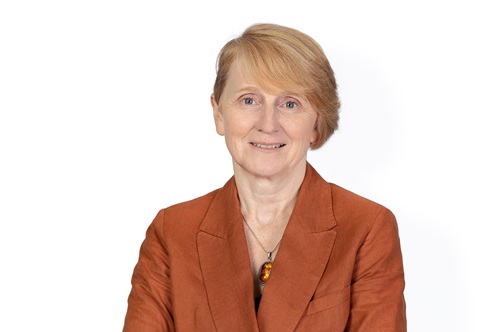 Anne Hayes, BSI’s director of sectors and standards development
The standard represents agreement among a diverse group. This can’t be replicated by a computer, argues Anne: “I’m sure AI would come up with a lot of the things that were discussed and maybe even ended up in the standard. I don’t believe you can come up with a standard that has had the discussion and the consensus and the different views that were expressed that reached agreement. AI would be making that decision.”
The standard development process is a very ‘present’ and live thing, unlike AI which learns from the past: “People quite likely don’t know what they really think until they’re in that moment of asking and discussing. It’s an emotional judgement.”
Marcus adds that committees on standards have a diverse make-up, which ensures that every decision is sense-checked in the round: “This diversity ensures checks and balances; it ensures intellect; it ensures no stone is left unturned in developing the best standard.”
Not just prevention
In 2024, we lost 7,147 individuals to suicide – each one a person whose story ended far too soon. It followed a year in which the UK saw the highest suicide levels recorded in 25 years.
Peter says most people ‘don’t know what to do’ when the worst does happen. HR sometimes stop a person’s salary immediately, which adds to the trauma the family are already experiencing. “For the two to three months after the incident occurs you continue to pay the salary, so family can afford a funeral,” he explains of what should happen. “You give colleagues time off to attend the funeral.”
The details matter and while it’s not anybody’s intention to be cruel, more likely they are panicking, having a handbook here of what to do in a practical sense is hugely helpful.
Will it save lives?
BSI says there have been 8,400 downloads of the standard since the launch. They are now working with ‘early adopters’ to see how it’s being used in their organisations. Although everyone wants to see the too high suicide rates in the UK fall, this would be a disingenuous target, says Anne: “What I’m keen to see is that people use it and implement the steps and advice in their organisations to make a difference.”
While BS 30480 is a technical document, its heartbeat is entirely human. The journey to its publication began partly with Marcus Long’s personal loss, and it’s maybe most fitting to measure the standard’s success through his eyes, and what his hopes are for it. “Adam not being here is an indescribable hurt I will live with forever,” he says. “If this standard prevents just one person from feeling the way Adam did, or spares one other family the loss I carry, then it has achieved something truly great.”
It’s been amazing, he says, to see the impact it’s already having: “When a colleague told me a month ago they’d they’d actually taken part of the standard to help in their conversation with their own daughter I felt such emotion at the power of this standard.”
BS 30480 Suicide and the workplace – Intervention, prevention and support for people affected by suicide can be downloaded here
FEATURES
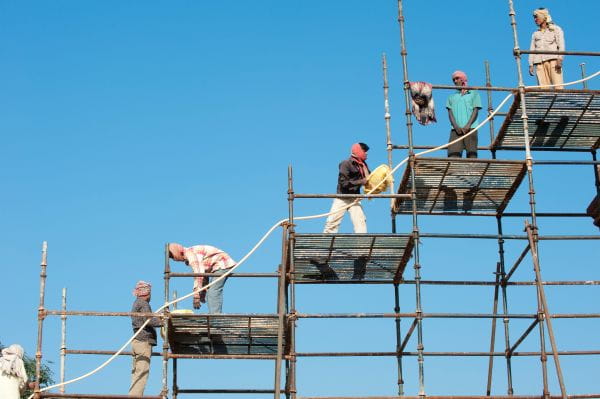
Fatal falls in India: why are the numbers not declining?
By Orchie Bandyopadhyay on 17 September 2026
Despite widespread awareness of safe working procedures and equipment, falls from hieght remain one of the leading causes of workplace death and serious injury in India. Critics say problems such as time pressures and inadequate training lie at the root of many of these incidents, but others are hopeful that the new Occupational Safety, Health and Working Conditions Code will herald a reduction in falls by driving improvements in training, competence and supervision more widely.

Avoidable deaths, endless excuses: how can India improve its workplace safety culture?
By Orchie Bandyopadhyay on 17 September 2026
A recent series of high-profile workplace tragedies that claimed multiple lives across India have stoked public debate about the poor safety record of many of the country’s highest-risk industries. Trade unions argue that greater enforcement of safety laws is required to change business behaviour, while other commentators say many businesses require a huge internal cultural shift to safety excellence that must be led by directors and senior managers.
Why contact with electricity is this year’s leading powered access safety challenge
By on 14 September 2026