
Employers need to adopt the latest and most effective noise risk evaluation and management measures, or face rapidly-rising compensation claims for noise-induced hearing loss at work.
Features
How to mitigate the hearing loss cost escalation tsunami
By
on 06 February 2026
For decades, hearing conservation programmes have been based on false assumptions about the performance of personal protective equipment (PPE), about the results of audiometry and about the costs and practicality of modern noise control. New data from the Health and Safety Executive (HSE) and medical research suggest these assumptions are not only outdated but dangerous to health.
The incoming tidal wave of undiagnosed hearing damage coupled with a huge increase in claims costs due to changes in the legal landscape mean that industry is facing a ‘perfect storm’ of medical, legal and regulatory challenges.
This article details the changes that safety professionals must make to update current practices to minimise the impact on both health and fiscal costs. The good news is that these changes can reduce the risk of noise induced hearing loss (NIHL) by 75–90 per cent, largely within current budgets.
 If the noise level is between 90 dB(A) and 95 dB(A) it is very difficult to guarantee adequate protection. Photograph: iStock
The failed status quo
Updating current practices requires knowledge of where they have failed.
Hearing protection: 3 dB attenuation is more likely than 30 dB
The almost universal hearing conservation programme foundations adopted by the majority of employers are based on false assumptions. The real-world performance of PPE is dramatically lower than the attenuation touted by suppliers. Instead of the claimed 20 dB to 30 dB protection used in risk calculations by employers attempting to assess the attenuation provided by protection, the typical real-world attenuation is often only 3 dB to 10dB, leaving many users insufficiently protected at noise levels much above 90 dB(A).
Moreover, recent HSE data reveals over 75 per cent of employees exposed to dangerous noise levels lack essential knowledge on how to use hearing protection, and 63 per cent have received no guidance on its use whatsoever.
Consequently, the assumptions about PPE efficacy are false and must be re-evaluated based on real-world data.
Conventional audiometry – a checkbox exercise
Conventional Pure Tone Audiometry (PTA), designed to spot hearing damage among workers, is a checkbox exercise that provides too little information that is also too late to be of much use in noise risk management at work.
Also, since PTA does not detect many cases of serious hearing damage, there is a large pool of people with undiagnosed damage, and these cases are likely to come to light as the more accurate Otoacoustic Emission (OAE) hearing testing method becomes more common. This will inevitably result in more employers facing compensation claims for NIHL.
Antediluvian noise control assumptions
Knowledge of the advances in engineering noise control over the last few decades that can cut project costs by 50 to 90 per cent is, sadly, abysmal. The typical assumptions about noise control costs and practicality are based solely on guesswork with no attempt to evaluate modern best practice options. Consequently, projects appear unnecessarily expensive – so they aren’t implemented and the risk remains.
Noise report quality
HSE’s 2025 survey of the noise control reports produced by employers and noise consultants indicated that 60 per cent are unsatisfactory, 14 per cent are poor and six per cent very poor. In addition, 77 per cent of reports do not include a prioritised list of noise control measures, despite this being a regulatory requirement. Consequently, organisations are paying for largely placebo reports that merely confirm there is still a noise problem without offering a practical, best practice action plan to cut risk.
The revised risk reduction best practices
The financial consequences of inaction are escalating rapidly. The recent settlement (Barry v Ministry of Defence) that saw a claimant with hearing damage awarded £713,716, reflects the previously underestimated disability and health risks of NIHL and the new legal framework for assessing the level of damages for NIHL.
In addition, the 300 per cent increase in HSE enforcement action on noise –and the regulator’s crackdown on ‘rogue’ noise consultants – means the financial and regulatory pressure on employers to modernise their hearing conservation programmes is intense.
The following are key areas where improvements must be made:
- PPE – improve field performance
- Audiometry – upgrade to OAE
- Noise control – cost/benefit evaluation should be carried out using modern methods
- Reporting – use a high-quality template for all future noise control reports.
Improving PPE performance
PPE remains necessary, but the way it is generally managed should be updated. Safety managers must abandon reliance on manufacturer-assumed protection data that is almost irrelevant in most circumstances.
Updated best practice involves estimating the protection provided using real-world wear rates and conditions. As a rule of thumb, if the noise level is between 90 dB(A) and 95 dB(A) it is very difficult to guarantee adequate protection; and above 100 dB(A), it is arguably impossible to do so reliably with conventional PPE.
Improving PPE performance involves the following:
- Wear rates: these must be regularly monitored, documented and coupled with effective education and enforcement/disciplinary procedures. Removing any type of PPE for one hour a day limits the maximum field attenuation to less than 9 dB.
- Fitting – earmuffs: implement regular fit-test/fit checks. If the headband of the muffs becomes stretched, they offer not 25 dB, but 5 dB attenuation. If earmuffs are worn with safety goggles, they often only provide 6 dB attenuation, due to the googles negatively affecting the fit.
- Fitting – earplugs: implement regular fit-test/fit checks. If incorrectly fitted or worn, the attenuation provided can be as low as 2 dB – 3 dB.
- Warning audibility checks: HSE inspections found that only five per cent of sites test for the audibility of warning signals when PPE is worn. This must be evaluated to avoid over-protection.
- ‘Intelligent PPE’: evaluate the potential use of the latest ‘intelligent’ PPE technologies that monitor and record real-world user exposures.
Real-world PPE attenuation calculators
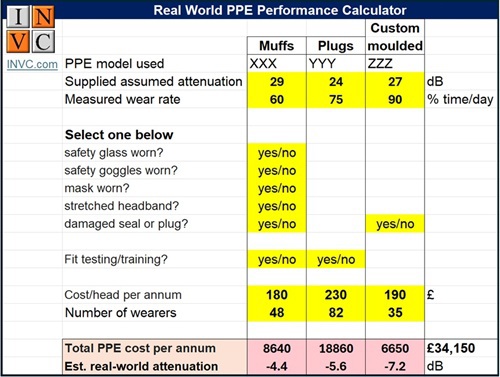
INVC has developed a real-world PPE attenuation calculator for in-house use (see below). This uses the results of the latest research on the factors affecting performance to estimate the field attenuation. In the example below, the earmuff supplier-provided 24 dB figure is reduced to around 5 dB when the equipment is used in a real-world situation. We will shortly be releasing a much-updated version as a free tool for anyone to use. To request a copy when it becomes available, visit our website here.
Modernising health surveillance – audiometry
Employers should start the transition now from Pure Tone Audiometry (PTA) to Otoacoustic Emission (OAE) testing (see: tinyurl.com/t8br5svy). PTA measures hearing loss very retrospectively and only after significant damage has occurred (often after up to 50 per cent of the outer hair cells in the cochlea have been destroyed), creating a pool of personnel with undiagnosed hearing damage. Consequently, it is of little use in identifying and deciding how best to manage noise risks at work, simply cataloguing failures in risk reduction strategy years after the event.
OAE testing, by contrast, provides an objective evaluation of the very early signs of cochlear damage before it becomes serious hearing loss. The British Society of Audiology issued a statement in 2022 that OAE allows for the earlier identification of cochlear damage before it is evident through routine PTA. OAE can therefore function as a proactive risk management tool rather than a retrospective record of failure. By detecting early warnings of hearing damage, safety teams can intervene to update noise risk control measures before life-changing disability occurs.
Employers should therefore ask their occupational health provider to switch to OAE (equipment costs are around £4,000–£5,000 with a 50 per cent hearing test time saving over PTA). Whilst OAE is not yet very commonly available, if clients demand it, availability will improve. OAE is best practice and at some point, a court assessing an NIHL personal injury claim will decide on the ‘Date of Guilty knowledge’ after which OAE should have been adopted by all affected employers.
In addition, OAE can be used to provide an accurate baseline of the hearing health of new employees, providing a more accurate and detailed evaluation of any pre-existing hearing damage before the person starts employment. If an employer uses PTA and not OAE, they will fail to spot significant damage from previous exposures, potentially leaving themselves open to future claims based on OAE tests.
 The goal of ‘Nil NIHL’ is achievable, but it demands change. Photograph: iStock
Noise control audits – diagnosing and costing the options
The common barrier to implementing noise control is the misconception that solutions require the purchase of expensive, productivity-hampering acoustic enclosures or silencers or barriers. All noise problems are treated as ‘black boxes’ that radiate noise – no attempt is made to determine why the plant is noisy.
This is the equivalent of taking a car to a garage as there is a rattle in the engine and being told, without lifting the bonnet, that you need a new engine. Modern best practice requires using a simple diagnostic process to identify and rank the causes of noise and then applying a precise engineering ‘scalpel’ to excise the cause rather than bludgeoning the whole machine with an acoustic enclosure. ‘Lift the bonnet’ of a machine and you are likely to find that the cause of the rattle might be something as simple as a loose bolt on the exhaust heat shield...
Noise control and sustainability – the Green Peace Dividend
This approach also aligns noise control with sustainability goals. Traditional silencers and enclosures entail significant embodied carbon and often reduce plant efficiency, increasing power consumption. In contrast, modern aerodynamic and vibration control techniques can reduce noise while cutting energy costs and carbon emissions, providing a ‘Green Peace Dividend’.
For instance, in one project, retrofitting aerodynamic noise control on cooling fans based on computer modelling eliminated the noise problem (achieving 16 dB attenuation) and cut power consumption by 23 per cent, making the noise control project profitable. Conventional silencers would not only have been eye-wateringly expensive, but would also have reduced fan efficiency, increasing running costs.
Best practice is to carry out a Noise Control Audit (NCA) for an item of plant or a whole site to generate a cost/benefit analysis of the noise control options based on the latest current worldwide technology (tinyurl.com/m9y9w4p7). The results will provide the information required to make informed decisions based on Return on Investment (ROI). This might reveal that a noise control project would actually reduce the cost of the hearing conservation programme. Any engineer can easily learn the basic NCA procedures.
In any case, it is important to understand that, for example, reducing noise levels from 97 dB(A) to 91 dB(A), means the risk to hearing has been cut by 75 per cent. While PPE will still be required, it will now be much more effective.
Improving report quality
Organisations should cease commissioning placebo noise assessment reports that simply regurgitate HSE documentation or generic advice and tell you what you already know – that you still have a noise problem. Instead, businesses must demand reports that include a specific action plan with timescales and named responsibilities, supported by a competent NCA.
Best practice is to acquire or develop a high-quality report template for all future noise risk assessments that is based on the latest evidence and best practices used either in-house or by consultants. This makes it easy and practical to track progress over time, something that, despite being a Key Performance Indicator (KPI), is not possible if report formats and content keep changing.
Ensure reports include:
- An action plan – specific, time limited actions assigned to specific people
- An audit of the implementation of actions from previous reports
- The results of a Noise Control Audit cost/benefit analysis
- An assessment of the required report frequency – report elements should only be updated if there have been changes that could affect noise levels.
INVC will shortly be releasing a comprehensive template noise report as an ‘open source’ document. Contact us at invc.com/contact/ if you would like a copy when it becomes available.
The economic and ethical case for urgent action
The tidal wave of incoming, high-cost NIHL claims, plus the recently established links between noise and neurodegenerative diseases and other negative health and life opportunity effects from hearing damage, make the typical existing risk reduction approach financially and ethically untenable. The cost of not updating to the latest best practices is the potential for six-figure settlements, increased insurance premiums and the human costs of dementia and social isolation.
Updating typical practices does not necessarily require larger budgets. There are little or no cost implications for updating knowledge, and investing in quality reporting, OAE and Noise Control Audits. In fact, by implementing best practices and ‘Greener Quieter’ engineering, organisations can often reduce NIHL risk by up to 90 per cent within current budgets.
The goal of ‘Nil NIHL’ is achievable, but it demands change. It means discarding the obsolete over-reliance on PPE. It means picking up and using the readily available tools and processes described above to create a step change in RoI. It means changing to better practices. It is time to change...
New legal landscape and future claim costs
A recent UK hearing damage settlement of £713,716 (tinyurl.com/57c6ss7w) reflects changes to the legal landscape guidelines for personal injury claims relating to the health effects of hearing loss. These now take into account the results of recent medical research (research suggests NIHL can increase dementia risk by 500 per cent and also increases the risk of Parkinson’s disease), the effects on life opportunities due to hearing damage, and noise exposures below 85dB(A). (Previously, any noise exposure below 85dB(A) was discounted by the courts – despite the fact that lower level exposure adds to the risk).
This also has implication for employers’ liability insurance premium costs.
For a comprehensive list of online noise control resources from a variety of organisations, see INVC online resources
For more information visit: invc.com
E. [email protected]
T. +44 (0)1753 698 800
Peter Wilson is Technical director at the Industrial Noise and Vibration Centre (INVC).
FEATURES
AI at work: why employee monitoring may be creating new pressures
By Orchie Bandyopadhyay on 21 October 2026
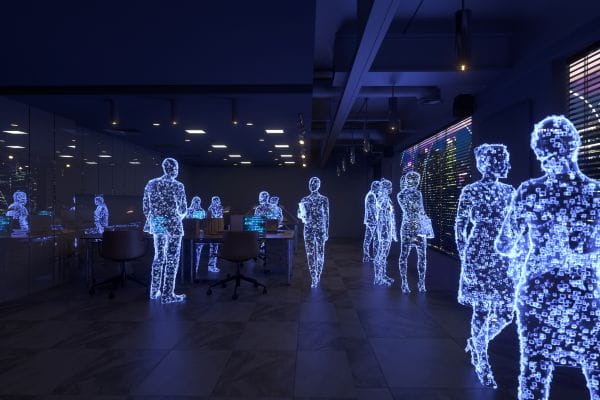
India’s information technology companies are rapidly expanding their use of AI in a bid to drive business efficiency and boost innovation. However, commentators warn that the growing use of AI to monitor employees’ work outputs and activities poses a risk to workforce mental health and wellbeing.

Remote and hybrid working: how can employers best provide support?
By Orchie Bandyopadhyay on 21 October 2026
India continues to embrace remote and hybrid working, with large numbers of staff either working from home full time or following a mix of remote and office attendance. However, remote working can create feelings of isolation and loneliness, in turn affecting performance and mental wellbeing, so it’s essential employers have excellent communication and support procedures in place to prevent these problems arising.