With scientific evidence increasingly showing that gas cooking causes harmful indoor air pollution and contributes to climate change, it is vital that commercial kitchens globally switch to safe and clean electric cooking methods.
Opinion
Cooking without gas: induction’s safer, sustainable future for commercial kitchens
By
on 15 April 2026
Open flames are flickering, creating a constant drone below the clattering of pots and pans; the air is hot and heavy, sweat appearing on busy brows; and after service, there will be grates slick with grease to soak and scrub.
At the Global Cooksafe Coalition, we have engaged with hundreds of chefs and hospitality businesses and this is how they describe the experience of working in commercial kitchens that use gas for cooking.
Beyond workplace comfort, volatility in gas prices and evidence of health risks are ringing the death knell for gas stoves. In their place, more and more homes and restaurants are turning to induction and singing its praises.
 Monica Burns: "Chefs also often tell us that induction technology has surpassed gas in terms of performance."
The impact of gas stoves on air quality
A growing body of evidence shows that gas stoves in homes cause indoor air pollution that can be harmful to health. When cooking with gas, we release chemicals into the air, including nitrogen dioxide, carbon monoxide, formaldehyde and benzene. These chemicals can have dangerous side effects, including an increased risk of respiratory issues and of developing illnesses including asthma, chronic lung disease and cancer.
While cooking, nitrogen dioxide emissions have been found to exceed national safe limits – even surpassing levels considered unsafe outdoors – with concentrations found to be 50 to 400 per cent higher in homes with gas compared to homes with electric stoves.
Studies have also shown that gas hobs leak dangerous chemicals when they are turned off, including benzene, a known carcinogen associated with leukaemia as well as other long-term adverse health effects and diseases, which has no known safe exposure level.
PSE Healthy Energy and Stanford University recently released a study that measured gas leaks from stoves in homes in Italy, the Netherlands and the UK. Overall, 40 per cent of the gas stoves that PSE tested were leaking while turned off at the time of measurement.
The study found that commonly occurring, odourless gas leaks can expose people to benzene levels that exceed health-based limits, while large outdoor leaks can contaminate air across entire communities.
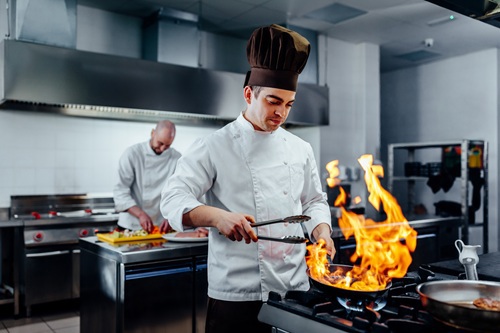 Nitrogen dioxide emissions released through gas cooking have been found to exceed national safe limits. Photograph: iStock
Gas stoves also leak methane – the main component of natural gas and a greenhouse gas over 80 times more potent than carbon dioxide in the short term. Research suggests that more than three-quarters of methane emissions from gas stoves occur when the stove is off, and that leakage from gas stoves in US homes is comparable to the climate pollution of half-a-million cars.
Overall, methane is estimated to account for 30 per cent of global warming since pre-industrial times.
Data on the health impacts of gas cooking in commercial contexts is still limited, but preliminary findings from ongoing PSE and Stanford University research in the US found that commercial kitchens with gas-powered appliances had worse air quality than exclusively electric-powered kitchens, with pollutant levels often exceeding health-related standards. Further data is expected to be released later this year.
Why is electric cooking the answer?
Fortunately, healthier, safer and more sustainable alternatives to gas stoves exist, and their use is on the rise. The Global Cooksafe Coalition (GCC) exists to promote induction and other forms of energy efficient electric cooking as a solution, working closely with chefs, property companies and NGOs in Europe and beyond.
Through our work, we’ve documented the many benefits that restaurants and staff who now cook with electricity have seen, and the increased comfort of working in cooler, quieter spaces is only the start.
We recently released a report in collaboration with the Sustainable Restaurant Association and Hospitality Energy Saving & Sustainability that shows that UK restaurants can save up to 20 per cent on energy costs, cut energy use by up to 64 per cent, and reduce CO2 emissions by up to 65 per cent by switching from gas to electric equipment.
And cost savings go beyond energy bills. One of our chef ambassadors told us he was able to reduce cleaning time at his restaurant from 24 minutes for a gas cooktop to just 21 seconds to wipe down an induction cooktop, which saved over £15,000 in wages for cleaning in one year. Another chef spoke of reduced insurance costs.
Chefs also often tell us that induction technology has surpassed gas in terms of performance, offering more precise temperature control and more evenly spread heat, and making it the preferred choice for many.
Momentum is building, but more support is needed
It’s clear that to enhance staff wellbeing, future-proof our commercial kitchens, and meet global sustainability targets, transitioning to electric cooking equipment is vital. And the task requires buy-in from a broad range of stakeholders.
As well as chefs and hospitality businesses, the GCC works with property companies – such as Grosvenor Property UK and Lendlease – that are committed to electrifying the kitchens in their portfolios.
Property companies who invest in electrification can contribute to improving air quality in their buildings and wider communities, and support tenants to reap the benefits of electric cooking, while also slashing their emissions.
The transition also requires support from national and subnational governments. Many countries around the world are introducing policies which incentivise and promote building electrification.
These pushes must be accompanied by financial assistance to transition to electric cooking appliances, especially for small businesses and households who may otherwise struggle with upfront costs.
The Global Cooksafe Coalition’s guide, Making the Switch: Why and How to Electrify Your Commercial Kitchen, explains how restaurants and foodservice businesses can transition from gas to electric cooking, is available at:
cooksafecoalition.org/making-the-switch
Monica Burns is director of the Global Cooksafe Coalition