The recent documentary revealing alarmingly high levels of PFAS in the blood of residents from a Yorkshire town, reveals some of the real-life consequences of one of the biggest pollution crises of our time.
Opinion
How PFAS has exposed the failings of our chemical safety laws and what can be done about it
By
on 16 April 2026
The qualities that make PFAS (per- and polyfluoroalkyl substances) so useful for industry also mean they are extremely persistent and resistant to degradation, and are associated with irreversible, long-term contamination of the environment. As well as being found in high levels in areas such as Bentham in Yorkshire, they are also found in the blood of almost everyone ever tested, as well as in our food, drinking water, air, soil, rivers and oceans.
The most studied PFAS have been linked with serious health problems, including hormone disruption, certain cancers and immune system dysfunction. Some occupations have higher levels of exposure, such as firefighters using PFAS-containing firefighting foams and protective gear.
At Wildlife and Countryside Link (WCL), we are particularly focussed on the widespread contamination of water bodies, with impacts on the health of aquatic life and humans, as well as huge economic costs to society.
Analysis by WCL and The Rivers Trust in 2025 found that 94 per cent of English rivers where PFAS was tested for would fail proposed EU safety standards in surface water – this was up from 77 per cent of sites in 2023.
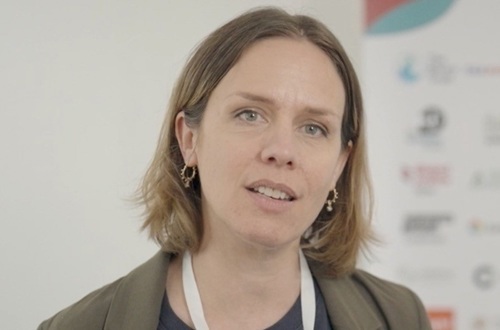 Chloe Alexander: "Rules are also needed to make polluters pay for urgent upgrades to wastewater treatment plants."
There was also an increase found in aquatic wildlife – with levels on average 322 times higher than proposed new EU safe levels for wildlife, an increase from 301 times in 2023.
Once PFAS have entered the environment, treatment can be hugely expensive and very technically difficult, and cannot undo harm already caused to people or wildlife. Upgrading water treatment works to remove PFAS from wastewater could cost an estimated £21 billion.
Adequacy of PFAS controls and comparison with EU
PFAS have exposed the flaws and slowness of chemical regulations worldwide that have failed to prevent their widespread pollution.
In the five years since Brexit and, while our European neighbours have made some progress in regulating PFAS (though too slow), Great Britain has failed to match its restrictions and other controls.
This includes some sub-groups of PFAS, as well as PFAS in toys and food packaging, and regulatory limits on concentrations in drinking, surface and groundwater.
Critically, the EU is currently discussing a broad ban on the use and manufacture of all (over 10,000) PFAS to prevent at source its further build-up in the environment, with some derogations for up to 13.5 years for uses that are essential and for which alternatives are still in development.
Some countries, such as Denmark and France, are taking immediate action to start reducing emissions and protect their citizens ahead of the EU’s broad ban – with bans in consumer products, such as clothing and cosmetics.
Government’s PFAS Action Plan
In February the UK Government published a PFAS Action Plan which powerfully described the long-term challenge they pose “not only our health, but that of the nation’s vital ecosystems”, and the “irreversible harm” they can present. But as many said at the time, it is light on the action urgently needed to meet the scale of that challenge.
 The government is consulting on a new statutory limit for PFAS in drinking water. Image: iStock
We were pleased the Government used the internationally recognised OECD definition of PFAS as a class of chemicals, of over 10,000 substances – a welcome shift from the definition it used in 2023 which only covered a few hundred PFAS.
Regulating PFAS as a group addresses one of the historic weaknesses of chemical safety laws – of regulating substances one by one. So that in the case of PFAS – a family of over 10,000 chemical substances – international bans on the most widely used and studied PFAS (PFOA and PFOS), have simply been replaced by other PFAS, whose levels are now steadily rising in the environment.
The Plan included commitments to improved monitoring and research of PFAS, to consult on a new statutory limit for PFAS in drinking water, and acknowledgement of the need to improve the transparency of PFAS in products that will help with recycling.
But it is missing the concrete, time-bound actions needed to address the urgency and scale of the problem. There is a notable absence of restrictions beyond those already in train to prevent PFAS emissions at source.
There’s no action on PFAS pesticides which are increasingly associated with the formation of Trifluoacetic Acid (TFA), a small, highly mobile PFAS found in nearly all UK rivers tested, with one site having the second highest level of contamination ever recorded globally.
The Plan does, however, reiterate a Government commitment to align more closely with EU protections and lists EU restrictions adopted since Brexit the Government will consider. Oddly, food and food packaging will be tested for PFAS – with no mention of considering EU safety standards in food or restriction of PFAS in food packaging; this may be because these areas of chemicals policy fall under the remit of Food Standards Agency.
Environmental NGOs were concerned by the glaring absence of any mention of the EU’s proposed universal restriction on PFAS. Evidence given to the Environmental Audit Committee’s inquiry on PFAS was more hopeful – with the lead Defra official saying about the EU restriction (that is on its way but not yet finalised), “we may well end up in the same position, but we are too early to say that just yet”.
But this was confused by the Health and Safety Executive (HSE) saying it had a different philosophy from the EU on the PFAS restriction in wanting to “tackle things that are the priorities and build up to things”.
This points to a wider problem identified by the Office for Environmental Protection about the lack of coherence of chemicals policy across government departments and arms-length bodies, particularly identifying “fragmented efforts and unclear alignment between agencies such as HSE and Defra”.
The EU’s broad restriction has been making good progress, with two EU expert scientific committees recently finding a broad ban the only effective measure to deal with PFAS emissions.
The UK Government must commit to matching this restriction, to turn off the tap of PFAS pollution. Deferring action will mean their continued release and build up in our environment, rising levels of exposure and health impacts on people and wildlife, as well as mounting costs of clean-up and toxic waste.
What action can we all take – from Government to businesses – to reduce risks
Tens of thousands of lawsuits have now been filed in the US, adding up to settlements worth over an eye-watering $17 billion.
Due to this escalating liability, as well as insurance and reputational risk, some of the largest manufacturers of PFAS in the world are moving away from PFAS production, such as 3M and BASF.
PFAS-free alternatives are an economic and growth opportunity, with alternatives either already widely available on the global market or in development. The recent ban in France on PFAS in cosmetics, was described by a minister as benefiting French manufacturers “ahead of the game” on PFAS-free cosmetics giving them a “competitive edge”.
The Government’s Plan – while short on action – was encouragingly described by the Defra Minister as a starting point and foundation from which they will build. As part of WCL’s #CleanWaterNow campaign, we’re calling on the Government to control pollution at source – to match the EU’s ban on PFAS, as well as groups of other harmful chemicals.
In the Government’s PFAS plan, consumer products are identified as the next priority for consideration, and we hope the Government will act swiftly ahead of the EU’s broad restriction with bans on PFAS in consumer products, like those in France and Denmark.
Rules are also needed to make polluters pay for urgent upgrades to wastewater treatment plants to protect our rivers, lakes and seas.
Read more about Wildlife and Countryside Link’s #CleanWaterNow campaign:
wcl.org.uk/clean-water-now.asp
In July 2025, WCL and partner NGOs published a PFAS Action Plan setting out actions needed to regulate PFAS.
Chloe Alexander is chemicals policy lead at Wildlife and Countryside Link