PFAS pollution is a rapidly growing concern in the UK. PFAS are widespread in the UK’s environment, wildlife, and people and research shows that the cost of cleaning up PFAS in the UK is astronomical. The question is, what is the government currently doing to address these issues, and is it enough?
Opinion
The problem with PFAS: how can the UK address the ‘forever chemicals’ pollution crisis?
By
on 15 April 2026
What are PFAS?
Per-and polyfluoroalkyl substances (PFAS) are a group of over 10,000 highly persistent synthetic chemicals that take generations to break down in the environment, which is why they are sometimes referred to as the ‘forever chemicals’.
A wide variety of consumer and industrial products use PFAS for their grease- and water-repelling properties and their durability. For example, they can be found in products such as non-stick pans, waterproof fabrics, paper and card food packaging, cosmetics and toiletries, as well as industrial uses such as solar panels and heat pumps.
PFAS pollution in the UK is widespread. According to an estimate from the Environment Agency, there are over 10,000 high-risk PFAS contamination sites across the country. These sites range from landfills and military bases to airports and sewage outfalls. PFAS have been found in our water, our food and even our blood.
 Dr Shubhi Sharma: "The UK should immediately phase out PFAS in key sectors, including firefighting foams, food packaging, textiles and cosmetics."
For example, testing of blood samples from leading politicians and environmentalists in the UK found PFAS in all participants. Even UK wildlife, such as otters and harbour porpoise, is contaminated with PFAS. Research by PAN UK has shown that common food items, such as strawberries, are contaminated with PFAS.
In some areas, such as Thornton-Cleveleys in Lancashire, home to a PFAS manufacturing plant, the situation is so severe that residents have been advised not to eat locally grown fruit, eggs and vegetables due to concerns that soil is contaminated with PFOA, a type of PFAS that has been linked to certain cancers.
Health impacts related to PFAS exposure
Alongside certain cancers, exposure to the most well-studied PFAS has been linked with a variety of adverse health impacts, such as reduced fertility in both men and women, and the disruption of the immune system. Certain PFAS have been classified as endocrine disruptors (EDs) in the EU. EDs disrupt the normal functioning of the hormone system.
Certain occupations like firefighters are particularly at risk of PFAS exposure, due to the presence of PFAS in many firefighting foams. A 2024 blog from the UK’s Fire Brigades Union observed that exposure to firefighting foams can be linked to four of the eight cancers most commonly diagnosed in firefighters. According to a recent investigation by the London Assembly Fire Committee, middle-aged firefighters in London are being diagnosed with cancer at a rate three times higher than the general population.
Workers in PFAS manufacturing plants also face an elevated risk of PFAS exposure. In 2014, a former employee at the Miteni factory in Vicenza, Italy, died of cancer. Last May, a historic court ruling recognised a causal link between his death and his exposure to PFAS.
The Italian chemical company has been at the centre of a pollution crisis in Vicenza, with eleven former executives sentenced to a total of 141 years in jail last year. They were found guilty of polluting the water and soil in a 100 square kilometre area with PFAS.
The town of Bentham in North Yorkshire has the highest PFAS concentrations in the UK. The levels were recorded in groundwater from the site belonging to Angus Fire, a factory that produced firefighting foams containing PFAS between 1976 and 2024. Recent blood testing of residents has revealed alarming PFAS levels. One man, a former worker at the factory, had PFAS levels in his blood more than 200 times greater than the accepted US risk level.
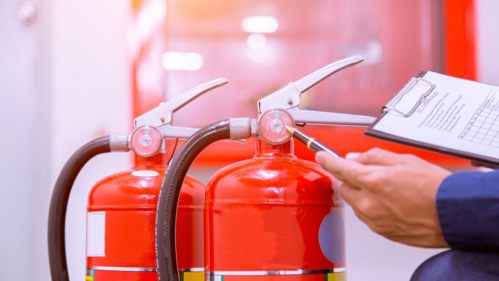 Firefighters are particularly at risk of PFAS exposure, due to the presence of PFAS in many firefighting foams. Photograph: iStock
The cost of inaction
Delaying much-needed action on PFAS comes at an enormous financial cost. Cleaning up PFAS from the environment is extremely expensive. For instance, research has estimated that if PFAS emissions remain uncontrolled, the annual costs of cleaning up PFAS in the UK would be £9.9bn. Even if emissions stopped immediately, costs would remain £428m annually for the next 20 years. These costs do not include health-related costs resulting from exposure to PFAS.
These figures underscore the severity of the crisis the UK finds itself in and the necessity of immediate, decisive action to turn off the tap on PFAS pollution.
The UK is delaying action on PFAS, while the EU moves forward
Since Brexit, the UK has fallen behind the EU in regulating harmful chemicals, and PFAS are no exception. The EU is currently developing a universal PFAS restriction that will cover around 10,000 PFAS.
However, the response to the PFAS pollution crisis in the UK has so far lacked the urgency needed to address the scale of the crisis. In February, the UK Government published its long-awaited PFAS plan, which lays out how it intends to respond to the PFAS crisis. Although the plan is a welcome acknowledgement of the serious risks that PFAS pose to humans and wildlife, it is lacking in ambition.
A main weakness of the plan is its excessive focus on monitoring PFAS levels in the environment and on gathering research and evidence to assess the need for regulation, rather than setting clear, binding timelines to phase out their manufacture and use.
While monitoring and data gathering are important, they are not effective solutions on their own unless PFAS pollution is first stopped at the source. It is like mopping the floor next to an overflowing bath while the tap is still on. In gathering more data and conducting more research on PFAS, the UK will mostly be replicating the work already done by the EU, thus wasting precious capacity and pushing action further down the road.
Regulatory bodies in the UK do not have the capacity to regulate at the same scale and pace as the EU. Alignment with the EU would therefore provide a sustainable and cost-effective solution. However, while the UK Government’s PFAS plan repeats its promise to align more closely with EU standards, it fails to clearly state whether it will take a similarly ambitious approach as the EU.
In addition, the plan does not have a clear remediation strategy, nor does it specify who will pay for the clean-up of this pollution – the taxpayers or the polluting companies. Polluters must be held accountable and made to pay for the damages caused by PFAS pollution and exposure, not the public or financially stretched local councils.
Many groups have voiced their support for action
Support for action on PFAS is widespread across Europe. NGOs in the UK have repeatedly called on the UK government to match the EU’s incoming protections. Last year, a coalition of NGOs – CHEM Trust, Fidra, the Marine Conservation Society, Wildlife and Countryside Link and Breast Cancer UK – published a comprehensive PFAS action plan, laying out policy recommendations for regulating PFAS in the UK.
The industry body Water UK has called for PFAS to be banned at source in the UK to prevent further accumulation in water supplies. They have also asked that PFAS manufacturers fund the removal of PFAS from the environment.
In the EU, PFAS alternative companies have been calling for a phase-out of PFAS as well. Last year, companies that have developed PFAS alternatives in the green sector (such as for green hydrogen, solar, and wind energy) wrote to the EU Commission asking for a PFAS phase-out.
What can the UK do next?
To make sure that the UK doesn’t fall behind the EU on vital protections against PFAS, the UK must commit to aligning with the EU’s universal PFAS restriction. Incremental steps are not enough; bold, preventive policy is necessary to ensure proper protection for people and the environment.
In addition, the UK should immediately phase out PFAS in key sectors, including firefighting foams, food packaging, textiles and cosmetics. Several EU countries, including France and Denmark, have already taken national action on PFAS by banning them in some consumer products.
Finally, PFAS polluters must be the ones footing the bill for the remediation of contaminated sites, in accordance with the ‘polluter pays’ principle. This financial burden should not fall on local authorities or the public.
The time for decisive action is now.
For more information see:
chemtrust.org/pfas
Dr Shubhi Sharma is scientific researcher at CHEMTrust