
Portable gas detectors are a vital safety tool for tasks like water treatment and refrigerated food processing, but it’s essential they form part of a wider system for controlling the risks posed by gases, including staff training, detector maintenance and a through understanding of the relevant legal duties.
Features
Portable gas detection: back to basics
By
on 02 April 2026
Portable gas detectors have long been a crucial tool for proactively protecting workers operating in industries where gas presents a serious safety risk, from wastewater facilities to food processing plants, telecommunications sites to breweries.
Alerting workers to both the presence of asphyxiating, toxic or explosive gases – as well as the danger of oxygen depletion – portable gas detectors provide immediate, point-of-exposure monitoring in changing environments and confined spaces, allowing for rapid response and intervention to keep workers (and plant) safe.
However, significant changes to working practices over recent years, as well as major advances in technology in this area of safety, highlight the importance of understanding the fundamentals of portable gas detection. Having a solid grasp of the basic foundations of this important area of safety enables greater comprehension – and potential use – of some of the latest innovations in the field.
 Credit Dräger
What is a portable gas detector?
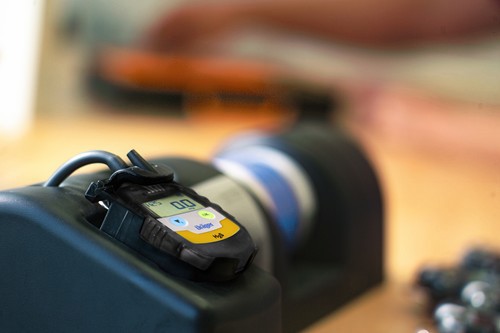
Portable gas detectors, sometimes referred to as personal or compliance monitors, are compact, battery-powered devices. They are worn on the person, usually attached to clothing at chest height in the breathing zone. They provide early warnings of the presence of a range of toxic or flammable gases or vapours, or low oxygen levels, in the immediate surrounding area.
These devices support both single and multi-gas detection; the latter can monitor several gas hazards simultaneously using individual or dual gas sensors in one device. In wastewater treatment settings, for example, sensors may monitor for methane, hydrogen sulphide, carbon monoxide and oxygen deficiency to protect employees working in such environments.
When a portable gas monitoring device detects any gas that reaches preset levels, it will activate an alarm and start flashing/vibrating. The alarm is designed to be clearly heard and seen by the wearer, allowing them to take immediate action to protect themselves and others by evacuating the danger area.
Gas detection regulations in the UK
Gas detection is tightly regulated in the UK to ensure worker safety, and there are key regulations which employers need to adhere to keep their employees safe.
- EH40/2005 details Workplace Exposure Limits (WELs) for a variety of hazardous substances, including gases. Adhering to these limits is crucial for maintaining a safe working environment, and employers have a duty to ensure that no employee is exposed to any concentration of substance more than the WEL for that substance.
The WEL values are split into two parameters: the Long-Term Exposure Limit (LTEL), which is the maximum exposure permitted over an 8-hour period (also known as TWA – Time Weighted Average) and the Short-Term Exposure Limit (STEL), which is the maximum exposure permitted over a 15-minute reference period.
Gas concentration is measured in a variety of units such as Vol% and PPM (parts per million). For example, if a detector reads 50 PPM of carbon monoxide, this means 50 parts of carbon monoxide in every million parts of air.
Examples of common gases and their UK workplace LTEL exposure limits include:
- Carbon monoxide (CO): WEL of 20 PPM over an 8-hour time-weighted average (TWA)
- Hydrogen sulphide (H₂S): WEL of 5 PPM over an 8-hour TWA.
An example of a common gas and its UK workplace STEL exposure limit would be:
- Chlorine (Cl₂): WEL of 0.5 PPM over a 15-minute TWA.
The LTEL is designed to protect the workforce from concentrations of contaminants, which over a sustained period could cause long-term chronic ill health effects. The STEL exposure limit relates to peak exposure incidents and is designed to protect against immediate acute ill-health effects. - In addition to EH40, it is important to adhere to ISO 10156:2017, the international standard that provides a method for determining and calculating the flammability of gases and gas mixtures, including how to assess whether a mixture is flammable based on its composition and how inert gases reduce flammability.
Central to this is understanding the Lower Explosive Limit (LEL) and Upper Explosive Limit (UEL): the LEL is the minimum concentration of a gas in air below which ignition cannot occur, while the UEL is the maximum concentration above which there is insufficient oxygen for combustion. Gas detection systems are typically set to alert at low percentages of the LEL (often 10–20 per cent) to provide early warning and allow intervention well before conditions become explosive, ensuring compliance with legislation and protecting people, plant and property.
As an example, hydrogen sulphide (H₂S) presents a significant flammable as well as toxic risk in industrial and confined-space environments. It is a colourless gas with characteristic ‘rotten egg’ odour at low concentrations, although reliance on smell is strongly advised against because olfactory fatigue occurs rapidly. Sometimes called ‘odour fatigue’, olfactory fatigue may happen after prolonged exposure to a particular airborne compound and results in an individual temporarily not being able to smell the odour.
From a flammability perspective, H₂S has a wide explosive range in air, with a Lower Explosive Limit (LEL) of approximately 4.3 per cent by volume and an Upper Explosive Limit (UEL) of about 46 per cent, meaning it can ignite over a broad range of concentrations if an ignition source is present. This wide range increases the likelihood of forming an explosive atmosphere, particularly in poorly ventilated areas such as sewers, tanks and process vessels.
For health and safety professionals, it is critical to recognise that flammable conditions can co-exist with severe toxicity at much lower concentrations.Whilst detection equipment deployed to monitor for toxic levels of H₂S will always alert personnel to the danger long before a concentration becomes flammable, it is important to recognise that electrochemical sensors are very sensitive and can easily become saturated should a gas concentration continue to rise quickly.. This results in a sensor going ‘over-range’, meaning you lose visibility of the concentration in these specific circumstances.
With gas detection, effective ventilation, ignition source control and alarm setpoints based on a percentage of the LEL are essential to managing both explosion and acute health risks associated with H₂S.
By adhering to both EH40 and ISO 10156 guidelines, employers can reduce the risk of gas exposure and flammability, protecting their teams from health issues, serious injury and, in the worst-case scenario, fatality.
 Credit Dräger
Uses
Portable gas detectors are typically used for three key reasons:
- Personal safety – to protect workers from immediate or long-term exposure
- Operational integrity – to identify leaks and prevent fires or explosions
- Regulatory compliance – to meet occupational health and safety regulations.
Fixed and portable gas detection devices are often used in combination, but each has a different functionality, so it is crucial that the appropriate type of detector is used for the situation, activity and risk. While fixed gas detectors provide continuous area monitoring in high-risk zones, portable detectors offer personal protection and continuous monitoring for workers operating in the field or in confined spaces and during maintenance tasks, and when moving through areas where there is the potential for a leak.
Effective safety procedures
Employers must have an effective safety procedure in place so that employees clearly understand what to do in the event of a gas leak.
To optimise gas safety in the workplace, there must first be a risk assessment process that identifies potential gas hazards, establishes control measures and ensures all equipment is properly maintained and routinely inspected. In addition, an emergency procedure should be put in place, detailing what employees need to do in the case of the alarm sounding, with regular safety drills carried out.
Key elements of a gas safety procedure include:
Ongoing and effective employee training
Training plays a central role in an effective gas safety procedure within the workplace by giving employees the knowledge and practical skills they need to identify warning signs of gas leaks, understand detection systems, follow safe handling and storage procedures, operate equipment safely and respond correctly in emergencies.
There may also be a requirement for specific training on areas such as work in confined spaces (like storage tanks, silos and sewers), to equip workers with the skills and knowledge for safe entry, air quality testing, ventilation, monitoring, rescue procedures and understanding hazards and safety measures in confined spaces.
A fundamental aspect is responding quickly to a gas alarm – employees should never ignore an alarm or assume it to be anything other than real. Drills should be regularly carried out to ensure workers frequently practise the process to be followed in the event of a need to evacuate the area – whether it be a site, confined space or remote working area.
As well as the emergency response procedure for a suspected gas leak or hazard being clearly communicated to all employees, these drills should be regularly tested to ensure they are suitable and effective and workers understand how to follow them.
When training workers on the evacuation process, it should be reinforced that no one should re-enter an area until it has been confirmed safe from lingering contaminants.
Furthermore, regular refresher sessions will reinforce these skills and address any changes in technology, regulations or workplace conditions.
By building competence, confidence and situational awareness, training helps create a proactive safety culture in which workers help prevent incidents, respond quickly to potential risks, and protect both themselves and their colleagues.
 Credit Dräger
Regular maintenance (including calibration)
Regular maintenance of portable gas detectors is also an essential element of the safety procedure.
Portable gas detectors are there to save lives, so they must be regularly maintained in line with the manufacturer’s guidelines (usually every six to 12 months).
This maintenance may typically include visual inspection and ‘bump’ testing to confirm there is no damage and that the device’s sensors and alarms are responding to the target gases. It is recommended that these checks are carried out before every use.
More detailed maintenance tests will include electrical safety testing, as well as function and condition tests. An adequate maintenance programme will also ensure that functional parts – such as O-rings, which routinely deteriorate due to wear and tear – are replaced before they perish.
A well planned and suitable maintenance programme will also reduce downtime arising from the need to fix broken gas detectors and will help extend the life of equipment.
It is also extremely important that gas detection devices are regularly calibrated to ensure measurements are accurate and ensure alarms will activate if gas levels reach the maximum safe exposure limits or where they could pose an explosion risk.
Sensors are used for continuous measurements and are likely to drift over time, so they need adjusting periodically. The calibration frequency will depend on the device type, sensor/gas type, application and local legislation. It is therefore important to check the calibration periods with the manufacturer.
Conclusion
Portable gas detectors save lives every day – but only when used correctly and when an effective safety procedure is in place to manage the risk gases pose, both to workers and general site safety. Employers and employees using portable gas detection must understand the key terminology, regulations and potential health impact of gas exposure to maintain a safe working environment. In turn, this will help ensure every worker goes home safe, at the end of every day.
For more information see: draeger.com/en_uk/Home
Megan Hine is gas safety expert at Draeger Safety UK.
Example of portable gas detection in the food and drink industry: the use of ammonia in food refrigeration
Ammonia (NH3) is commonly used in food refrigeration systems as an alternative to hydrofluorocarbons, which are being phased out. As a result, the use of ammonia is increasing and it is often utilised by food producers, cold storage facilities and breweries. However, while ammonia is very versatile, it is also extremely dangerous in the event of a leak, so monitoring is essential.
While its pungent odour is distinctive and unmistakable, its dangers are significant: in lower concentrations, inhalation can lead to irritation of the eyes, nose and throat; and prolonged exposure can result in severe respiratory complications and can even be fatal. Another, often overlooked, danger is its explosive nature when present in higher volumes.
An accidental release of ammonia can not only pose immediate health risks but can also lead to explosive incidents if not promptly monitored and managed.
In such settings, portable gas detection devices provide versatile protection for personnel moving around the refrigeration facilities and during inspections or maintenance.
In the event of a refrigeration system which combines carbon dioxide (CO₂) with ammonia, the portable gas detection devices monitor for multiple gases simultaneously, so workers are kept safe when operating in the vicinity of the refrigeration unit.

FEATURES
Eliminating barriers in reporting: how conversational AI can unlock safety engagement
By on 01 January 0001
Why UK employers need to rethink recruitment, retention and support for older workers
By on 01 January 0001