
Workers over the age of 50 comprise nearly one third of the entire UK workforce, and they’re essential to the economy. Employers therefore have an imperative to recruit – and retain – older workers.
Features
Employers have every reason to support older workers
By
on 07 May 2026
Over the last 40 years, there has been an almost 50 per cent increase in the number of people aged 50 – equating to an additional 6.8 million people. In another 40 years, nearly half (46 per cent) of the population in England is projected to be aged 50 or over.
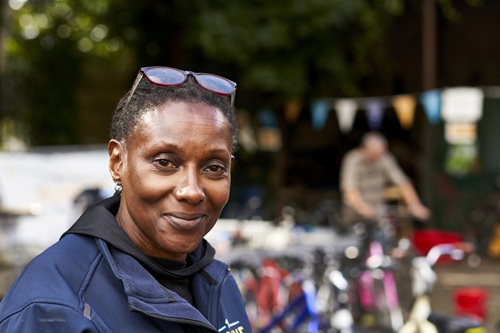 Research from our Age Without Limits anti-ageism campaign found that the workplace was the most mentioned setting for ageism to occur. Photograph: Centre for Ageing Better
As the country’s ageing population continues to grow, older workers will increasingly become a larger proportion of the UK’s labour force, and increasingly form part of the solution to organisations’ labour and skills shortages.
For some employers, that will require a reappraising of the value of what older workers can bring to their organisation and a challenging of some ageist stereotypes they might hold. For other employers, it will mean doing more of the age-friendly employment practices they are already adopting.
The problem with ageism
Unfortunately, and ironically when we consider the country’s ageing demographic, ageism is freezing out many people in their 50s and 60s from the workplace and is preventing organisations from building the multigenerational workforces they need. Ageism, a stubborn bastion of prejudice, is slowly being recognised as an issue that must be addressed but its prevalence remains shockingly high in work despite age discrimination protections.
Research from our Age Without Limits anti-ageism campaign found that the workplace was the most mentioned setting for ageism to occur, with more than one in three people aged 51–70 reporting they had felt badly treated because of their age in employment or work over a 12–month period.
Negative stereotypes about older workers persist, such as their inability to use IT, even though the use of technology in the workplace has been commonplace since the 1980s.
This is a tragedy for the individual, and for the country, particularly within the context of the country experiencing labour and skills shortages in many sectors of the economy, such as construction and hospitality.
The skills gap alone is costing companies a record £6.6 billion a year, according to recent estimates.
It’s important to remember that many older workers can bring vital skills and experience to an organisation.
With the state pension age recently rising to 67, and future increases already planned, the length of everyone’s working lives are increasing and the proportion of people’s working lives past 50 is also increasing.
Older workers are therefore the new ‘normal’.
But in today’s labour market, more than a third (36 per cent) of 50 to 69-year-olds believe that they are disadvantaged when they apply for jobs, purely because of their age. Research by the Centre for Ageing Better indicates that ageism is the most widespread form of discrimination in the UK.
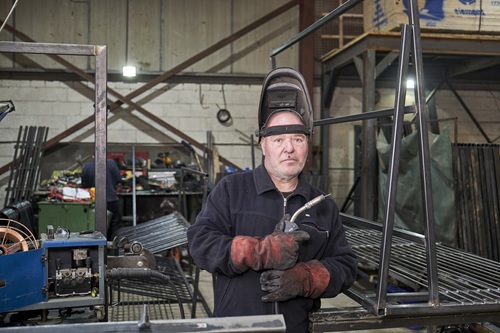 Older workers are not always keen to disclose health problems and disabilities. Photograph: Centre for Ageing Better
This is despite it being unlawful, under the Equality Act 2010, to discriminate against employees, jobseekers, and trainees of any age.
While a small number of explicit examples of age discrimination are successfully pursued legally by aggrieved parties every year, in most people’s experiences the ageism they experience is more subtle and unspoken within their experiences of being considered for recruitment, training, promotion or redundancy.
At interview, an unsuccessful older candidate may be told that they’re ‘not quite the right fit’ or ‘too experienced’. This goes some way to explain the fact that workers made redundant over 50 are three times less likely to return to work within three months than those younger than them.
The growing number of age-friendly employers
Fortunately, more and more employers are recognising that taking an age-friendly employment approach can give them the edge and help them to adapt better to the changing workforce.
The Centre for Ageing Better launched the Age-friendly Employer Pledge in November 2022.
The pledge is a nationwide programme for employers who recognise the importance and value of older workers.
Employers commit to one action a year to improve the recruitment, retention, and development of older workers.
The pledge offers guidance to employers in several key areas, including how to create an age-friendly culture, hire age-positively, be flexible about flexible working and encourage career development at all ages.
The Age-friendly Employer Pledge is the community of employers, actively working together to create change.
The pledge represents a commitment made by employers to not only support older workers but celebrate their value. It’s open to employers across the UK and is free to sign up to.
More than 500 employers have already signed the pledge, including Amey, Zurich Insurance, Oliver Bonas, Natural England, Arla Foods, The Gym Group and the Department for Work and Pensions.
The need for flexibility
Knowing where to start in taking action to become a more age-friendly employer might feel daunting for an employer amongst all the other challenges they are facing.
One way to prioritise where to start is to consider what older workers want most. In a number of surveys of 50+ workers, flexible working comes out on top on what they are looking for in a new role.
For employers, it’s beneficial to look at flexible working as a strategic workforce tool that can inspire, motivate and improve staff work-life balance. It can also improve performance.
Health support
Another way that age-friendly employers can maximise the potential of older workers is through health support.
In later life, we’re more likely to experience conditions that may need adjustments. Our research shows that older workers are not always keen to disclose health problems and disabilities, which can prevent them from accessing the support they may need to succeed at work.
It’s a good idea to support staff and line managers in providing training to enable them to feel more confident in discussing workplace health.
If the conversation is normalised, you can let all staff know that managing health problems isn’t an anomaly, but a part of life – and that health support is embedded in the culture.
It’s important to avoid stigmatisation because anyone can experience a health problem at any age. It would be beneficial to get this message across in internal communications, and ot would be ideal if you can share examples too. Senior management should communicate this from the top down.
Becoming an age-friendly employer, one step at a time
Pledged employers take action every year to improve the recruitment, retention, and development of workers aged 50 and over from one of the following areas:
- Create an age-friendly culture, such as challenging stereotypes about older workers, and promote the benefits of multigenerational teams
- Hire age-positively, including refreshing application and interview processes to reduce age cues and minimise age bias
- Be flexible about flexible working, including actively promoting flexible working to workers in their 50s and 60s
- Encourage career development at all ages, such as providing career guidance at mid-life and beyond, including retirement planning
- Ensure everyone has the health support they need – for example, have conversations about menopause in the workplace, and provide adjustments if needed.
Pledge employers taking action and making a difference
One of the benefits of being a Pledge member is learning best practice from the hundreds of participating organisations. Examples include:
Organisation: Hyde – a London and southeast-based housing organisation.
What they aim to achieve: For the over-50s workforce to be enabled to feel valued and supported – and thrive.
How they did it: Hyde have introduced a new ‘Carer Passport’ that enables employees to have confidential conversations with their managers about flexibility and caring responsibilities.
Organisation: Calderdale Council
What they aim to achieve: Give older employees more flexibility in phased retirement.
How they did it: Supporting staff who want to reduce their hours and/or level of responsibility but continue to work when they are aged over 55. The aim is that employees can then graduate into retirement.
Organisation: ISS (International Service System)
What they aim to achieve: Ensuring older workers can also benefit from apprenticeships.
How they did it: The organisation has made strategic use of apprenticeships, showing how career development can be improved for older workers and also simultaneously strengthen business performance and inclusivity.
Organisation: Epping Forest District Council
What they aim to achieve: Ensure great emphasis on equality, diversity and inclusion, including older employees.
How they did it: The council has put in place employee-friendly conditions, which may particularly suit the needs of older workers. People aged 55 or over who want to take flexible retirement are able to do so or can opt for condensed hours. Additionally, the council offers a free mid-life MOT annually to anyone aged 40 or over.
How to become a member of the Age-friendly Employer Pledge
Employers interested in becoming an age-friendly employer can register their interest in the Pledge here.
They will receive an information pack to help them decide if the Pledge is right for them and their organisational needs. Organisations can also request a call with one of the Pledge team members. Registering interest brings no obligation to sign the Pledge.
If companies do decide to go ahead with signing the Pledge, there is a link to the application form in the information pack.
Once signed, organisations will be sent a communications pack with suggestions and templates to help them share the news.
Pledge employers also receive monthly newsletters with tips, guidance, and inspiration, as well as invites to regular welcome calls and webinars.
Why it benefits organisations to employ older workers
- Businesses with a higher share of workers aged 50+ compared to the average are more productive
- Half of this impact has been measured as being because of older workers’ higher productivity levels and half due to older workers’ positive impact on co-workers
- More experienced CEOs and managers are associated with higher productivity
- Turnover is lower at firms that have a higher share of workers aged 50+.
For more information, go to:
ageing-better.org.uk/employer-pledge
Tracy Riddell is Head of Age-friendly Employers at the Centre for Ageing Better

FEATURES

AI at work: why employee monitoring may be creating new pressures
By Orchie Bandyopadhyay on 21 October 2026
India’s information technology companies are rapidly expanding their use of AI in a bid to drive business efficiency and boost innovation. However, commentators warn that the growing use of AI to monitor employees’ work outputs and activities poses a risk to workforce mental health and wellbeing.

Remote and hybrid working: how can employers best provide support?
By Orchie Bandyopadhyay on 21 October 2026
India continues to embrace remote and hybrid working, with large numbers of staff either working from home full time or following a mix of remote and office attendance. However, remote working can create feelings of isolation and loneliness, in turn affecting performance and mental wellbeing, so it’s essential employers have excellent communication and support procedures in place to prevent these problems arising.