
Although discrimination against disabled people has long been unlawful in India, disabled people are still under-represented in the country’s workforce. Now, campaigners are calling for larger companies to lead the way by stepping up efforts to recruit, support and retain disabled talent – for instance, by making workplaces more accessible for disabled workers.
Features
Disability inclusion in Indian workplaces: what needs to change?
By
on 15 May 2026
It’s not much of a mystery why the employment gap between disabled and non-disabled people in India has always been wide, and every attempt to narrow it seems to fall short. A report by Indian HR and diversity, equity and inclusion (DEI) consulting firm Marching Sheep provides details.
Persons with disabilities make up less than 1 per cent of the workforce in corporate India, the Marching Sheep PwD Inclusion Index 2025: Building Disability Confident Organisations report found.
The report, which is based on a survey of persons with disabilities (PwDs) employed at 876 publicly-listed organisations across 59 different sectors, concludes that structural failures, rather than isolated oversights, are the reason why so few disabled people are employed by Indian corporations and Indian businesses in general.

Marching Sheep says the report aims to provide a comprehensive, evidence-backed view of where India stands today in relation to the employment of PwDs in large corporations and the steps required to build truly inclusive workplaces for disabled people.
As well as finding that disabled people form less than 1% of the workforce at the companies surveyed, the report found that 37.9% of surveyed companies reported have no permanently employed PwDs.
The report also found that public sector undertakings (PSUs) – state-owned enterprises where the central or state government holds at least 51% of the paid-up share capital – employ 72% of all PwDs in India, and the private sector continues to lag behind the public sector in hiring disabled talent. However, the report found that during 2025, growth rates in hiring disabled workers were higher in the private sector than in PSUs.
Many PwDs (73%) believe they do not get paid equally for equal work, and 68% think their workplaces are not accessible enough, the report also found.
Marching Sheep adds that invisible disabilities “continue to be insufficiently addressed in hiring” and warns structural and attitudinal barriers are limiting the representation of people with hidden disabilities at work. Many PwDs are still restricted to entry-level jobs or blue-collar jobs, regardless of their qualifications, say`s the report.
Some good news
However, the report, which was published in December 2025, contains at least one piece of good news: the study found the number of organisations employing at least one disabled person in 2025 has risen by 4.1% compared to the previous year.
“The less than 1 per cent representation of PwDs in our workforce, combined with the widening entry trust gap and limited career pathways available to those who qualify, indicates that mere benevolence is insufficient toward building true inclusion for PwDs in the workforce,” said Sonica Aron, founder and CEO of Marching Sheep.
She added: “The data indicates we are making strides toward inclusivity. However, we need to pick up pace.
“To be inclusive in our workforce development, we need to shift from thinking of disability through the lens of charity, to viewing disability as an integral part of developing talent and capability within our teams and workforce.”
Commenting on why so few disabled people are hired and retained by large India corporations, a recent graduate from the Indian Institute of Management Ahmedabad – who is employed as a management trainee at a leading Indian company – said: “Although there are policies aimed at encouraging employers to employ more people with disabilities, you must realise that the corporate culture is very individualistic, very competitive – based on putting in insane hours.
“Expectations of very high productivity already make it an ableist environment. There are only some people who can succeed. What gets celebrated is the most productive – the most ‘abled’.”
The worker adds that his childhood sweetheart, who is now his wife, partially lost her mobility following an accident a decade ago. His wife, Sapna Verma, who uses a wheelchair, says: “Non-compliance with the mandates of The Rights of Persons with Disabilities (RPwD) Act, 2016 is routine.”
Verma argues the main reasons why employers are reluctant to hire disabled people are inaccurate ideas about the productivity of disabled people, ill-considered expectations that recruitment of PwDs will incur high costs, and little knowledge about the nature of disabilities and the capabilities of disabled employees.
“Those of us who get jobs and who request necessary accommodations and have them honoured are a privileged minority,” she says with a wry smile.
However, Verma argues that some companies have grasped that seeking to proactively employ disabled people and comply with legislation regarding the participation of disabled people in Indian society can provide businesses with a competitive advantage. “Some businesses also actually see the added value for their organisation of hiring people with disabilities. For example, because it enhances their reputation,” she says.
According to India’s 2011 Census, there are 26.81 million people with disabilities, or around 2.21% of the population, and women comprise 44.1% of the total number of disabled people. Disabilities related to physical movement affect the largest number (5.44 million people), followed by hearing impairments (5.07 million) and vision disabilities (5.03 million).
Disability rights legislation
The Person with Disabilities (Equal Opportunities, Protection of Rights and Full Participation) Act, 1995, laid down the foundation for disability rights legislation in India. The Act was the first piece of legislation in India to explicitly address the rights of persons with disabilities, and provided a legal basis for future reforms.
The Act was proposed and approved into law following of a long campaign of activism by people like Javed Abidi, a disabled Indian activist who founded the Disability Rights Group in 1993 and served as director of the National Centre for Promotion of Employment for Disabled People (NCPEDP). The NCPEDP is a non-profit trust established in 1996 following the enactment of the 1996 Act to champion the cause of disability rights. It acts as an interface between government, industry, international agencies and the voluntary sector towards the empowerment of persons with disabilities, including pushing for improved employment opportunities for disabled people.
The Disability Rights Group campaigned on issues such as improving access to public and other spaces and facilities for disabled people, and it was in part the result of Abidi’s perseverance that many stadiums, cinemas, railway stations and airports began to be fitted with ramps to improve access for wheelchair users and tessellation flooring to facilitate the movement of the visually-impaired.
In 1995, Abidi, who was born with spina bifida, spearheaded a protest that pushed Parliament to pass the Persons with Disabilities Act.
However, because the 1995 Act failed to cover several types of disabilities and address a number of modern challenges faced by disabled persons, a new act, The Rights of Persons with Disabilities (RPwD) Act, 2016, came into force in June 2017. Abidi was a major advocate of the 2016 Act, which modernised disability laws in India.
“The Persons with Disabilities Act, 1995 was passed after a lot of struggle and drama,” said Abidi, who died in 2018 at the age of 52. “We had tears in our eyes and thought everything would be alright. We became complacent. But the government passed a law, and then totally forgot about it! Again, we had to create a tamasha (commotion) every time we (disabled people) needed access to something.”
The primary objective of the RPwD Act 2016 is to ensure that all persons with disabilities can lead their lives with dignity, without discrimination and with equal opportunities. The Act also promotes inclusive education and provides safeguards designed to ensure disabled people have a right to employment without discrimination. It therefore aims to empower disabled people through inclusive growth and active societal participation.
Barries to equal opportunities
The International Labour Organization (ILO) states that people with disabilities make up an estimated one billion, or 15%, of the world’s population. It further estimates that around 80% of disabled people are of working age. However, the ILO says people with disabilities are frequently denied the right to decent work, and disabled people – particularly women with disabilities – face enormous attitudinal, physical and informational barriers to equal opportunities in the world of work.
In India, the percentage of disabled people in employment is estimated to stand at around 36%, compared to approximately 60% for those without disabilities.
The disparity is even starker in relation to the gender of disabled people. According to a report by the Ministry of Statistics and Programme Implementation, women with disabilities barely register in the economy, and their labour force participation rate (LFPR) languishes at 7.7%. Men with disabilities have a LFPR of 36% – a gap that demonstrates women with disabilities face greater barriers in accessing work.
Statistics also show that people with disabilities experience high rates of poverty and unemployment.
Disability-related labour market inequality is also not limited to obtaining and retaining employment. “There is also evidence that disability is associated with gaps in pay and job satisfaction among those in work,” say experts.
Although 50% of corporates in India reportedly have policies designed to ensure the recruitment, support and retention of employees with disabilities, implementation of these policies on the ground remains weak, say disability rights campaigners.
Common examples of barriers to the employment of PwCs include workplaces without ramps or accessible washrooms, digital tools that are not compatible with assistive technologies, insufficient training for managers and recruiters about the benefits of employing PwDs, and persistent stereotypes among employers and managers about the skills, capabilities and productivity of disabled workers. Many small and medium enterprises (SMEs) struggle to see a clear business case for disability inclusion, further hindering progress, according to the United Nations Development Programme (UNDP).
Financial repercussions
The UNDP adds that failing to boost disability inclusion at work and in all aspects of everyday life could have serious financial repercussions for India, as an Impact Future Project report estimates that failing to create a disability-inclusive economy could cost India over USD 210 billion.
Himanshi Goel, policy analyst, and Amit Kumar, head of inclusive growth at the Sustainable and Inclusive Growth (SIG) Unit at UNDP India, argue that a culture shift is required to eliminate biases and stereotypes about the capabilities of persons with disabilities.
“This involves educating employees and management through workshops on disability etiquette and reasonable accommodation and celebrating success stories that highlight the value of diversity,” they say.
“For instance, Lemon Tree Hotels employs individuals with Down syndrome and other disabilities in client-facing roles, effectively debunking myths about their employability. Continuous training programmes and senior management commitment are critical for embedding inclusion into workplace culture.”
Goel and Kumar add there are a number of steps the private sector can take to play a pivotal role in bridging the employment gap for persons with disabilities.
For instance, they argue businesses should focus on adopting cost-effective solutions for including persons with disabilities in the workplace. “Collaborating with organisations of persons with disabilities (OPDs) and NGOs to access talent pools and training programmes can help reduce recruitment costs,” they state. “For instance, Mirakle Couriers recruits hearing-impaired individuals through NGO collaborations, leveraging their strong memory and map-reading skills.
“Additionally, digital solutions like virtual interviews and remote work [result in] lower operational costs.”
They also urge businesses to make their work sites more accessible for PwDs, as research shows less than 25% of Indian workplaces provide accessible infrastructure such as ramps, adapted restrooms, or assistive technologies, and 17% of workplaces have made no accommodation (i.e. adjustments) at all for disabled staff. “Digital accessibility, including user-friendly websites and software, is equally crucial to productivity and engagement,” they add.
Goel and Kumar add that by promoting inclusive hiring, enhancing accessibility, and fostering a culture of belonging, India’s private sector can play a transformative role in creating workplaces where no one is left behind. “Together, we can build an equitable ecosystem that empowers persons with disabilities and drives sustainable growth,” they conclude.

FEATURES

AI at work: why employee monitoring may be creating new pressures
By Orchie Bandyopadhyay on 21 October 2026
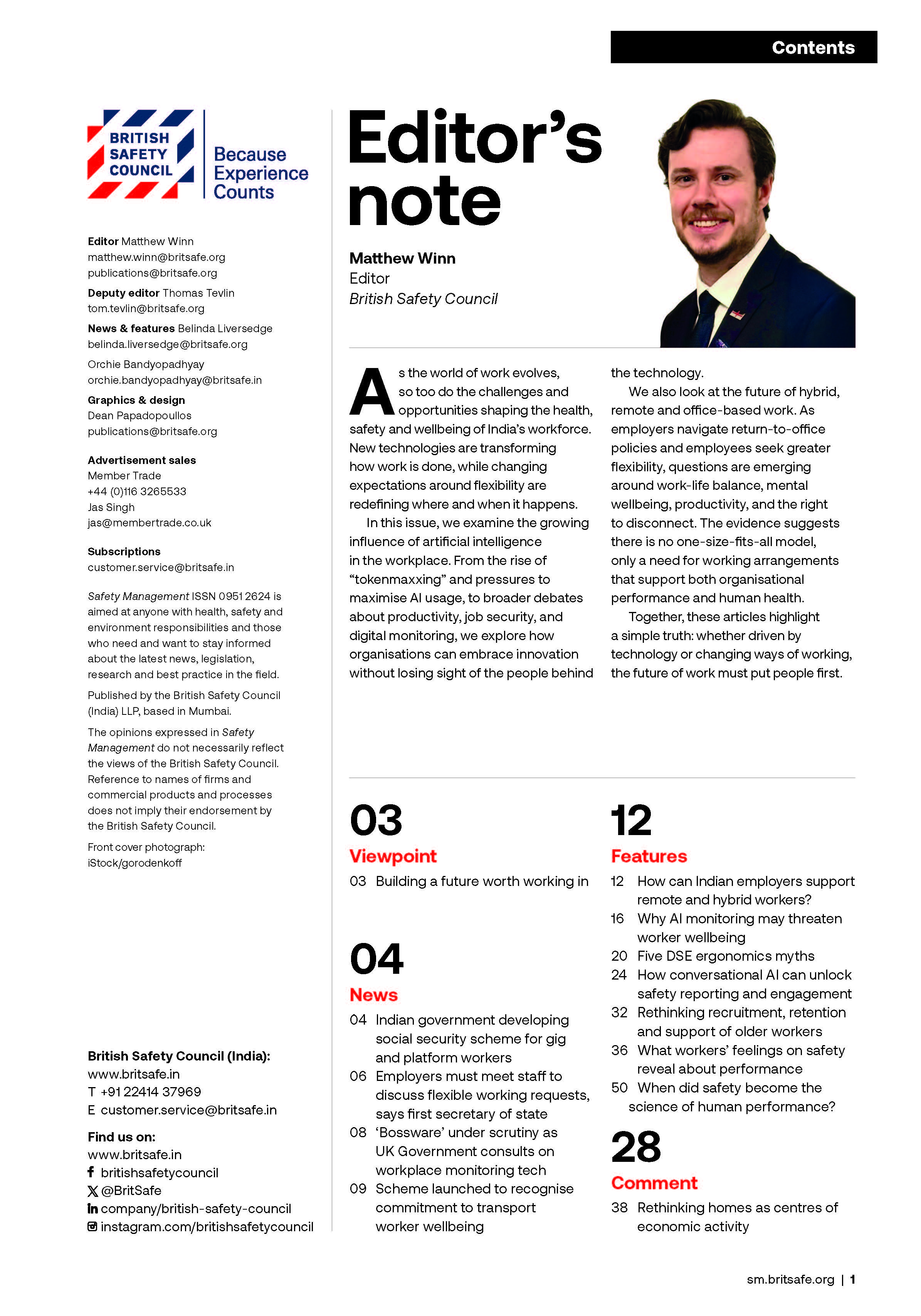
India’s information technology companies are rapidly expanding their use of AI in a bid to drive business efficiency and boost innovation. However, commentators warn that the growing use of AI to monitor employees’ work outputs and activities poses a risk to workforce mental health and wellbeing.
Remote and hybrid working: how can employers best provide support?
By Orchie Bandyopadhyay on 21 October 2026
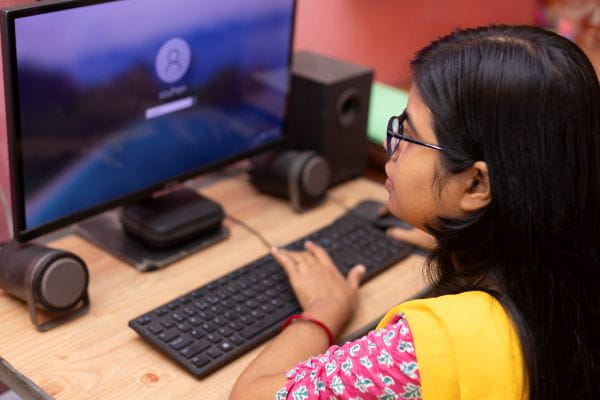
India continues to embrace remote and hybrid working, with large numbers of staff either working from home full time or following a mix of remote and office attendance. However, remote working can create feelings of isolation and loneliness, in turn affecting performance and mental wellbeing, so it’s essential employers have excellent communication and support procedures in place to prevent these problems arising.