
The UK’s energy efficiency landscape is transforming, with new regulations, reporting and efficiency standards set to reshape how organisations manage their energy in 2026.
Features
Reporting and reduction: what to expect in energy and efficiency in 2026
By
on 12 March 2026
From reformed EPC certificates to mandatory Scope 3 reporting, energy managers face mounting complexity on top of the need to transition to clean technologies. Graham Paul, service delivery director at TEAM Energy, speaks with the business’s efficiency and carbon-reduction experts to find out more.
According to the Climate Change Committee’s 2025 report to parliament, more than half of the energy used in our economy is simply wasted due to the inefficiencies built into fossil fuel technologies. Whether it’s in transport, space heating or industrial processes, electrification will help to reduce that waste.
At the same time, much of our built environment is wasteful of energy, and unfit for the future of changing weather conditions. Improving energy efficiency throughout buildings will build climate resilience, while also reducing emissions and energy costs for many organisations.
Electrification and the built environment are just two examples of how the energy and energy efficiency landscape is starting to change. Energy managers and business leaders have to help drive these changes while juggling the demands of daily operations. Yet that’s much easier said than done, especially when the future seems unclear, or requires new technology, reports and ways of operating.
 Much of our built environment is wasteful of energy, and unfit for the future of changing weather conditions. Photograph: iStock
There is no burying our heads in the sand. All UK organisations need to be aware of the developments on the horizon; they need to incorporate them into their business plans and get ready for any shockwaves. Acting sooner is also an advantage; small steps now can deliver meaningful impact while building momentum over the long term.
To give energy managers and business leaders an insight into what’s to come, I spoke with our energy management and efficiency experts at TEAM Energy, starting with Tim Holman, our head of operations:
Should UK organisations be concerned about any changes to energy efficiency ratings in 2026?
“Organisations should brace themselves for potential changes to the requirements for energy efficiency certificates. A consultation on the Energy Performance of Buildings (EPB) framework closed in February 2025, the results of which are expected very soon, and the reforms could start to be applied from 2026.
Shorter validity periods for Display Energy Certificates (DECs) and their recommendation reports have been proposed, and there could be updates to enforcement mechanisms, including fines for DECs and Air Conditioning Certificates (TM44s). Also, while commercial EPC ratings themselves may not change in 2026, related to this could be the confirmation of the new Minimum Energy Efficiency Standards (MEES) requirements setting the trajectory for future tougher compliance obligations.
“These are significant changes, and I’d caution energy and building managers to seek proper support ahead of taking any actions. At this stage, the best thing any organisation could do is find a trusted partner that will help them understand the full breadth of these potential changes and collect the data they may need to act on them.”
Data for sustainability reporting will also be of new importance in 2026, as the UK looks to introduce the UK Sustainability Reporting Standards (SRS). Tom Anderton, commercial director, tells us more:
What does SRS mean for UK organisations, and who is it going to impact?
“If your company is affected by existing reporting such as Streamlined Energy and Carbon Reporting (SECR) and Energy Savings Opportunity Scheme (ESOS), then you may be impacted by the proposed SRS, along with large private companies and public interest entities (PIEs). Whilst voluntary at first, SRS looks to be much more ambitious.
For example, where SECR required reporting on energy consumption and Scope 1 and 2 emissions without external validation, the SRS could require companies to have their data validated externally. It could also require companies to outline their transition plans and report on wider issues beyond simply climate and emissions.
“Although small and medium sized business will not be in scope as part of the first wave, if they are suppliers to larger firms which do fall in scope, they may be asked to provide emissions or sustainability data to help feed into their supply chain emissions.
“A big change will also be Scope 3 emissions. SRS will make Scope 3 reporting mandatory for affected companies after their first year. We work with many organisations already reporting under SECR, but to those we’re not supporting, I would advise them to carry out an analysis of the gaps in their reporting capacities and internal processes. Voluntary to mandatory is a big change. You’re going to need much more data; it needs to be good quality and auditable, and you’re going to need to tell a more forward-looking narrative about it and your organisation, too.”
More data will be a natural consequence of the upcoming Market-wide Half-Hourly Settlement (MHHS) programme. As the largest change to the electricity retail market in a generation, businesses can expect a mix of opportunity and risk. Robert Webb, bureau operations manager, sheds light on the situation:
Rob, what can organisations expect from MHHS in 2026, and how can they prepare?
“It wasn’t long ago the MHHS felt like a far-off change; now, it’s here. The central MHHS system went live in September, and from October 2025 some electricity suppliers started to move their customers from the older settlement arrangement to the new half-hourly system, in 2026 many more electricity providers will move.
This 18-month migration window will see roughly 33 million electricity meters moved over, 80 per cent of which are expected to be complete by October 2026.
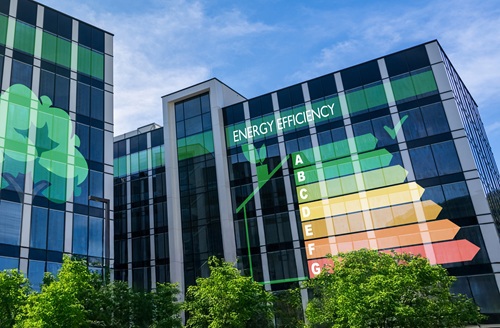 Some businesses will face uncomfortable truths about their energy usage and potentially higher costs as a result under upcoming changes. Photograph: iStock
“Organisations need to prepare now. They may need to upgrade their meters and data platforms to handle exponentially higher data volumes, while also preparing for more complex imbalance management for forecasted and actual consumption.
More granular data will also expose operational inefficiencies and peak-time consumption patterns that were previously hard to detect. Some businesses will face uncomfortable truths about their energy usage and potentially higher costs as a result.
All, however, will have the chance to take advantage of new dynamic pricing models – which combined with energy efficient technologies, self-generation and more, have the potential to significantly reduce organisations’ costs, energy, and emissions.”
Also upcoming is the Energy Savings Opportunity Scheme (ESOS) phase 4 qualification deadline. For energy managers and business leaders, the requirements for ESOS phase 4 are clearly defined with some pre-existing routes to compliance eliminated, and progress reporting now needed. I asked senior energy consultant, Sam Arje about the urgency of ESOS:
Why should organisations care about the upcoming deadlines for ESOS phase 4?
“Though the new qualification date is December 31 2026, the first compliance and submission deadline is December 5 2027. With so little time between qualification and submission, those responsible for their organisation’s ESOS compliance need to start preparing now, especially because the government has reduced the valid routes to compliance: Display Energy Certificates (DECs) and Green Deal Assessments (GDAs) will no longer be valid.
“Reporting itself is undergoing a step-change, too. Energy managers and business leaders need to now report on their progress toward the commitments made in their ESOS action plans. And if those commitments aren’t met, they’ll have an opportunity to explain why – and in these cases, silence might not be the sensible option.
“Still, ESOS goes far beyond merely compliance. It’s a catalyst for meaningful change that helps organisations to significantly reduce their energy consumption and emissions while improving efficiency. In many organisations, it helps to justify funding rounds or build the business case around new initiatives, such as replacing combined heat and power (CHP) units or installing solar PV.”
New generation assets will soon be prioritised for different locations across the UK as the first Strategic Spatial Energy Plan (SSEP) is set to be published next year. The release of NESO’s Whole Energy Market Strategy (WEMS) report this year has also raised questions about the financial burden that net zero could place on UK organisations, as well as the upcoming Nuclear Regulated Asset Base (RAB) charges.
I asked our head of business change, Greg Armstrong, to explain more about the consequences:
The SSEP is a national change, so what does it mean for individual organisations, and should they also be concerned with RAB charges or the Whole Energy Market Strategy?
“The SSEP could have cascading effects on organisations deploying near- or on-site generation and storage. Projects in areas identified as strategic for decarbonisation may benefit from streamlined planning processes and better alignment with regional energy plans. Longer-term grid development certainty will strengthen business cases for private wire investments by providing clarity there, too.
“For consumers on pass-through contracts, RAB will introduce a new charge on their bills, and though it may be considered comparatively small, the long-term impact for large energy users could be significant. For consumers on fixed price contracts it is likely that the Suppliers will absorb these costs until renewal, at which point they will be included in renewal quotes. It is also important to note the Energy Intensive Industries (EII) will not be required to pay the additional charge.
“The new charges will impact budgets regardless of consumption patterns and the detailed WEMS report has revealed a significant imbalance between demand and supply-side funding, so organisations should be conscious about the scale of upcoming changes if funding imbalances continue. Those asking, ‘Who will pay for net zero?’ may not like the answer.”
So where does that leave us? Well, one thing’s for certain: the energy efficiency landscape of 2026 demands a new level of preparedness from UK organisations. With regulatory frameworks becoming more ambitious and reporting requirements more rigorous, energy managers and business leaders can no longer afford reactive approaches. They must stretch their planning horizons into the future while putting systems and processes in place today.
The reforms to EPB, the transition from SECR to SRS, and the evolution of ESOS all point toward a common truth: comprehensive data, trusted partnerships, and early action are no longer optional. They’re essential.
For more information see:
teamenergy.com
E: [email protected]
T: +44 (0)1908 041513

FEATURES

Fatal falls in India: why are the numbers not declining?
By Orchie Bandyopadhyay on 17 September 2026
Despite widespread awareness of safe working procedures and equipment, falls from hieght remain one of the leading causes of workplace death and serious injury in India. Critics say problems such as time pressures and inadequate training lie at the root of many of these incidents, but others are hopeful that the new Occupational Safety, Health and Working Conditions Code will herald a reduction in falls by driving improvements in training, competence and supervision more widely.

Avoidable deaths, endless excuses: how can India improve its workplace safety culture?
By Orchie Bandyopadhyay on 17 September 2026
A recent series of high-profile workplace tragedies that claimed multiple lives across India have stoked public debate about the poor safety record of many of the country’s highest-risk industries. Trade unions argue that greater enforcement of safety laws is required to change business behaviour, while other commentators say many businesses require a huge internal cultural shift to safety excellence that must be led by directors and senior managers.
Why contact with electricity is this year’s leading powered access safety challenge
By on 14 September 2026