
Neurodivergent people can sometimes struggle to achieve their full potential at work, but simple changes to recruitment practices, work arrangements and wider workforce education can create an inclusive environment where they flourish.
Features
Cultivating positive relationships across neuro-differences and harnessing the power of inclusion in the workplace
By
on 01 May 2026
Grant’s story – my working life with ADHD
As I walked into his office for the second time that month, I sat down in the little grey chair, wondering if I would still have my job as a health and safety officer when I walked back out.
He didn’t waste time: “You’re not being effective.”
No explanation, no discussion; just a verdict. I knew what he meant. He wanted a safety officer who policed people: someone who called things out, disciplined people and enforced the rules. But I’ve never worked that way.
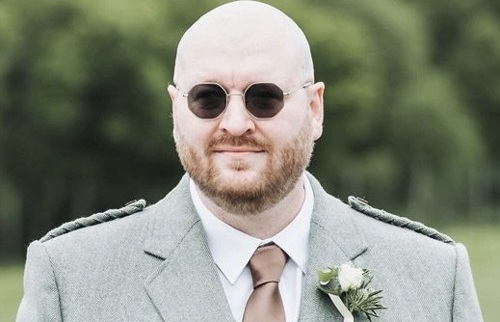 Grant Tickle: "While I was being judged on checklists and spreadsheets, I was seeing something else entirely: people, relationships and culture."
I was out in the plant every day. Talking to people, listening and asking what their challenges were – what mattered to them. Building trust so that they would talk to me about things that went wrong and things that weren’t safe.
But none of that made it to his spreadsheets. To him, I wasn’t visible enough. Not “tough” enough. So, the meetings kept coming. Always the same: “You’re too soft”, “You’re missing things”, “You need to be more on top of things”.
I started to question myself and my ability. I had been successful many times before. But he wasn’t completely wrong. I was missing things. Small details, follow-ups, admin tasks that slipped through. What he didn’t see was everything else. Team leads having conversations that built shared understanding.
Workers talking to me instead of hiding problems. Quiet little changes happening everywhere; improving the way work was done. I sat in that chair, again and again, being told I wasn’t good enough.
After a while, I really started to believe it. The problem was me, my personality, my effort. But something else was at play. Something which made the admin harder. The planning and organisation impossible. Switching between tasks exhausting.
ADHD.
It explained the struggle. It makes me incompatible with a system that only values control, visibility and compliance. But it also explained my strengths. While I was being judged on checklists and spreadsheets, I was seeing something else entirely: people, relationships and culture.
Sometimes, seeing things differently isn’t the weakness. It’s the whole point.
Walking in their shoes – Audrey’s experience of working with neuroatypical people
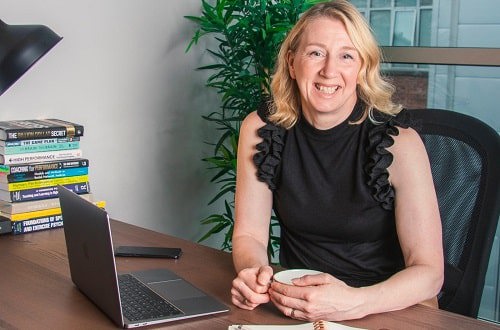 Dr Audrey Fleming: "I knew Grant would bring many strengths to our team, such as authenticity, intense hyperfocus on tasks, creative problem-solving and a rapid adaptability in fast-paced or crisis situations."
Previously, when I was a university lecturer, I supervised a dyslexic student through their dissertation year.
During this period, there was some reverse mentoring as I learned from them about not only managing the demands of university life but how they navigated and coped as a neuroatypical person in a neurotypical world in their achievement to gain a first-class honours degree.
This experience, alongside working with other neuroatypical students, and as a psychologist, has increased my awareness and motivation to support inclusion of neurodiversity within the workplace.
Neurodiversity is often inaccurately considered to be a mental health disorder, although it simply means an individual’s brain works differently to what is considered more typical by large sections of society.
However, neurodivergent workers sometimes ‘mask’ their condition in a bid to fit in better (hiding parts of a condition to ‘fit in’ better), and consistently managing and masking a neurodivergent condition or traits in a neurotypical world can lead to mental health issues.
I first met Grant, my colleague in British Safety Council’s Workplace Wellbeing Audit, Consultancy and Training team, during a training session I was delivering for his former employer.
When Grant joined British Safety Council a few years later, he disclosed to me that he had been diagnosed with ADHD (attention deficit hyperactivity disorder), and this confirmed some of the signs and behaviours I recognised when I first met him at the training session.
I knew Grant would bring many strengths to our team, such as authenticity, intense hyperfocus on tasks, creative problem-solving and a rapid adaptability in fast-paced or crisis situations.
However, I also recognised that someone with ADHD can find it difficult to manage challenges arising from being neurodivergent, and, if there is inadequate support from managers and colleagues, they can struggle to manage aspects of their work.
They may experience lapses in concentration, have a tendency to move onto new tasks before completing the current one, and struggle with time management and work organisation. They can become overwhelmed, and experience both physical and cognitive fatigue.
Grant is such a strong contributor to our team. As a team, we ensure that Grant doesn’t take on too much work at the same time, and we have frequent chats with him about areas like workloads, tasks and progress, which helps him to process everything effectively.
Neurodiversity: what it is and what it’s not
Researchers believe neurodiversity is a way the human species has evolved to ensure a diverse range of ways of thinking. The idea is that differences in cognition evolved because of many different environments throughout our species’ evolution.
 Neurodiversity describes several overlapping conditions. Image: iStock
Neurodivergence is an umbrella term which groups together a range of neurological differences – essentially, natural differences in how people’s brains behave and process information.
Neurodivergence is often compared against ‘neurotypical’ – a definition used to describe individuals with typical neurological development, whose brain functions, behaviours and processing align with societal norms and developmental milestones. Other interchangeable terms for neurodivergent include ‘neuroatypical’ and ‘neuro-minority’.
Neurodiversity describes several overlapping conditions including autism spectrum disorder (ASD), attention deficit hyperactivity disorder (ADHD), dyslexia, dyspraxia, dyscalculia, Tourette’s syndrome and obsessive-compulsive disorder (OCD).
As the characteristics of, and distinctions between, these conditions are often unclear, it can be difficult for clinicians to make specific diagnoses of individual neurodivergent conditions, prompting use of the term ‘spectrum of neurodevelopmental disorders’.
Perhaps due to this crossover in how the symptoms of neurodivergence are expressed across the population, individuals are often diagnosed with more than one, or several, neurological differences at the same time. For example, research suggests that between 50–60 per cent of people diagnosed with ASD also meet the criteria for ADHD.
Despite general misconceptions, neurodiversity is not a mental disorder. However, it is widely accepted that neurodivergent individuals, particularly those with ASD or ADHD, are at increased risk of anxiety and depression compared to neurotypical populations.
These poorer mental health outcomes for neurodivergent people are strongly influenced by environmental factors, reflecting the challenges of navigating systems and spaces designed around neurotypical norms.
To manage their focus, mood or day-to-day functioning, and cope with how they experience their neurodivergence, some people with ASD or ADHD may misuse alcohol or drugs (sometimes called self-medication). For instance, there is a strong link between ADHD and substance misuse: one study suggested that more than 20 per cent of people being treated for substance use disorders also met the criteria for ADHD.
Sadly, these negative outcomes are often driven by and create stigma, assigning a mark of disgrace to an individual’s characteristics or behaviour. This stigma cycle can reinforce behaviours that can be exhausting for the individual, such as masking.
But what if we considered neurodiversity as a superpower rather than a flaw?
For instance, adults with ADHD can have some very specific strengths, such as creativity, humour, hyperfocus and pattern-recognition. If managers help an employee with ADHD to adapt their work so they are able to utilise and enhance these strengths, it enables the individual to work more effectively and supports and improves their mental and physical wellbeing.
 Poorer mental health outcomes for neurodivergent people are strongly influenced by environmental factors. Image: iStock
Identifying and harnessing the ‘strength differences’ of neurodivergent workers as part of effective human resource practices can improve the neurodivergent employee’s satisfaction with their work and working life, while also enhancing innovation in their work and boosting organisational resilience.
In today’s volatile, uncertain, complex and ambiguous world, there has never been a greater opportunity for neurodiversity to drive adaptability, innovation and diverse problem solving at work.
In the workplace
The Equality Act 2010 and Employment Rights Act 2025 form the legislative framework setting out the actions employers are required to take to support neurodivergent employees to enter, thrive and remain in work.
Similarly, the Employment Equality Directive (2000/78/EC) addresses the equal treatment and employment of neurodivergent people across the European Union, while the UN Convention on the Rights of Persons with Disabilities applies in a similar way across United Nations member states.
There are numerous simple and low-cost steps employers can take to support neurodivergent employees to thrive at work. A useful framework for managing neurodiversity at work is ‘Creating, Fostering, Capitalising’.
Creating a neurodiverse workforce
Creating a neurodiverse workforce starts long before someone joins the organisation: it begins with how the business attracts and assesses talent. An inclusive recruitment process signals commitment to making the organisation as inclusive as possible for neurodivergent employees.
Too often, organisations ask candidates at the end of an application form whether they require adjustments to remove or reduce a disadvantage related to a disability. By that point, it may already be too late. Barriers such as overly long job descriptions, corporate jargon and ambiguous role expectations can deter neurodivergent applicants from applying in the first place.
Similarly, complex or repetitive application systems – such as requiring candidates to manually re-enter their CV – can lead to neurodivergent people ‘dropping off’ and abandoning the application process, particularly for individuals with attention or executive functioning challenges.
To create a more neuroinclusive job application system:
- Use clear, concise language in job descriptions and avoid corporate ‘fluff’
- Break information into structured bullet points and describe day-to-day responsibilities clearly
- Allow CV uploads without mandatory re-typing. Offer alternative formats such as LinkedIn profiles, portfolios or short responses
- Keep application forms short and remove duplication
- Include a progress bar and a ‘save and return’ function
- Ask about helpful reasonable adjustments at the beginning of the application, enabling support from the outset.
Fostering a neurodiverse workforce
Fostering inclusion is about what happens once people are inside the organisation. It rests on two key pillars: providing meaningful support for neurodivergent employees and managing both possible discrimination towards neurodivergent people and possible perceptions of unfairness among the workforce about adjustments made to support neurodivergent workers.
At its core, fostering inclusion requires leaders to genuinely understand their people. Forms and policies can only go so far – what matters is how confident leaders are in building relationships, recognising diverse traits and identifying strengths.
Managing perceptions of unfairness among the workforce in relation to adjustments made to support neurodivergent employees requires clearly communicating that equity, not equality, is the goal. In short, while equality treats everyone the same, equity ensures neurodivergent individuals receive the specific support they need to lift them up to the same baseline as everybody else.
Organisations should therefore:
- Train leaders beyond basic awareness of neurodiversity, so they are equipped with practical tools to have effective, human-centred conversations on how best to support neurodivergent workers
- Focus on individual needs rather than labels – normalising discussions about the working methods that everyone at work prefers to adopt to boost their effectiveness reduces pressure on individuals to disclose if they are neurodivergent
- Actively identify the strengths of all employees, including those who are neurodivergent, and align them with tasks and responsibilities
- Build psychological safety by encouraging authenticity and vulnerability, role-modelling openness about topics such as neurodivergence and mental and physical health, and ensure differences in communication or behaviour are not penalised
- Embed inclusive leadership into the performance metrics of managers and leaders
- Provide neurodiversity training for employees, including how tailored adjustments for neurodivergent individuals are designed to support fair performance, and do not give an unfair advantage to these individuals.
Information and training
Another important aspect of neuroinclusion is the way information is shared and learned at work. Traditional, text-heavy approaches may exclude people who process text-based information in different ways. Ways of sharing information that boost neuroinclusion include:
- Use multiple formats – combine written content with video, audio and visual materials
- Design learning materials for clarity and flexibility, offering different formats and different learning speed options
- Make accessibility the default by embedding inclusive practices into learning and development strategies.
Reasonable adjustments
- Many effective adjustments are simple and low-cost, yet highly impactful
- Offer flexible working patterns, including remote or hybrid options and flexible start/finish times
- Adapt the physical environment: providing quiet spaces, noise-cancelling headphones and adjustable lighting can reduce sensory overload. Also, consider the unintended side effects of open-plan offices and hot desks, as some neurodivergent people may struggle to concentrate in noisy areas.
- Balance remote work with opportunities for connection to avoid isolation.
Capitalising on a neurodiverse workforce
Once an employer has taken steps to create and support a neurodiverse workforce, they can begin to fully realise the value of employing neurodivergent individuals. This means intentionally leveraging the strengths of neurodivergent staff and enabling these individuals to perform at their best.
Technology can play a key role in unlocking this potential. In today’s world, there is a bounty of effective technology that can reduce barriers and cognitive load for neurodivergent people and enhance their productivity.
Examples include:
- Assisted diary and workload management tools to support executive functioning
- Text-to-speech software to aid information processing
- Speech-to-text dictation tools to capture ideas in real time.
However, it is important to remember that making an organisation neuroinclusive and capitalising on the strengths of a neurodiverse workforce is not solely about accommodating the needs of neurodivergent individuals at work. It is also about recognising that the different ways of thinking, processing and problem-solving that neurodivergent people bring to the workplace are assets.
Organisations that intentionally harness these strengths can unlock higher levels of innovation, productivity and engagement.
Support available
There is lots of support and advice available on making an organisation neuroinclusive, both from government bodies and charities.
Neurodivergent individuals may be eligible for Personal Independence Payment (in England and Wales) or Adult Disability Payment (Scotland), which can help take the pinch out of both daily living costs incurred because of the challenges presented by neurodiversity and the cost of medications.
Access to Work is a government scheme which provides help for people with disabilities to get or stay in work. The scheme can provide a grant to help pay for practical support at work, support with managing mental health and funding to pay for communication support at job interviews. (Note: Access to Work cannot be used to pay for reasonable adjustments, as this is the employer’s legal obligation.)
ACAS provides advice on adjustments for neurodiversity, and the UK Government provides advice on employing disabled people and people with health conditions. The Equality and Human Rights Commission gives specific advice on legal requirements, including reasonable adjustments at work.
The British Dyslexia Association offers free guidance for employers and employees, including practical guidance such as accessible document style guides.
ADHD UK offers a guide to help both employers and employees navigate the conversation about ADHD and adjustments, including simple and effective solutions to explore.
The National Autistic Society offers lots of autism-related training courses, from general awareness to communication and sensory challenges. It also offers suggestions on adjustments which people with ASD may find helpful.
Tourettes Action has a helpful factsheet for employers and offer a free e-learning course: ‘Understanding Tourette Syndrome’.
PAS 6463:2022 Design for the Mind. Neurodiversity & the Built Environment provides detailed information on designing inclusive spaces and places.
Conclusion
Grant’s experience shows what happens when difference is misunderstood; Audrey’s shows what becomes possible when it is recognised and supported. The shift between the two doesn’t need to be difficult... but it is intentional.
By actively creating neuroinclusive workplaces, organisations can shift from judging difference to actually benefiting from it.
Grant Tickle is wellbeing health and safety auditor and consultant at the British Safety Council
Dr Audrey Fleming is head of culture change and psychosocial safety at the British Safety Council

FEATURES

AI at work: why employee monitoring may be creating new pressures
By Orchie Bandyopadhyay on 21 October 2026
India’s information technology companies are rapidly expanding their use of AI in a bid to drive business efficiency and boost innovation. However, commentators warn that the growing use of AI to monitor employees’ work outputs and activities poses a risk to workforce mental health and wellbeing.

Remote and hybrid working: how can employers best provide support?
By Orchie Bandyopadhyay on 21 October 2026
India continues to embrace remote and hybrid working, with large numbers of staff either working from home full time or following a mix of remote and office attendance. However, remote working can create feelings of isolation and loneliness, in turn affecting performance and mental wellbeing, so it’s essential employers have excellent communication and support procedures in place to prevent these problems arising.