
The Modi Government says the recently agreed interim trade deal with the United States will boost the Indian economy, but farmers’ unions and opposition leaders argue tariff concessions on American agricultural imports could lead to big falls in the price of domestically-grown crops, placing severe pressure on rural livelihoods and the mental health of the nation’s small farmers.
Features
India–US trade deal: economic boon or further blow to farmers’ livelihoods and mental health?
By
on 17 March 2026
In February, the interim trade deal between the US and India, which will see US tariffs on Indian goods slashed in exchange for India allowing greater imports of certain American agricultural products and committing to phase out Russian oil imports, was hailed as a diplomatic and economic milestone.
Seafood farmers in coastal states such as Andhra Pradesh were jubilant, as India is a major exporter of shrimp and the US is the largest buyer of the shellfish. However, in contrast, on 12 February, a coalition of major trade unions and farmers’ groups held a series of protests across the country, arguing the interim trade deal undermines the interests of farmers, small businesses and workers and could deeply affect not only their livelihoods but also their health, safety and wellbeing.
Under the draft framework signed on 2 February, the US agreed to reduce its overall tariff rate on imported Indian goods to 18 per cent, a sharp reduction on the 50 per cent tariff originally introduced in August 2025.
The move saw Washington completely remove a 25 per cent punitive tariff imposed on Indian goods due to the New Delhi Government buying Russian crude oil, and reduce the previous 25 per cent reciprocal tariff on imports from India to 18 per cent.
In return, India made key concessions, including agreeing to eliminate or reduce tariffs and non-tariff barriers on imports of all industrial goods and a wide range of food and agricultural products from the US; a commitment to stop purchasing oil from the Russian Federation; and an agreement to purchase over $500 billion of US energy, information and communication technology, coal, and other products.
However, the trade deal was quickly subject to legal turbulence in the US.
On 20 February, the US Supreme Court struck down President Trump’s use of emergency powers to impose sweeping tariffs on countries like India. The ruling led to fresh uncertainties about the level of tariffs Indian goods would eventually be subject to under the final, agreed India-US trade deal. In the meantime, the Indian Government appears to be treading carefully and has given no indication it intends to walk away from the bilateral agreement, while Trump has publicly insisted that “nothing changes”, meaning the agreed deal will reportedly go ahead, despite the Supreme Court ruling.
However, for Indian exporters – including farmers, whose agricultural products are exported to countries like the US – the uncertainty over whether the trade deal will proceed as agreed has added another layer of instability to an already volatile trading environment and stoked fears about the prospective impact of any India-US trade deal on their livelihoods.
‘Heavily skewed in favour of American interests’
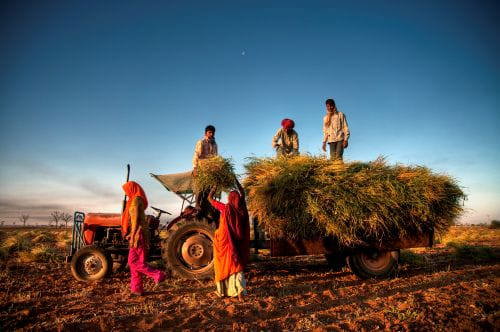
Indian farmers argue the trade deal is heavily skewed in favour of American interests and threatens their livelihoods, because it will lower Indian tariffs on some US agricultural products to zero, from a previous level of between 30 and 150 per cent. They argue this will depress domestic prices for agricultural products and therefore hurt India’s rural economy, where millions of people rely on farming for a livelihood. The farmers argue the arrangement is deeply unequal as cheaper imports of corn, soybean, nuts, cotton and processed foods could depress domestic prices and reduce already fragile agricultural incomes.
Farmers’ groups add that because around 86.1 per cent of farming in India is undertaken by small farmers – who own less than two hectares of land – these small producers will not be able to compete on price with large, mechanised and subsidised US farms.
However, the Modi Government has rejected these claims, arguing the trade deal will benefit all stakeholders. India’s trade ministry says the majority of key farm products – including rice, wheat, dairy, poultry, a several fruits and vegetables – remain outside the deal, adding the pact strengthens trade ties while safeguarding food security and farm incomes.
Union commerce minister Piyush Goyal told Parliament said the deal “fully” protects core sensitivities in the Indian agriculture and dairy sectors, and also accused opposition parties of misleading farmers on the impact of the deal.
The farmers’ protests, which took place in multiple states on 12 February, including Haryana, were coordinated by the Samyukt Kisan Morcha (SKM), a coalition of over 40 farming unions, and the Central Trade Unions. The protests saw convoys of tractors being driven from farms into towns and assembling near local government offices and farmers burning dummy copies of the trade deal. At the protests, union speakers claimed the trade deal represents a surrender of the country’s sovereignty and is harmful to the interests of millions of Indian farmers.
Congress Party leader Randeep Singh Surjewala said the deal could harm farmers and rural livelihoods: “Work has been done to snatch away the livelihoods of millions of food providers, farm labourers and farmers,” he said.
Meanwhile, another opposition leader warned the agreement risks exposing millions of farmers and farm labourers to global price shocks without adequate safeguards.
Anxiety among cotton growers
There is particular anxiety about the deal among agricultural communities that rely on cotton-growing for their livelihoods. A group of protesting farmers from Maharashtra said easing import restrictions could not only expose small and marginal farmers to competition from heavily subsidised American agricultural products but also open the door to imports of genetically modified foods and seeds, which could damage soil fertility, biodiversity and domestic seed systems.
“The trade agreement would hurt us and the poor because of lower tariff barriers,” said a cotton farmer from Vidarbha in Maharashtra.
A statement by Commerce Minister Piyush Goyal that under the deal, Indian textile and clothing manufacturers could potentially obtain a zero-tariff rate on exports to the US of clothing and textiles manufactured using imported US cotton, was also met with anger among Indian cotton producers.
Goyal said that if India purchases raw cotton from the United States, processes it domestically, makes garments, and exports the finished products back to the US, then the country will be granted a zero reciprocal tariff – similar to a facility reportedly extended to Bangladesh.
However, cotton farmers argue this could trigger a huge reduction in the price of domestically-grown cotton, with devastating knock-on effects for the viability of domestic agriculture. One farmer leader from Karnataka said: “We are already importing $334 million worth of cotton from the US, and this has led to a sharp fall in domestic cotton prices for Indian farmers... but, who is listening? Nobody cares... where will we go?”
Mental strain
Commentators warn the mental health of Indian farmers is already under strain due to factors such as low incomes and worries about crop yields and prices, arguing that the Modi Government’s overall policies are placing strain on the farming community. They point to a recent report from the National Crime Records Bureau (NCRB) showing that 10,786 farmers and agricultural workers committed suicide in 2023, with the highest number of suicides reported in Maharashtra (38.5 per cent), followed by Karnataka (22.5 per cent), both leading cotton-producing states. Farmers’ groups argue the decision to waive import duty on US cotton could aggravate the situation, triggering further mental anguish and a possible rise in the number of farmer suicides.
The NCRB statistics show that in Maharashtra, between 1 January and 31 December 2024, 2,706 farmers from Vidarbha and Marathwada regions committed suicide. The former is a significant cotton-growing area and the latter is currently experiencing severe, recurring drought, and commentators argue that likely contributing factors to the high suicide toll include the impact of climate change, droughts, crop failures and debt.
Gopal Patil, a farmer from the Yavatmal region of Maharashtra, said: “I do not understand tariffs, but people tell me that the price of cotton will crash (under the trade deal). I suffered severe losses last year, and was left financially devastated, with little money to invest in the next crop cycle. As I could not leave my field fallow, I borrowed heavily at a high interest rate from the sahukar (local moneylender). If I do not get a good price for my cotton crop this year, then the sahukar will grab my land.”
Patil added: “While the input cost for seeds, fertilisers, pesticides, and diesel have surged, cotton ends up being sold below the Minimum Support Price (government-set minimum price for selected agricultural products to protect farmers from market price dips).
"Last year, I was forced to sell my produce to a private trader for Rs 7,200 per quintal, which was way below the Cotton Corporation of India’s procurement price of Rs 8,100 per quintal. With the trade deal, I do not know how much I will get.”
Patil, who has two school-going daughters, says that the ever-rising cost of education, healthcare and daily needs outpace his stagnating income, creating a stark income-expense gap, putting him under immense mental stress.
According to a report by The Times of India, Atul Ganatra, president of the Cotton Association of India (CAI), which represents traders and mills, said that after the original 50 per cent all-goods tariff hike by the US in August 2025, purchases of cotton yarn dipped by 50 per cent in India.
“There has been a sharp decline in purchase of cotton yarn after the tariff hit,” explained Ganatra. “The US is India’s largest textile export market. As demand for cotton yarn dips, demand for cotton will fall, and ultimately this will affect the farmer.” Ganatra added that domestic demand for cotton has also fallen, largely as a result of Indian cotton mills being able to import cotton at competitive rates.
In a statement, the Samyukta Kisan Morcha (SKM) coalition of farmers’ unions said: “The [India-US trade] framework is an abject rejection of the claim of the Commerce Minister Piyush Goyal that the agriculture and dairy sectors are out of [excluded from] the Free Trade Agreements and the Government of India will not make any compromise on the interests of agriculture.
“The Commerce Minister is consciously propagating falsehood and betraying the farmers and the entire people. SKM considers the role of the Commerce Minister as a traitor and demands his immediate resignation.”
Jagjit Singh Dallewal, a 70-year-old farmer leader from Punjab who hit the headlines in 2024 after going on hunger strike in protest at alleged Government failures to ensure minimum prices for certain crops, said that while Goyal is tweeting that the agriculture and dairy sectors will be protected under the trade deal, the India-US joint statement says India has agreed to discuss and resolve non-tariff barriers imposed on US agricultural and food products.
According to Dallewal, these two positions are contradictory, and the joint statement makes it clear that under US pressure, the Indian government has agreed to open Indian markets to American agricultural products, which will cause severe losses to Indian farmers.
Another farmer leader added: “For Indian farmers, the concern is existential.”
Meanwhile, Congress leader Rahul Gandhi said he fully supported the nationwide strikes and protests by workers and farmers across India against various central government policies, arguing that their concerns have been ignored for too long.
In a post on X, he said: “Today, millions of workers and farmers across the country are on the streets, raising their voice for their rights. Workers fear that the four Labour Codes will weaken their rights. Farmers are apprehensive that trade agreements will strike a blow to their livelihood. And weakening or eliminating MGNREGA (the social welfare measure that provided a minimum of 100 days of guaranteed paid employment per year to at least one member of every Indian rural household) could snatch away the last support of the villages.”
Gandhi, who has repeatedly claimed that the deal represents a “sell-out”, questioned whether India was effectively opening the door to foreign control over its farm economy. “In the name of a US trade deal, we are witnessing a betrayal of Indian farmers,” the Leader of the Opposition wrote in another post on X.
‘Dilute’ position on GM crops
He further questioned the Government’s intention in agreeing to remove “non-trade barriers”, warning this could pave the way to dilute India’s position on GM crops, weaken procurement systems or reduce Minimum Support Prices for crops and bonuses for farmers.
At the same time, even groups aligned with the ruling Modi-led BJP have voiced discomfort over aspects of the deal. Mohini Mishra, head of the Bharatiya Kisan Sangh, a politically influential farmers’ group close to Modi’s ideological parent organisation, the Rashtriya Swayamsevak Sangh, told Bloomberg News: “We are not comfortable with the import of cheaper GM soybean oil and animal feed processed from GM corn.”
As part of the deal, India is expected to import around 10 per cent of its required animal feed components in the form of dried distillers’ grains with solubles (DDGs) from the US. However, critics argue that because DDGs, a by-product of biofuel production that is commonly used as animal feed, are largely derived from genetically modified corn, such imports could gradually open the gates to GM crop cultivation, eroding centuries-old practices like seed saving, while also raising questions about consumer food safety and possible negative environmental impacts.

FEATURES

AI at work: why employee monitoring may be creating new pressures
By Orchie Bandyopadhyay on 21 October 2026
India’s information technology companies are rapidly expanding their use of AI in a bid to drive business efficiency and boost innovation. However, commentators warn that the growing use of AI to monitor employees’ work outputs and activities poses a risk to workforce mental health and wellbeing.
Remote and hybrid working: how can employers best provide support?
By Orchie Bandyopadhyay on 21 October 2026
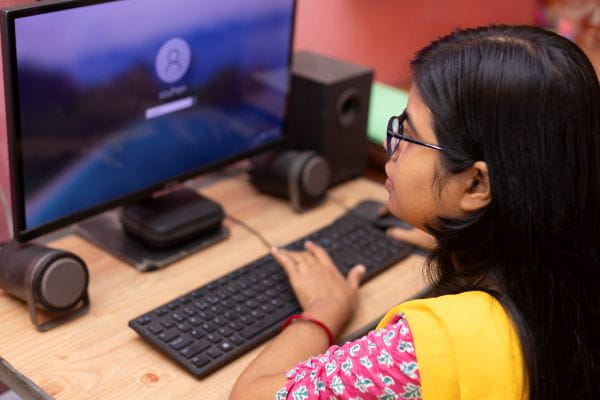
India continues to embrace remote and hybrid working, with large numbers of staff either working from home full time or following a mix of remote and office attendance. However, remote working can create feelings of isolation and loneliness, in turn affecting performance and mental wellbeing, so it’s essential employers have excellent communication and support procedures in place to prevent these problems arising.