A recent series of high-profile workplace tragedies that claimed multiple lives across India have stoked public debate about the poor safety record of many of the country’s highest-risk industries. Trade unions argue that greater enforcement of safety laws is required to change business behaviour, while other commentators say many businesses require a huge internal cultural shift to safety excellence that must be led by directors and senior managers.
Features
Avoidable deaths, endless excuses: how can India improve its workplace safety culture?
By
on 17 September 2026
On 7 July this year, eight workers were killed after a large volume of excavated debris gave way at the under-construction Anakkampoyil-Kalladi-Meppadi twin tunnel road project site in Kalladi, Wayanad, Kerala state. Intense monsoon showers triggered a rush of mud, earth and rock down a slope, burying parts of the work site and blocking nearby roads.
Kerala agriculture minister T Siddique said the incident at the Kalladi tunnel project site was not a natural landslide but a “man-made landslide” caused by the unscientific dumping of excavated earth.
Two weeks before the accident, following a minor landslide at the site, the District Collector had ordered the main contractor, Bhopal-based Dilip Buildcon Ltd (DBL), to halt the construction work.
“The order was not considered, and the construction company went ahead with the tunnelling work,” Kerala’s environment minister Sunny Joseph told The Indian Express.
Track record under scrutiny
DBL’s track record had also come under scrutiny.
Although Konkan Railway Corporation awarded DBL the Wayanad road tunnel project in June 2025, five months later, in November 2025, Bengaluru Smart Infrastructure Ltd (B-SMILE) disqualified the company’s bid to be the main contractor for Bengaluru’s Hebbal-Silk Board road tunnel project because a tender clause prohibits work being awarded to companies associated with the collapse of major structures.
The Wayanad twin-tunnel landside is not the first serious construction accident on projects carried out by, or involving, Dilip Buildcon Ltd. In December 2024, the National Highways Authority of India (NHAI) imposed a fine of Rs 50 lakh on DBL-Altis Holding Corporation, a joint venture of Dilip Buildcon Ltd, after a retaining wall collapsed at the Delhi-Mumbai Expressway tunnel project in Kota. The accident resulted in the death of a worker.
In July 2021, two massive concrete beams that formed part of an under-construction flyover collapsed in Andhra Pradesh’s Anakapalle district, killing at least two people and injuring several others.
In 2019, scaffolding supporting the under-construction Zuari River bridge in Goa gave way while concrete was being poured. The collapse left two workers dead and four others injured. In a statement, DBL stated: “Prima facie this scaffolding failure is most likely due to soil displacement from the hillock.”
In relation to the Wayanad tragedy, locals and state authorities allege that a key contributing factor to the landslide was a failure by DBL to follow safety protocols. However, Dilip Buildcon has rejected claims that construction practices alone were responsible. The company argues the landslide was primarily caused by exceptionally heavy rainfall and Wayanad’s known susceptibility to monsoon-induced slope failures.
Risk of landslides
Because the tunnel site lies close to Chooralmala and Mundakkai, where devastating landslides in 2024 claimed over 300 lives, environmentalists have long warned about the risks of constructing a major road tunnel at this location. They allege that the Kerala Government has prioritised infrastructure development over the prevention of landslides in the Western Ghats region. Geologists, too, have repeatedly cautioned that the Kalladi region consists of loose and unstable earth, increasing the risk of landslides.
However, supporters of the project argue the tunnel will spur development by reducing the road distance between Kalpetta and Kozhikode by 31 kilometres, bypassing the congested Thamarassery Ghat road, which features multiple sharp bends. The tunnel is expected to reduce travel time between Kozhikode and Wayanad by 45 to 60 minutes while providing all-weather connectivity to the hill district.
The Kerala Government has said construction will remain suspended until an investigation is completed and further potential risks have been fully assessed, at which point it will decide if any technical or legal action should be taken against any parties over the fatal landslide. However, the incident has reignited questions about whether permission should have been granted for the project in the first place, given the fragility of the landscape in this part of the Western Ghats region.
High-profile disasters
Meanwhile, the Wayanad incident was just one of a number of serious, high-profile workplace disasters that have occurred across the country in recent months.
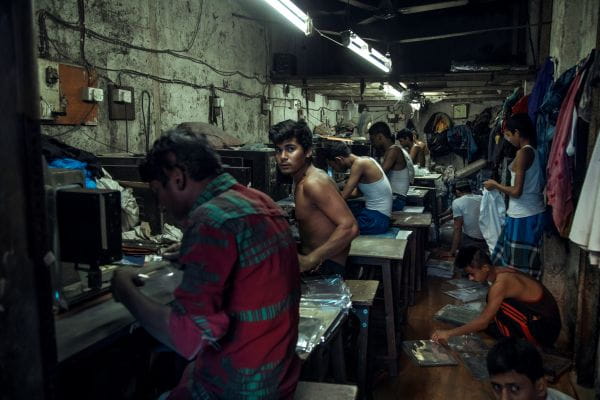
On 24 June, a warehouse collapse in Kolkata claimed 16 lives and left 17 injured.
Following the incident, West Bengal chief minister Suvendu Adhikari said that despite structural defects and a faulty design, the building plan was approved, and the plan had been signed by former Kolkata mayor and senior Trinamool Congress Party leader Firhad Hakim. Promising strict action against anyone found culpable for the tragedy, Adhikari said: “No one will be spared.” Hakim was also the state’s urban development minister in the Mamata Banerjee-led Trinamool regime.
Adhikari added the victims were largely people drawn from economically weaker sections of society, who often take up risky jobs due to financial pressures. He added the incident highlights the need for stricter monitoring of safety measures for buildings and sites used as workplaces, including fire safety compliance and fire safety audits.
Also in June, five workers died and dozens were hospitalised following an ammonia gas leak at a seafood processing factory in Tamil Nadu. In a separate incident in the same month, nine workers were killed at the state-run Rashtriya Ispat Nigam Ltd (RINL) Visakhapatnam Steel Plant (VSP) in Anakapalle in Andhra Pradesh, when a ladle of molten steel erupted during casting, engulfing them in a fireball. Preliminary reports suggest that a critical gas-rinsing safety process may not have been completed as required at the steel plant.
Deep failures
“Together, these deaths expose deep failures in hazard identification, emergency preparedness and occupational safety across India’s high-risk workplaces,” said IndustriALL Global Union, an umbrella organisation consisting of 550 unions representing industrial workers in over 130 countries.
IndustriALL claims that in many recent deadly industrial incidents in India, workers and unions had previously raised concerns about unsafe conditions.
Referring to a report by the occupational safety campaign and advocacy group Safe in India examining the safety records of India’s leading automotive brands and companies that supply them with components, IndustriALL stated: “Most power press injuries struck [i.e. affected] workers on machines stripped of safety sensors. A third of injured workers received no training and learned on the machine itself.
“When workers flagged faulty machines, supervisors ignored them. Inspections routinely bypass workers entirely, with buyers and government inspectors rarely speaking to those who know the dangers first-hand.”
IndustriALL adds that even official government data reveals “serious gaps” in the oversight, inspection and enforcement of hazardous industries by safety regulators, with figures from the Directorate General, Factory Advice Service and Labour Institutes showing safety inspection coverage was less than 40 per cent even in hazardous process factories in 2023.
IndustriALL adds that the failure by the Union and State governments to ensure adequate inspection and enforcement of hazardous industries contributes to a high accident toll that is clearly reflected in official workplace injury compensation claims. “In May 2026 alone, the Employees’ State Insurance Corporation settled 185,634 permanent disablement claims,” states IndustriALL. “There is no breakdown showing when these injuries occurred, but such a high number in a single month points to both poor data and an urgent need for stronger inspections.”
The global trade union body added that the Union and State Governments must strengthen safety inspection capacity urgently, including ensuring the provision of sufficient inspectors with specialist technical expertise for hazardous industries. The union adds that governments must ensure safety inspectors have effective access to all workplaces, including contractor-controlled worksites and special economic zones.
Sanjay Singh, general secretary of the Indian National Electricity Workers Federation and IndustriALL executive committee member, said: “The presence of contract workers in core production operations reflects a growing reliance on precarious labour in hazardous industries. The Visakhapatnam [steel plant] tragedy highlights both the shortage of skilled manpower and the failure of management to invest adequately in safety measures, issues that must be urgently addressed.”
Behavioural and cultural failures
Although safety rules are meant to protect lives, Neeraj Sinha, head of safety at Tata Steel, states: “Yet in the Indian subcontinent, most accidents happen not because of lack of protocols, but because people don’t follow them.”
Sinha argues that behavioural and cultural failures are major contributory factors to industrial safety failures. He states that risk normalisation, over-confidence among management and workers, time and economic pressures, hierarchical workplace structures, an atmosphere of obedience, and a mindset where compliance becomes a ritual, not a value, all contribute to creating unsafe working environments.
Sinha adds that truly high standards of safety will only be achieved when workplace rules are no longer treated as mere boxes to tick and start becoming a lived practice that is respected, understood and embraced at every level of all organisations.
Subhash Kumar, director at safety training provider 3S Life Safe Akademie, says safety culture starts at the top, with leaders visibly prioritising safety through their decisions, by setting clear goals, and providing adequate resources. He argues that directors and senior managers need to lead by example – such as by attending safety meetings, and ensuring safety is discussed in general business planning, not just treated as a separate function.
“It is equally important to get workers involved in safety activities like reporting hazards and participating in safety meetings, as they are closest to the hazards and have valuable insights into how safety can be improved,” argues Kumar. “Training workers to spot and manage hazards keeps everyone prepared. Industries should also have clear, simple and easy-to-understand safety procedures that everyone can follow. Safety checks, incident reports and performance reviews can help identify problems and address them.”
Training not an on-going investment
In a column for ETHRWorld.com, a HR news website from The Economic Times, Jonathan D’Souza, chief human resources officer at Vertis Infrastructure Trust, which invests in and manages transportation assets like major highways, wrote: “Safety training in many industrial warehouses is often treated as a one-time compliance exercise rather than an ongoing investment. As the country’s logistics and manufacturing sectors expand, the urgency to implement rigorous, non-negotiable safety measures cannot be overstated.”
He added: “Despite existing regulations, industrial accidents continue to pose a severe threat. The question is not just about compliance, it is about fundamentally redefining workplace safety as a strategic, operational and ethical imperative.”
D’Souza adds that it should be compulsory for large industrial businesses to provide comprehensive employee safety training programmes that blend classroom learning, digital modules and hands-on practical safety drills. “Periodic refresher courses, real-time hazard simulations, and multilingual training resources can enhance engagement and effectiveness,” he adds. “Here the goal is clear – safety awareness must become second nature to every worker on-site.”
Indian occupational safety experts argue that employers need to build workplace safety cultures that focus on policies, measures and arrangements that extend beyond a simple target of basic compliance with regulations.
They argue that employers should set clear safety goals and communicate them throughout the organisation; recognise and reward safe behaviour by celebrating safety milestones; recognise individuals who report hazards; share success stories; invest in safety leadership training for supervisors and managers; and make safety visible through safety notice boards and toolbox talks to reinforce the importance of health and safety in everyday work.
Greater inspection resources
However, IndustriALL Global Union argues that the Union and State governments must allocate greater resources to labour inspectorates so there is more stringent inspection of high-risk industrial and related workplaces and activities and more effective enforcement of existing safety laws. The global union also argues that both regulators and employers should both encourage and act on worker reports about safety hazards in workplaces: “Workers and their unions are often the first to identify emerging risks. When they raise the alarm, employers and regulators must listen and act,” states IndustriALL.
Ashutosh Bhattacharya, South Asia regional secretary at IndustriALL Global Union, added: “Every worker has the right to return home safely at the end of the working day and that right is empty without strong inspection. ILO Convention 081 shows governments the way. Staff inspectorates properly, open every worksite to scrutiny and put workers and their unions at the heart of prevention. Each failure to act is measured in lives.”